Synthetic teaching case: a 65-year-old adult with stable CKD G3b and hypertension reports avoiding most fruit, vegetables, dairy, and protein after reading a generic “renal diet.” Appetite is poor and weight has fallen. This fictional scenario is designed for discussion, not as an individualized diet prescription.
Learning goal: Connect assessment, evidence, and a clear next clinical decision. Educational use; individual care requires the treating team’s assessment and applicable protocols.
Visual reference
Open the visual review after completing the case
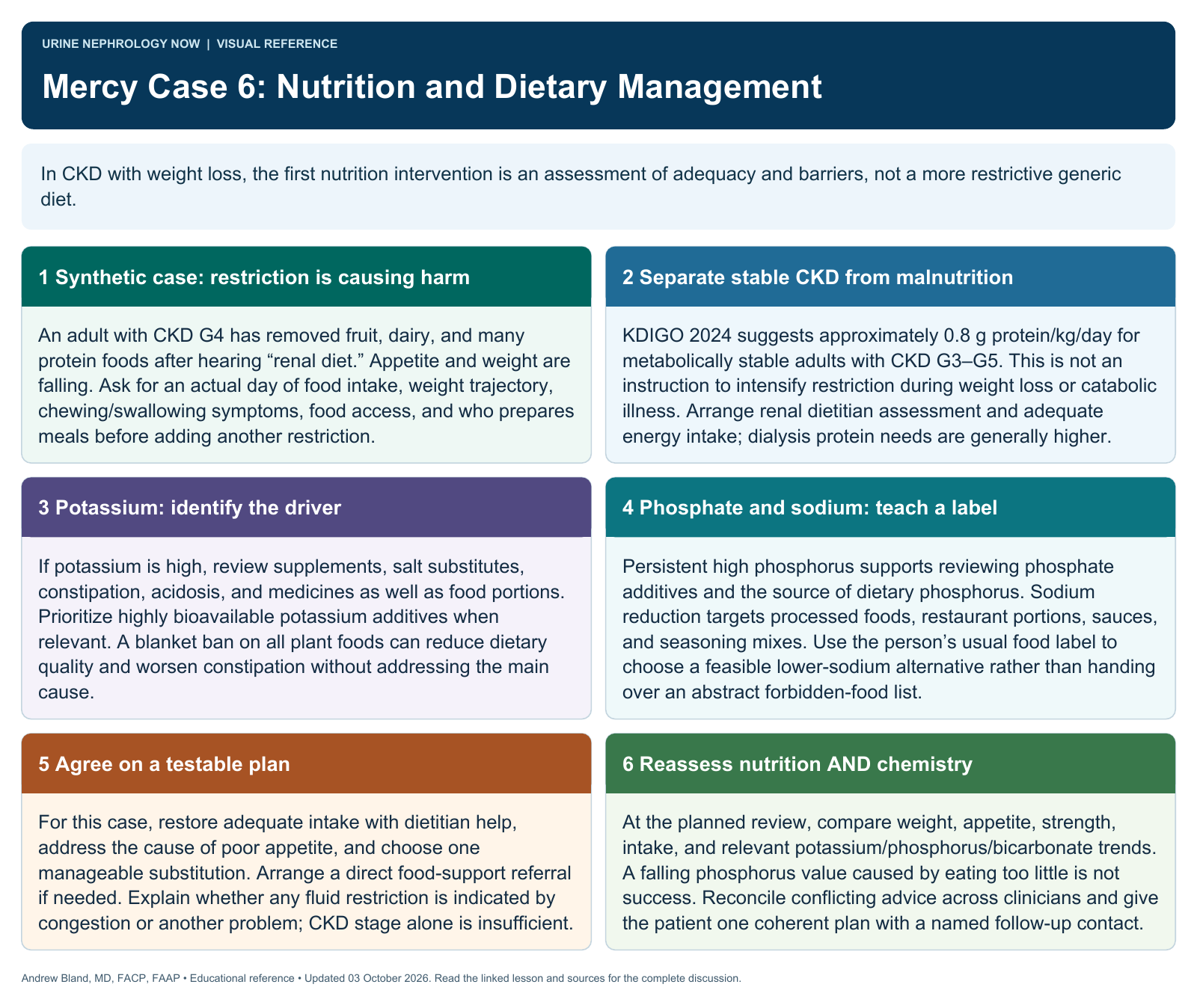
Browse the visual reference library · Download lesson Markdown
Define the nutrition problem
The starting task is to understand actual intake and the reason for restriction. Ask about weight trajectory, appetite, food access, chewing or swallowing, beliefs, supplements, and who buys or prepares food. Review kidney trajectory, medications, potassium, bicarbonate, phosphorus, and albumin in clinical context.
Avoid a universal renal diet
CKD stage alone does not prescribe the same potassium, phosphorus, protein, or fluid limit for everyone. Identify the specific biochemical or clinical problem before adding a restriction. A diet that becomes nutritionally inadequate can undermine strength, function, and quality of life despite appearing kidney-conscious.
Discuss protein in context
Protein recommendations differ by guideline, diabetes status, dialysis status, metabolic stability, and nutritional risk. In this patient with weight loss, do not impose an unsupervised very-low-protein regimen. Arrange renal dietitian assessment to balance energy, protein, preferences, and kidney goals with planned monitoring.
Address sodium and additives
Review high-sodium processed foods, portion sizes, eating outside the home, and affordable alternatives. Discuss phosphate additives if phosphorus management requires attention. Potassium decisions should consider the actual level, constipation, medicines, acidosis, preparation methods, and the nutritional value of foods rather than a blanket plant-food ban.
Agree on a practical change
Use shared decision making to select one or two feasible changes and explain their purpose. Teach label reading using foods the patient actually buys. Screen for inability to afford food and arrange a direct support referral rather than repeating advice that cannot be implemented.
Reassess the outcome
Follow weight, appetite, function, laboratory trends, and whether the changes were sustainable. Improvement is not defined by a lower potassium or phosphorus value if the patient has stopped eating. Reconcile recommendations from different clinicians so the patient receives a consistent and adequate nutrition plan.
Apply the framework
Should the first response be a stricter low-protein, low-potassium diet?
Show the reasoning
No. Assess the cause and extent of weight loss and nutritional risk first. Tailor medical nutrition therapy to the patient’s biochemistry, goals, food access, and ability to eat.
References and evidence
These sources support the teaching framework. Trial populations, endpoints, and limitations should be checked before applying a result to an individual patient.
- Ikizler TA, Burrowes JD, Byham-Gray LD et al.. KDOQI Clinical Practice Guideline for Nutrition in CKD: 2020 Update. Am J Kidney Dis. 2020;76(3 Suppl 1):S1-S107. PubMed 32829751
- Kistler BM, Moore LW, Benner D et al.. The International Society of Renal Nutrition and Metabolism Commentary on the National Kidney Foundation and Academy of Nutrition and Dietetics KDOQI Clinical Practice Guideline for Nutrition in Chronic Kidney Disease. J Ren Nutr. 2021;31(2):116-120.e1. PubMed 32737016
- Kidney Disease: Improving Global Outcomes (KDIGO) CKD Work Group. KDIGO 2024 Clinical Practice Guideline for the Evaluation and Management of Chronic Kidney Disease. Kidney Int. 2024;105(4S):S117-S314. PubMed 38490803