Visual summary
In CKD with weight loss, the first nutrition intervention is an assessment of adequacy and barriers, not a more restrictive generic diet.
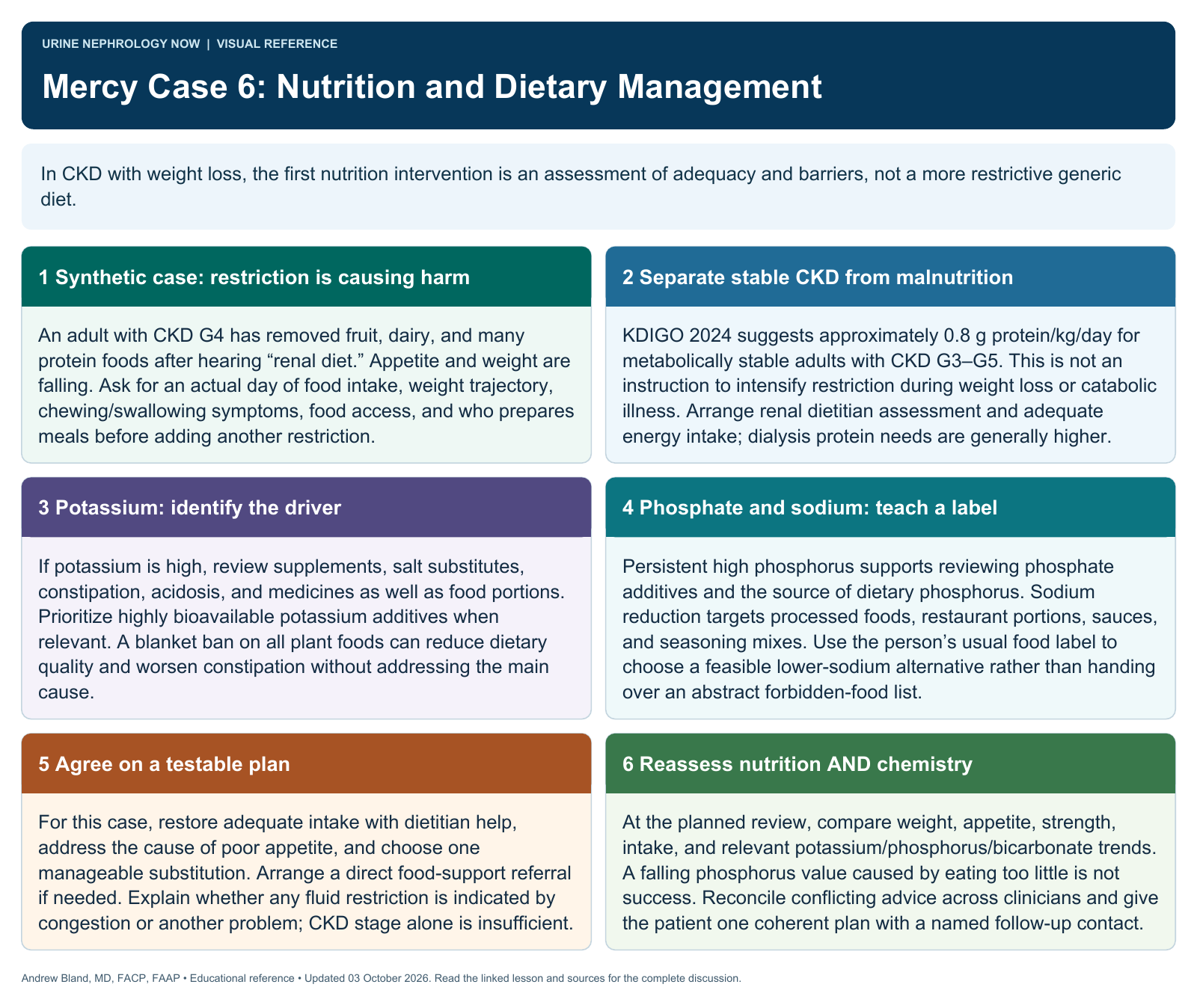
Text version
Synthetic case: restriction is causing harm
An adult with CKD G4 has removed fruit, dairy, and many protein foods after hearing “renal diet.” Appetite and weight are falling. Ask for an actual day of food intake, weight trajectory, chewing/swallowing symptoms, food access, and who prepares meals before adding another restriction.
Separate stable CKD from malnutrition
KDIGO 2024 suggests approximately 0.8 g protein/kg/day for metabolically stable adults with CKD G3–G5. This is not an instruction to intensify restriction during weight loss or catabolic illness. Arrange renal dietitian assessment and adequate energy intake; dialysis protein needs are generally higher.
Potassium: identify the driver
If potassium is high, review supplements, salt substitutes, constipation, acidosis, and medicines as well as food portions. Prioritize highly bioavailable potassium additives when relevant. A blanket ban on all plant foods can reduce dietary quality and worsen constipation without addressing the main cause.
Phosphate and sodium: teach a label
Persistent high phosphorus supports reviewing phosphate additives and the source of dietary phosphorus. Sodium reduction targets processed foods, restaurant portions, sauces, and seasoning mixes. Use the person’s usual food label to choose a feasible lower-sodium alternative rather than handing over an abstract forbidden-food list.
Agree on a testable plan
For this case, restore adequate intake with dietitian help, address the cause of poor appetite, and choose one manageable substitution. Arrange a direct food-support referral if needed. Explain whether any fluid restriction is indicated by congestion or another problem; CKD stage alone is insufficient.
Reassess nutrition AND chemistry
At the planned review, compare weight, appetite, strength, intake, and relevant potassium/phosphorus/bicarbonate trends. A falling phosphorus value caused by eating too little is not success. Reconcile conflicting advice across clinicians and give the patient one coherent plan with a named follow-up contact.
Supporting evidence
- Official clinical guidance
- KDOQI Clinical Practice Guideline for Nutrition in CKD: 2020 Update.
- The International Society of Renal Nutrition and Metabolism Commentary on the National Kidney Foundation and Academy of Nutrition and Dietetics KDOQI Clinical Practice Guideline for Nutrition in Chronic Kidney Disease.