Visual summary
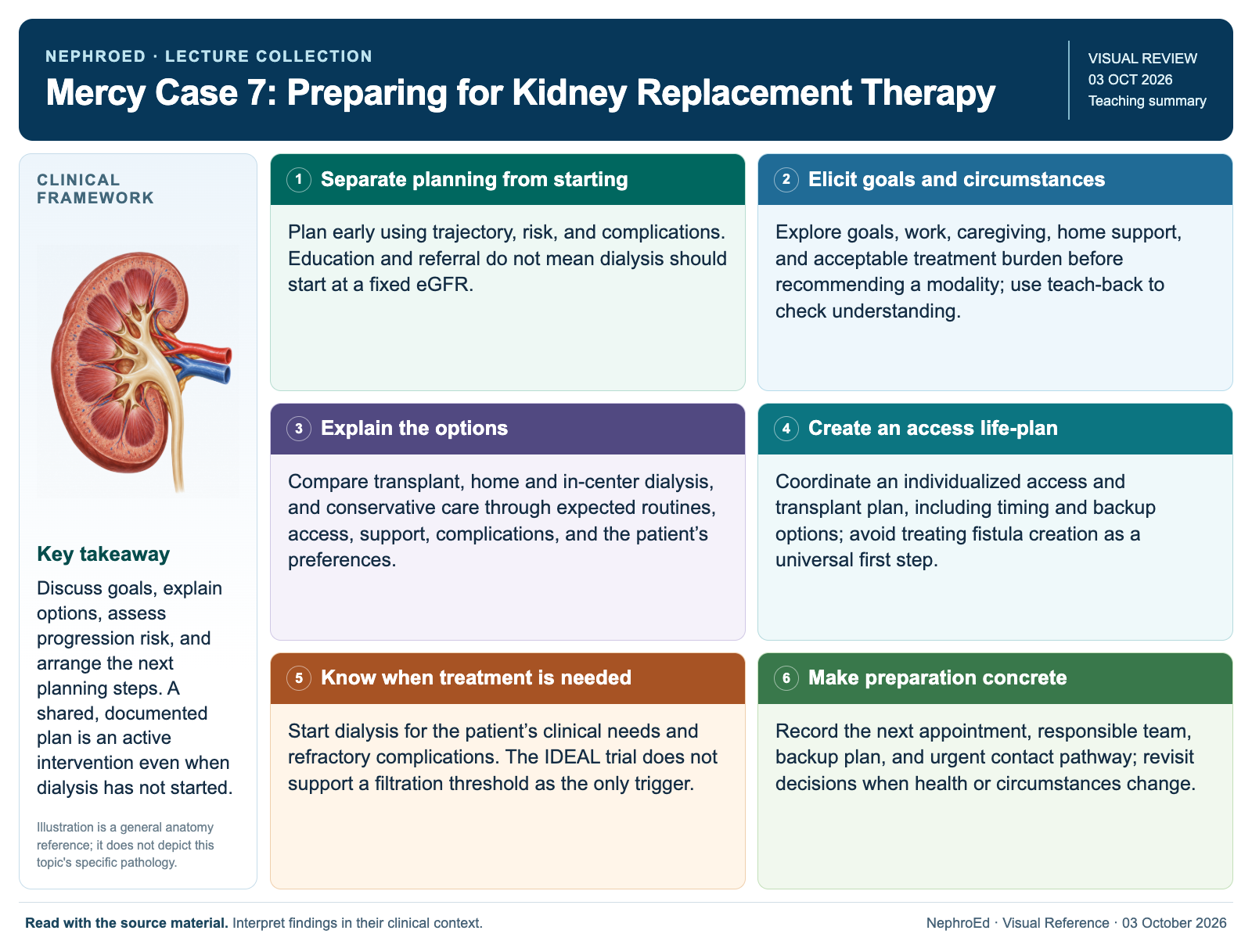
Discuss goals, explain options, assess progression risk, and arrange the next planning steps. A shared, documented plan is an active intervention even when dialysis has not started.
Text version
Separate planning from starting
Plan early using trajectory, risk, and complications. Education and referral do not mean dialysis should start at a fixed eGFR.
Elicit goals and circumstances
Explore goals, work, caregiving, home support, and acceptable treatment burden before recommending a modality; use teach-back to check understanding.
Explain the options
Compare transplant, home and in-center dialysis, and conservative care through expected routines, access, support, complications, and the patient’s preferences.
Create an access life-plan
Coordinate an individualized access and transplant plan, including timing and backup options; avoid treating fistula creation as a universal first step.
Know when treatment is needed
Start dialysis for the patient’s clinical needs and refractory complications. The IDEAL trial does not support a filtration threshold as the only trigger.
Make preparation concrete
Record the next appointment, responsible team, backup plan, and urgent contact pathway; revisit decisions when health or circumstances change.
Continue learning
This graphic summarizes a topic. The full educational pages provide the broader discussion and references.