Visual summary
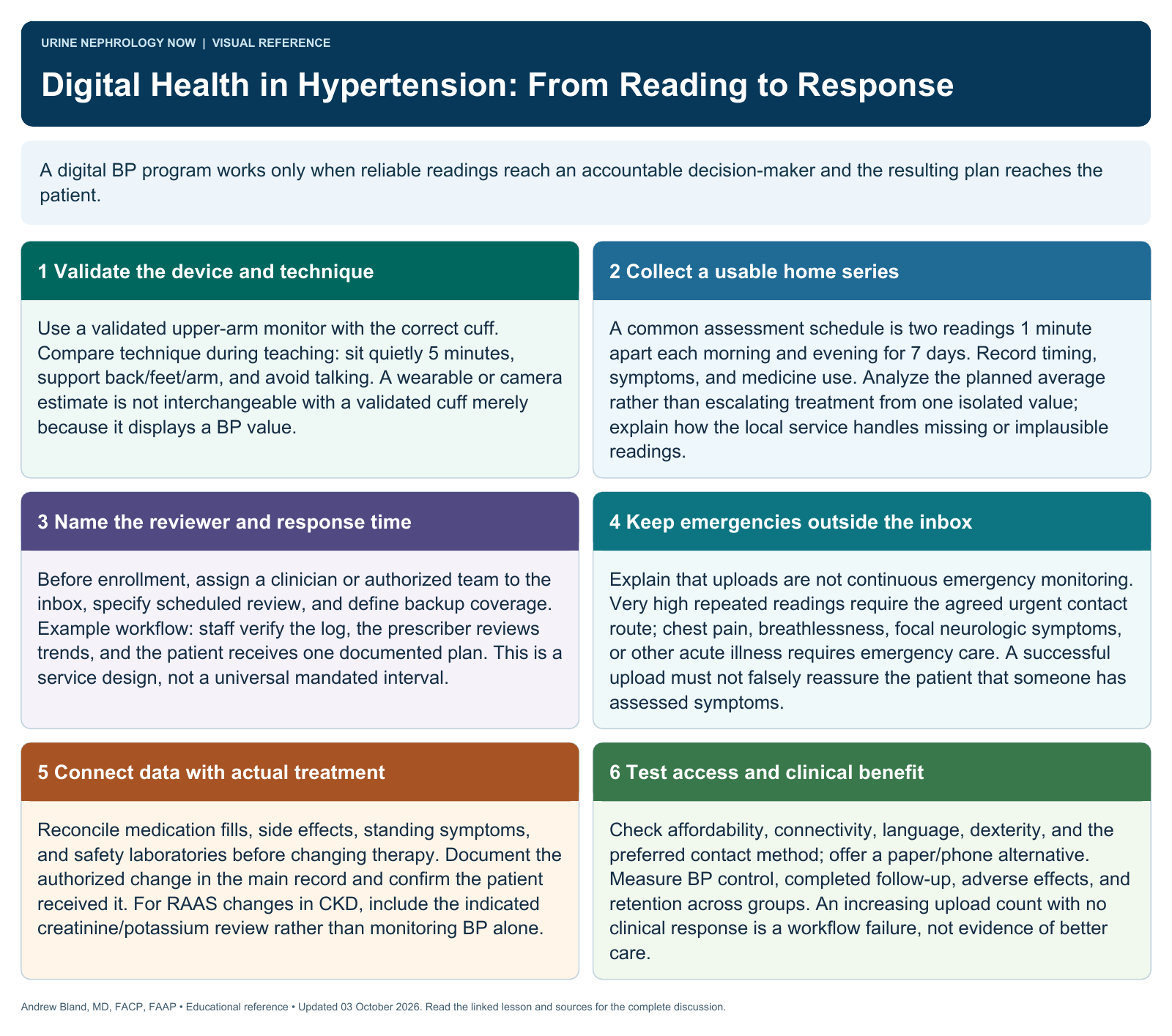
A digital BP program works only when reliable readings reach an accountable decision-maker and the resulting plan reaches the patient.
Text version
Validate the device and technique
Use a validated upper-arm monitor with the correct cuff. Compare technique during teaching: sit quietly 5 minutes, support back/feet/arm, and avoid talking. A wearable or camera estimate is not interchangeable with a validated cuff merely because it displays a BP value.
Collect a usable home series
A common assessment schedule is two readings 1 minute apart each morning and evening for 7 days. Record timing, symptoms, and medicine use. Analyze the planned average rather than escalating treatment from one isolated value; explain how the local service handles missing or implausible readings.
Name the reviewer and response time
Before enrollment, assign a clinician or authorized team to the inbox, specify scheduled review, and define backup coverage. Example workflow: staff verify the log, the prescriber reviews trends, and the patient receives one documented plan. This is a service design, not a universal mandated interval.
Keep emergencies outside the inbox
Explain that uploads are not continuous emergency monitoring. Very high repeated readings require the agreed urgent contact route; chest pain, breathlessness, focal neurologic symptoms, or other acute illness requires emergency care. A successful upload must not falsely reassure the patient that someone has assessed symptoms.
Connect data with actual treatment
Reconcile medication fills, side effects, standing symptoms, and safety laboratories before changing therapy. Document the authorized change in the main record and confirm the patient received it. For RAAS changes in CKD, include the indicated creatinine/potassium review rather than monitoring BP alone.
Test access and clinical benefit
Check affordability, connectivity, language, dexterity, and the preferred contact method; offer a paper/phone alternative. Measure BP control, completed follow-up, adverse effects, and retention across groups. An increasing upload count with no clinical response is a workflow failure, not evidence of better care.