Visual summary
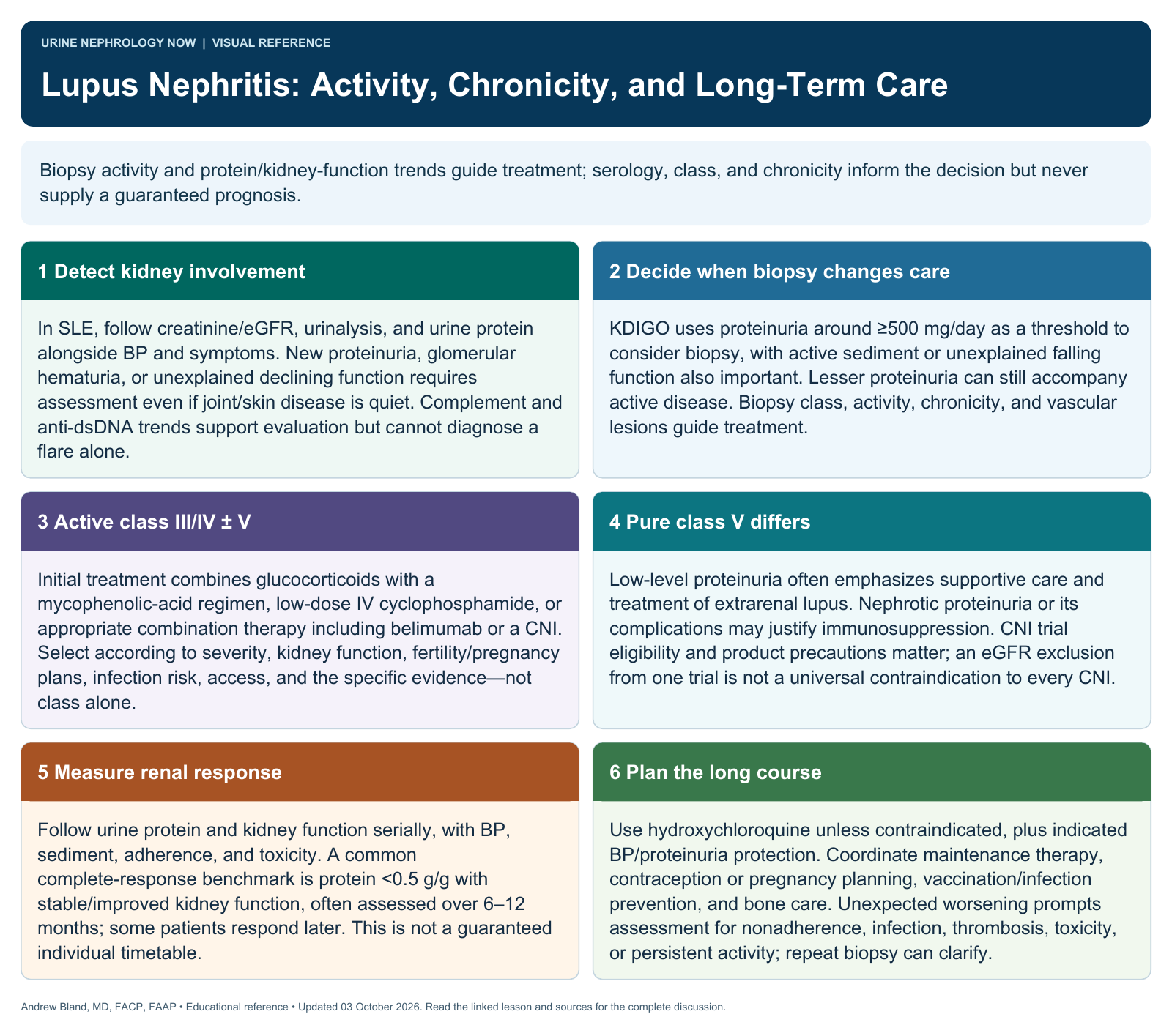
Biopsy activity and protein/kidney-function trends guide treatment; serology, class, and chronicity inform the decision but never supply a guaranteed prognosis.
Text version
Detect kidney involvement
In SLE, follow creatinine/eGFR, urinalysis, and urine protein alongside BP and symptoms. New proteinuria, glomerular hematuria, or unexplained declining function requires assessment even if joint/skin disease is quiet. Complement and anti-dsDNA trends support evaluation but cannot diagnose a flare alone.
Decide when biopsy changes care
KDIGO uses proteinuria around ≥500 mg/day as a threshold to consider biopsy, with active sediment or unexplained falling function also important. Lesser proteinuria can still accompany active disease. Biopsy class, activity, chronicity, and vascular lesions guide treatment.
Active class III/IV ± V
Initial treatment combines glucocorticoids with a mycophenolic-acid regimen, low-dose IV cyclophosphamide, or appropriate combination therapy including belimumab or a CNI. Select according to severity, kidney function, fertility/pregnancy plans, infection risk, access, and the specific evidence—not class alone.
Pure class V differs
Low-level proteinuria often emphasizes supportive care and treatment of extrarenal lupus. Nephrotic proteinuria or its complications may justify immunosuppression. CNI trial eligibility and product precautions matter; an eGFR exclusion from one trial is not a universal contraindication to every CNI.
Measure renal response
Follow urine protein and kidney function serially, with BP, sediment, adherence, and toxicity. A common complete-response benchmark is protein <0.5 g/g with stable/improved kidney function, often assessed over 6–12 months; some patients respond later. This is not a guaranteed individual timetable.
Plan the long course
Use hydroxychloroquine unless contraindicated, plus indicated BP/proteinuria protection. Coordinate maintenance therapy, contraception or pregnancy planning, vaccination/infection prevention, and bone care. Unexpected worsening prompts assessment for nonadherence, infection, thrombosis, toxicity, or persistent activity; repeat biopsy can clarify.