Visual summary
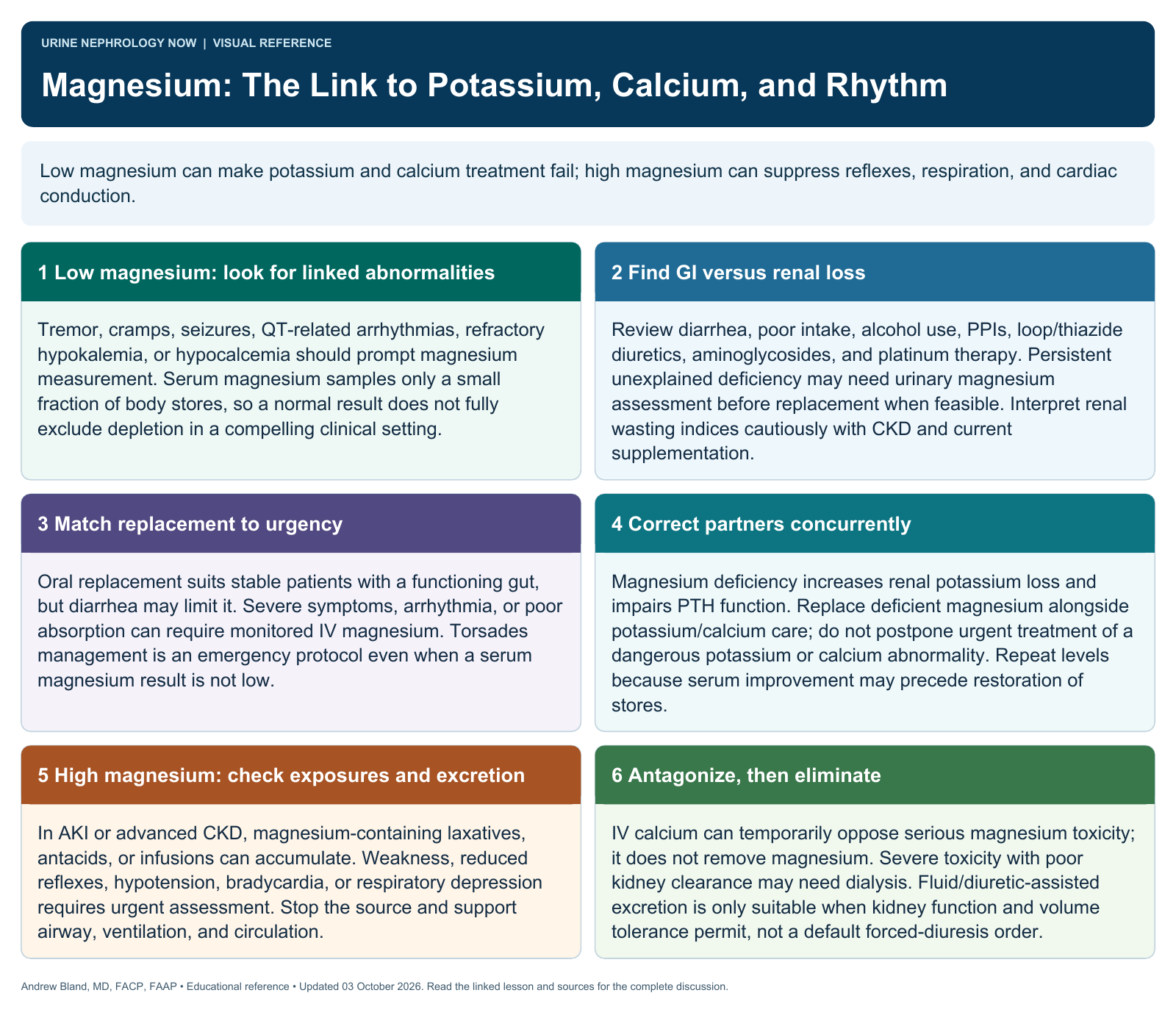
Check magnesium when potassium or calcium behaves unexpectedly, and remember that reduced kidney clearance can turn supplementation into toxicity.
Text version
A small circulating fraction
Magnesium supports enzymatic, neuromuscular, and electrical function; most body magnesium is outside plasma. The kidneys regulate excretion, while intestinal absorption and medication exposures influence both deficiency and excess.
Recognize opposite syndromes
Deficiency may cause tremor, cramps, seizures, arrhythmia, refractory hypokalemia, or hypocalcemia. Excess may cause weakness, reduced reflexes, hypotension, bradycardia, and respiratory depression, particularly when kidney excretion is impaired.
Find the source
Review diarrhea, nutrition, alcohol, diuretics, PPIs, nephrotoxins, laxatives, antacids, and intravenous exposure. Check potassium, calcium, kidney function, and ECG when indicated; urinary magnesium testing can help investigate unexplained losses.
Replace deficiency appropriately
Select oral or intravenous replacement according to symptoms, severity, absorption, and kidney function. Address ongoing losses and related potassium or calcium abnormalities. Repeated monitoring is necessary because serum normalization may precede replenishment of stores.
Treat symptomatic excess
Stop magnesium sources and support circulation and ventilation. Intravenous calcium can counter selected acute effects while elimination is addressed. Severe toxicity with impaired excretion may require dialysis and urgent specialist involvement.
Avoid one-number reassurance
A normal serum concentration does not fully measure body stores, and symptoms do not map perfectly to fixed thresholds. Replacement and toxicity protocols must account for renal function, route, formulation, and the speed of change.
Continue learning
This graphic summarizes a topic. The full educational pages provide the broader discussion and references.