Visual summary
Low magnesium can make potassium and calcium treatment fail; high magnesium can suppress reflexes, respiration, and cardiac conduction.
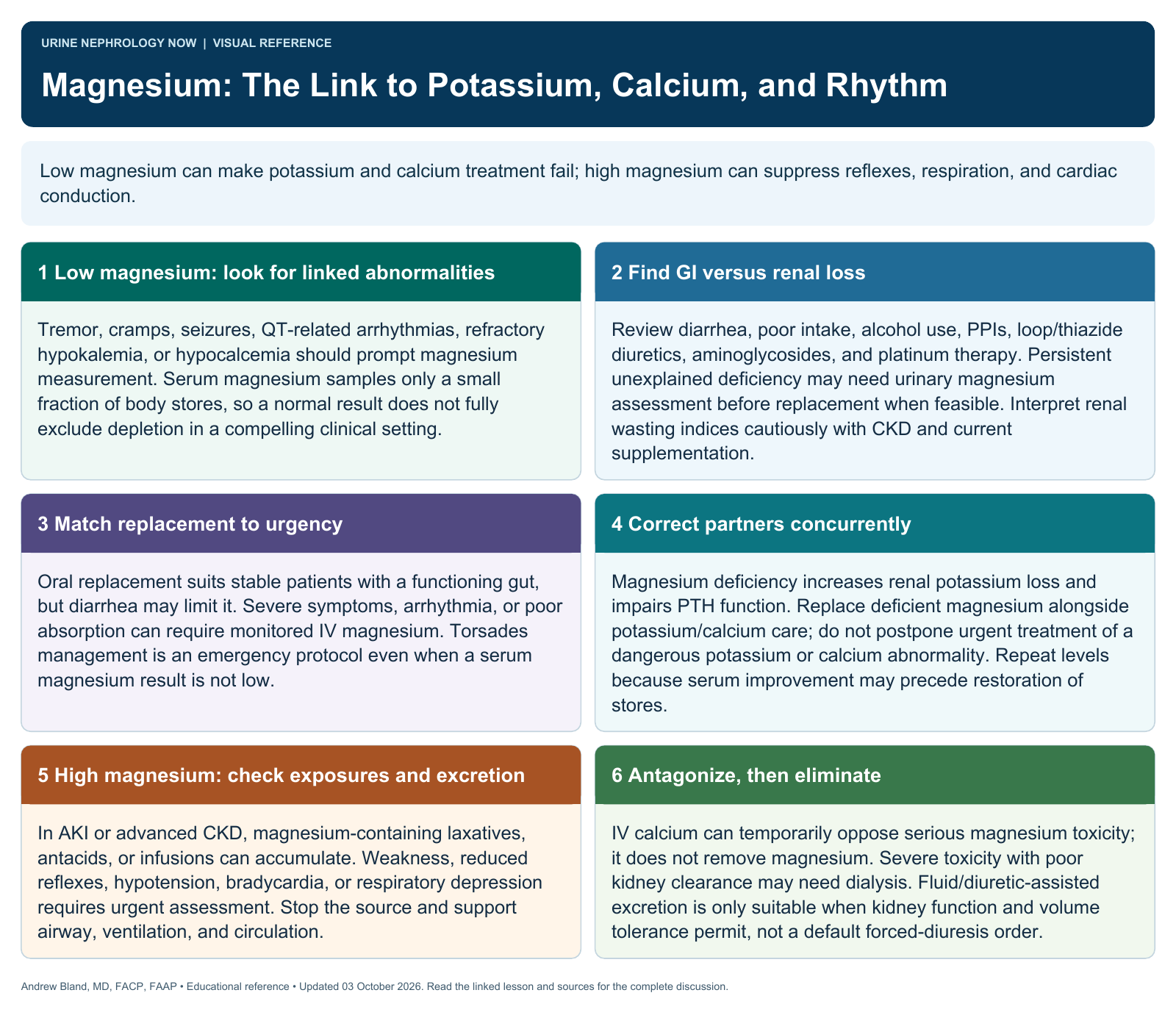
Text version
Low magnesium: look for linked abnormalities
Tremor, cramps, seizures, QT-related arrhythmias, refractory hypokalemia, or hypocalcemia should prompt magnesium measurement. Serum magnesium samples only a small fraction of body stores, so a normal result does not fully exclude depletion in a compelling clinical setting.
Find GI versus renal loss
Review diarrhea, poor intake, alcohol use, PPIs, loop/thiazide diuretics, aminoglycosides, and platinum therapy. Persistent unexplained deficiency may need urinary magnesium assessment before replacement when feasible. Interpret renal wasting indices cautiously with CKD and current supplementation.
Match replacement to urgency
Oral replacement suits stable patients with a functioning gut, but diarrhea may limit it. Severe symptoms, arrhythmia, or poor absorption can require monitored IV magnesium. Torsades management is an emergency protocol even when a serum magnesium result is not low.
Correct partners concurrently
Magnesium deficiency increases renal potassium loss and impairs PTH function. Replace deficient magnesium alongside potassium/calcium care; do not postpone urgent treatment of a dangerous potassium or calcium abnormality. Repeat levels because serum improvement may precede restoration of stores.
High magnesium: check exposures and excretion
In AKI or advanced CKD, magnesium-containing laxatives, antacids, or infusions can accumulate. Weakness, reduced reflexes, hypotension, bradycardia, or respiratory depression requires urgent assessment. Stop the source and support airway, ventilation, and circulation.
Antagonize, then eliminate
IV calcium can temporarily oppose serious magnesium toxicity; it does not remove magnesium. Severe toxicity with poor kidney clearance may need dialysis. Fluid/diuretic-assisted excretion is only suitable when kidney function and volume tolerance permit, not a default forced-diuresis order.