Visual summary
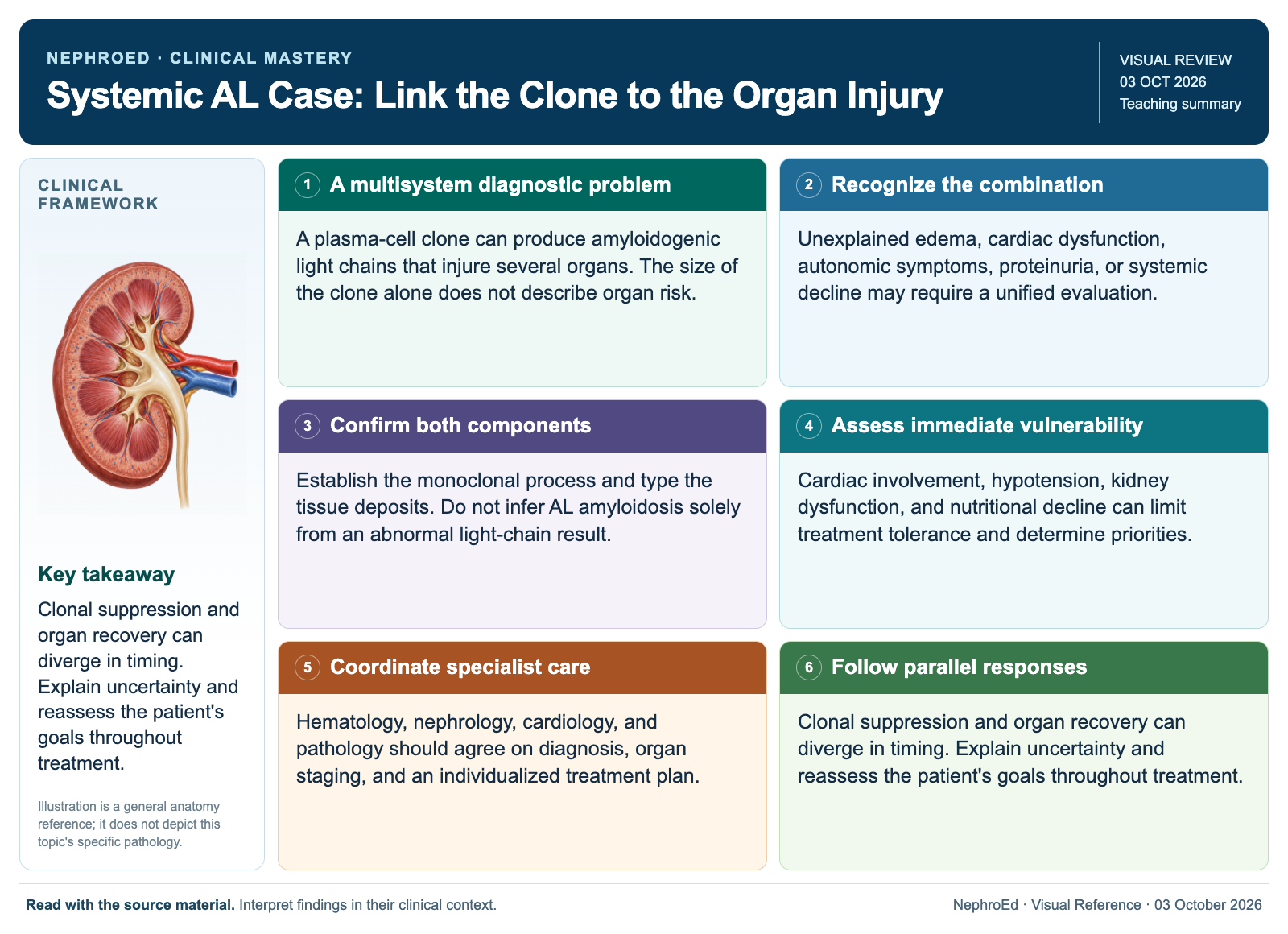
Clonal suppression and organ recovery can diverge in timing. Explain uncertainty and reassess the patient's goals throughout treatment.
Text version
A multisystem diagnostic problem
A plasma-cell clone can produce amyloidogenic light chains that injure several organs. The size of the clone alone does not describe organ risk.
Recognize the combination
Unexplained edema, cardiac dysfunction, autonomic symptoms, proteinuria, or systemic decline may require a unified evaluation.
Confirm both components
Establish the monoclonal process and type the tissue deposits. Do not infer AL amyloidosis solely from an abnormal light-chain result.
Assess immediate vulnerability
Cardiac involvement, hypotension, kidney dysfunction, and nutritional decline can limit treatment tolerance and determine priorities.
Coordinate specialist care
Hematology, nephrology, cardiology, and pathology should agree on diagnosis, organ staging, and an individualized treatment plan.
Follow parallel responses
Clonal suppression and organ recovery can diverge in timing. Explain uncertainty and reassess the patient's goals throughout treatment.
Continue learning
This graphic summarizes a topic. The full educational pages provide the broader discussion and references.