Visual summary
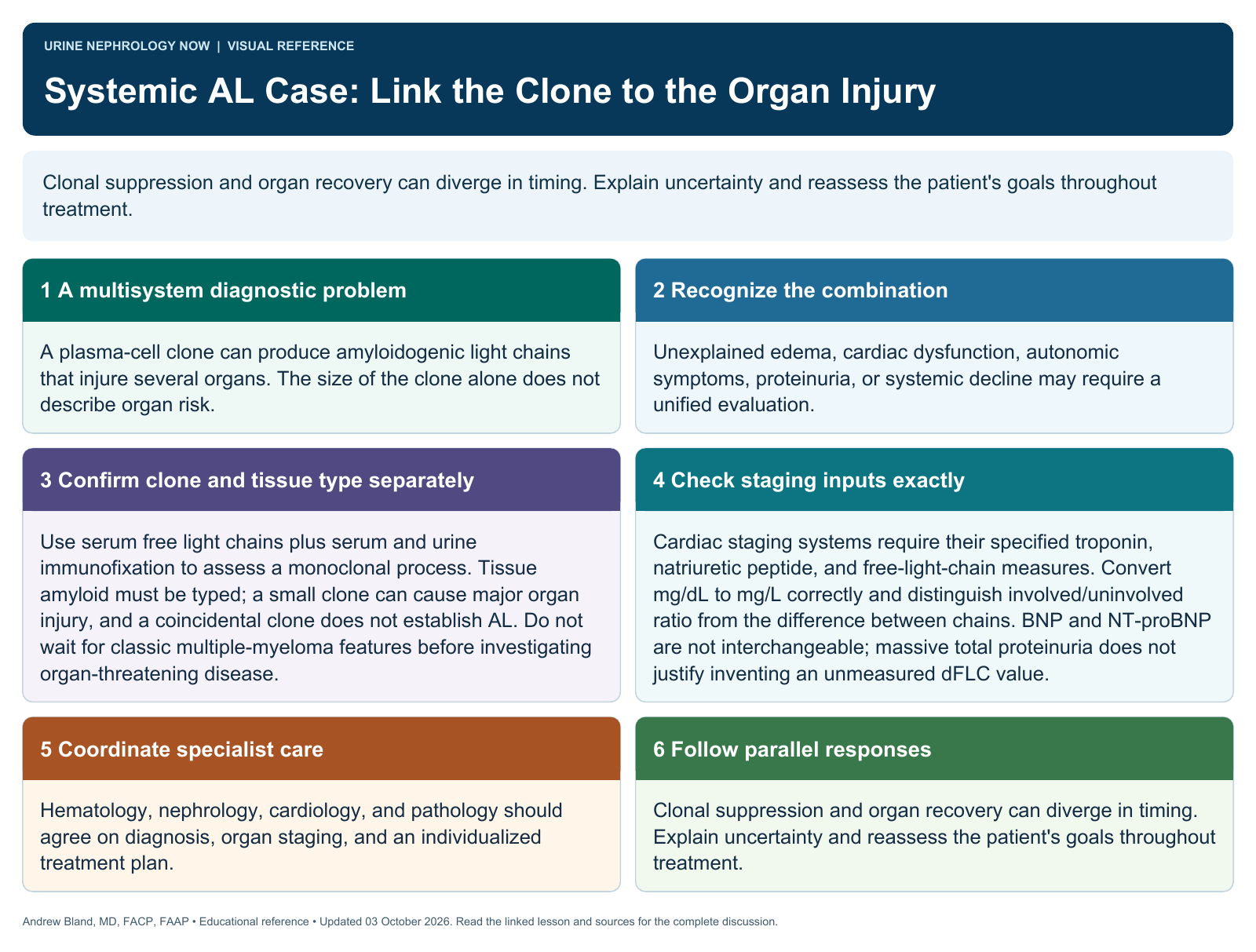
Clonal suppression and organ recovery can diverge in timing. Explain uncertainty and reassess the patient's goals throughout treatment.
Text version
A multisystem diagnostic problem
A plasma-cell clone can produce amyloidogenic light chains that injure several organs. The size of the clone alone does not describe organ risk.
Recognize the combination
Unexplained edema, cardiac dysfunction, autonomic symptoms, proteinuria, or systemic decline may require a unified evaluation.
Confirm clone and tissue type separately
Use serum free light chains plus serum and urine immunofixation to assess a monoclonal process. Tissue amyloid must be typed; a small clone can cause major organ injury, and a coincidental clone does not establish AL. Do not wait for classic multiple-myeloma features before investigating organ-threatening disease.
Check staging inputs exactly
Cardiac staging systems require their specified troponin, natriuretic peptide, and free-light-chain measures. Convert mg/dL to mg/L correctly and distinguish involved/uninvolved ratio from the difference between chains. BNP and NT-proBNP are not interchangeable; massive total proteinuria does not justify inventing an unmeasured dFLC value.
Coordinate specialist care
Hematology, nephrology, cardiology, and pathology should agree on diagnosis, organ staging, and an individualized treatment plan.
Follow parallel responses
Clonal suppression and organ recovery can diverge in timing. Explain uncertainty and reassess the patient's goals throughout treatment.