Visual summary
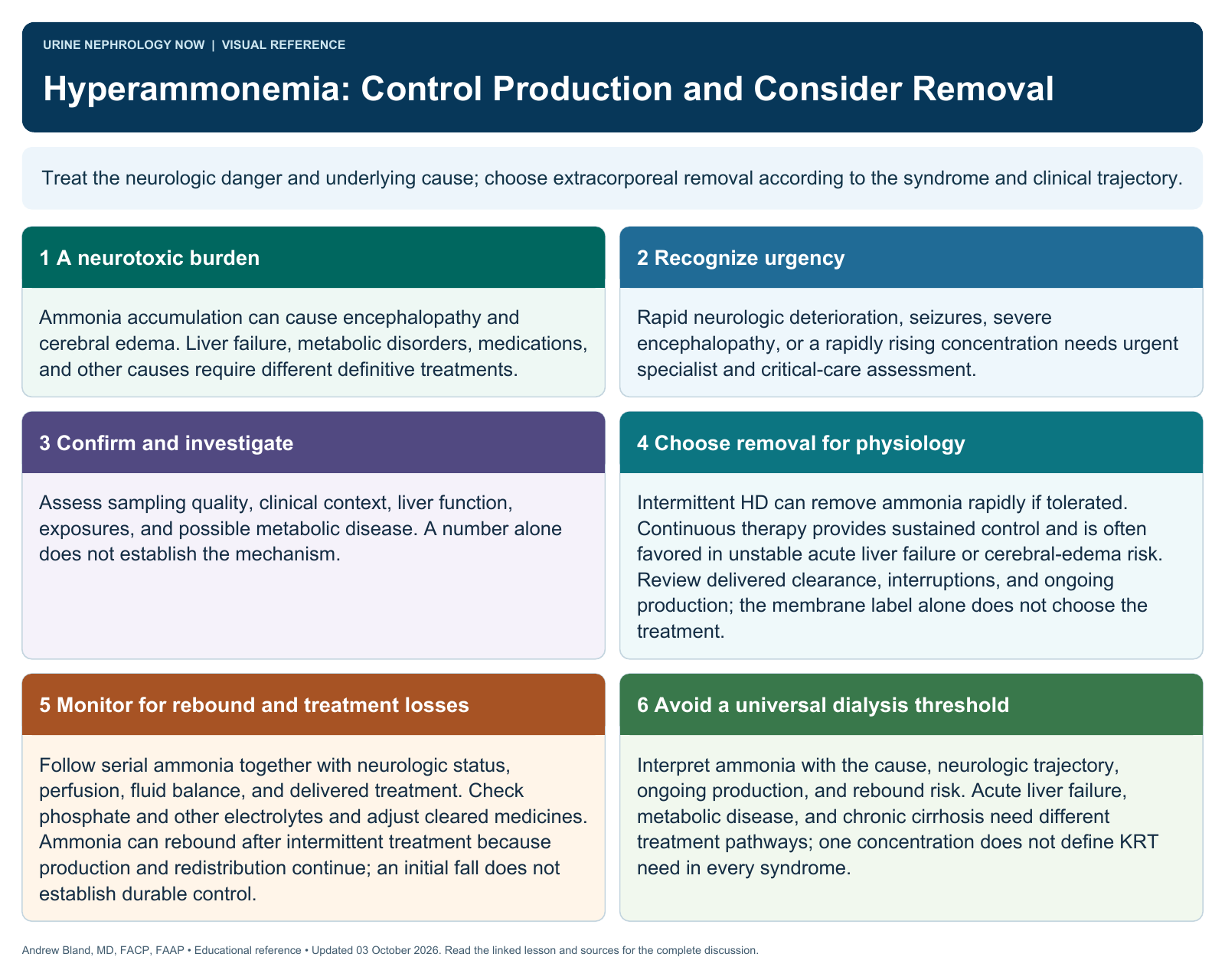
Treat the neurologic danger and underlying cause; choose extracorporeal removal according to the syndrome and clinical trajectory.
Text version
A neurotoxic burden
Ammonia accumulation can cause encephalopathy and cerebral edema. Liver failure, metabolic disorders, medications, and other causes require different definitive treatments.
Recognize urgency
Rapid neurologic deterioration, seizures, severe encephalopathy, or a rapidly rising concentration needs urgent specialist and critical-care assessment.
Confirm and investigate
Assess sampling quality, clinical context, liver function, exposures, and possible metabolic disease. A number alone does not establish the mechanism.
Treat the source and remove load
Therapies that reduce generation or enhance elimination may be needed alongside extracorporeal removal. Coordinate disease-specific expertise early.
Anticipate rebound
Distribution between compartments and continued production can cause recurrence after initial clearance. Modality and duration should follow the clinical trajectory.
Avoid a universal dialysis threshold
Interpret ammonia with the cause, neurologic trajectory, ongoing production, and rebound risk. Acute liver failure, metabolic disease, and chronic cirrhosis need different treatment pathways; one concentration does not define KRT need in every syndrome.
Continue learning
This graphic summarizes a topic. The full educational pages provide the broader discussion and references.