Visual summary
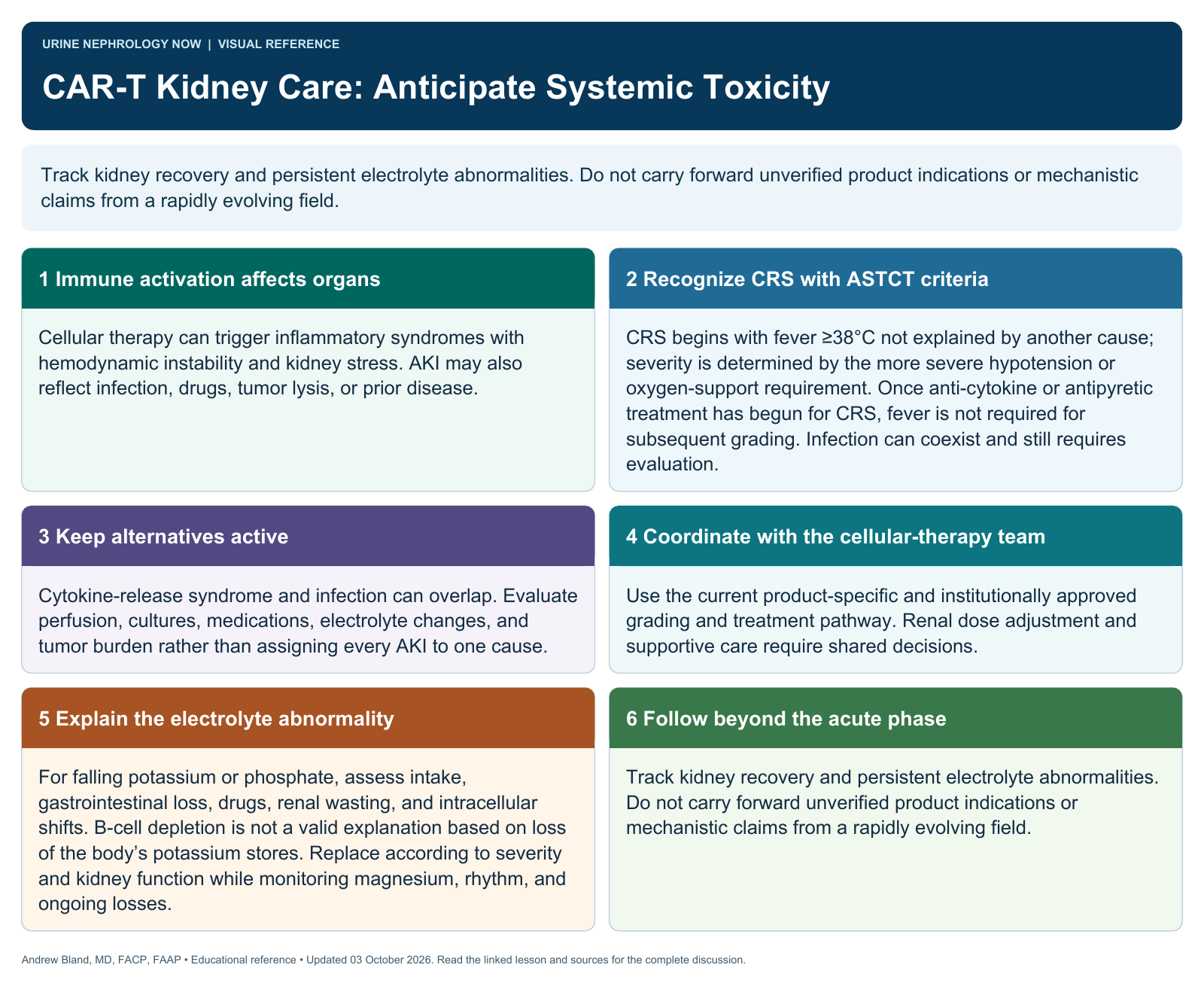
Track kidney recovery and persistent electrolyte abnormalities. Do not carry forward unverified product indications or mechanistic claims from a rapidly evolving field.
Text version
Immune activation affects organs
Cellular therapy can trigger inflammatory syndromes with hemodynamic instability and kidney stress. AKI may also reflect infection, drugs, tumor lysis, or prior disease.
Recognize the evolving syndrome
Fever, hypotension, hypoxemia, neurologic changes, and falling urine output require prompt coordinated assessment after therapy.
Keep alternatives active
Cytokine-release syndrome and infection can overlap. Evaluate perfusion, cultures, medications, electrolyte changes, and tumor burden rather than assigning every AKI to one cause.
Coordinate with the cellular-therapy team
Use the current product-specific and institutionally approved grading and treatment pathway. Renal dose adjustment and supportive care require shared decisions.
Monitor fluid and solutes
Capillary leak, resuscitation, ongoing losses, and reduced clearance can change the fluid and electrolyte plan quickly. Reassess after each major intervention.
Follow beyond the acute phase
Track kidney recovery and persistent electrolyte abnormalities. Do not carry forward unverified product indications or mechanistic claims from a rapidly evolving field.
Continue learning
This graphic summarizes a topic. The full educational pages provide the broader discussion and references.