Visual summary
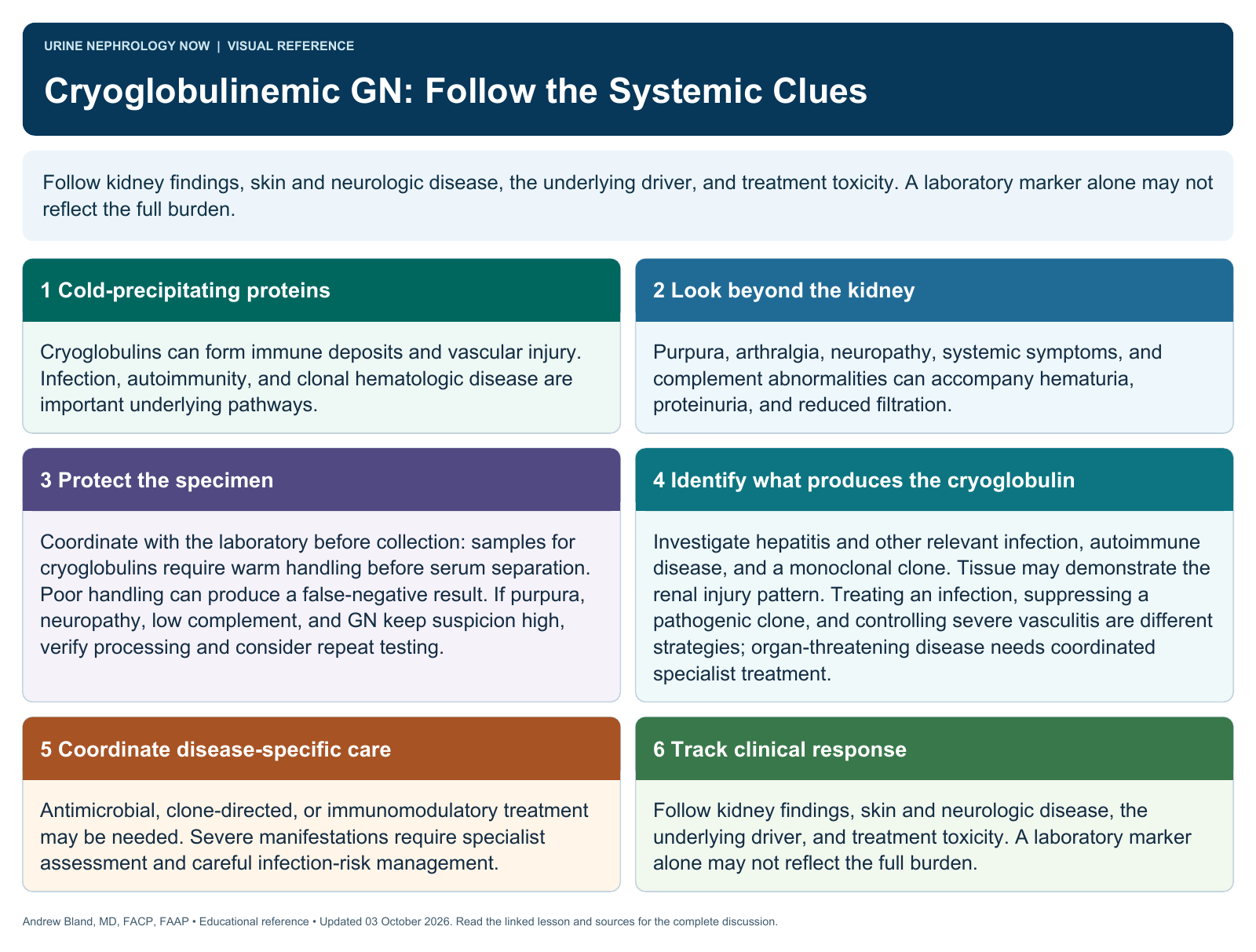
Follow kidney findings, skin and neurologic disease, the underlying driver, and treatment toxicity. A laboratory marker alone may not reflect the full burden.
Text version
Cold-precipitating proteins
Cryoglobulins can form immune deposits and vascular injury. Infection, autoimmunity, and clonal hematologic disease are important underlying pathways.
Look beyond the kidney
Purpura, arthralgia, neuropathy, systemic symptoms, and complement abnormalities can accompany hematuria, proteinuria, and reduced filtration.
Handle testing correctly
Cryoglobulin testing is sensitive to collection and transport conditions. A negative result may require reconsideration when clinical suspicion remains strong.
Define the driver
Evaluate infection, monoclonal proteins, autoimmune disease, and biopsy findings as appropriate. Treatment depends on cause and organ threat.
Coordinate disease-specific care
Antimicrobial, clone-directed, or immunomodulatory treatment may be needed. Severe manifestations require specialist assessment and careful infection-risk management.
Track clinical response
Follow kidney findings, skin and neurologic disease, the underlying driver, and treatment toxicity. A laboratory marker alone may not reflect the full burden.
Continue learning
This graphic summarizes a topic. The full educational pages provide the broader discussion and references.