Visual summary
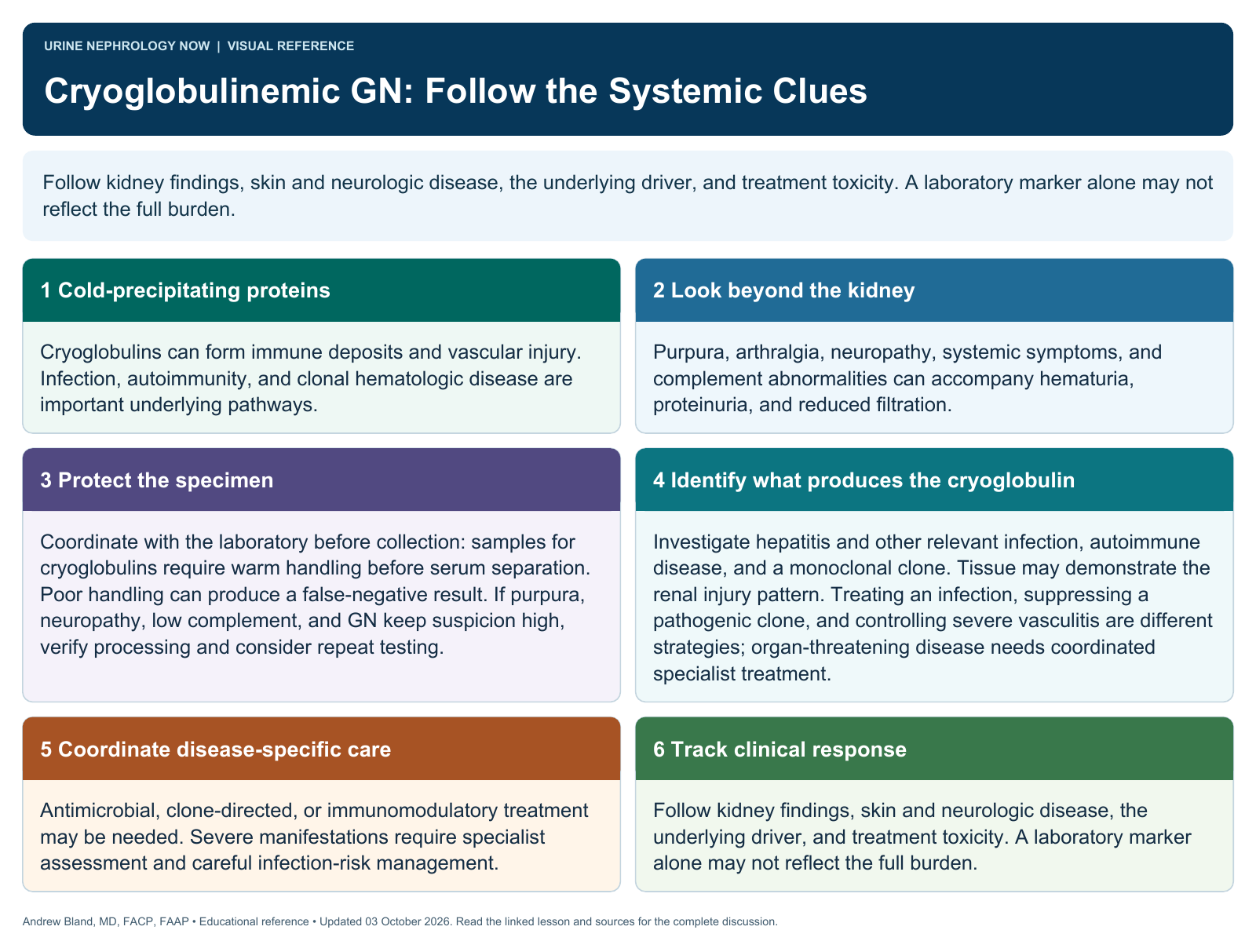
Follow kidney findings, skin and neurologic disease, the underlying driver, and treatment toxicity. A laboratory marker alone may not reflect the full burden.
Text version
Cold-precipitating proteins
Cryoglobulins can form immune deposits and vascular injury. Infection, autoimmunity, and clonal hematologic disease are important underlying pathways.
Look beyond the kidney
Purpura, arthralgia, neuropathy, systemic symptoms, and complement abnormalities can accompany hematuria, proteinuria, and reduced filtration.
Protect the specimen
Coordinate with the laboratory before collection: samples for cryoglobulins require warm handling before serum separation. Poor handling can produce a false-negative result. If purpura, neuropathy, low complement, and GN keep suspicion high, verify processing and consider repeat testing.
Identify what produces the cryoglobulin
Investigate hepatitis and other relevant infection, autoimmune disease, and a monoclonal clone. Tissue may demonstrate the renal injury pattern. Treating an infection, suppressing a pathogenic clone, and controlling severe vasculitis are different strategies; organ-threatening disease needs coordinated specialist treatment.
Coordinate disease-specific care
Antimicrobial, clone-directed, or immunomodulatory treatment may be needed. Severe manifestations require specialist assessment and careful infection-risk management.
Track clinical response
Follow kidney findings, skin and neurologic disease, the underlying driver, and treatment toxicity. A laboratory marker alone may not reflect the full burden.