Visual summary
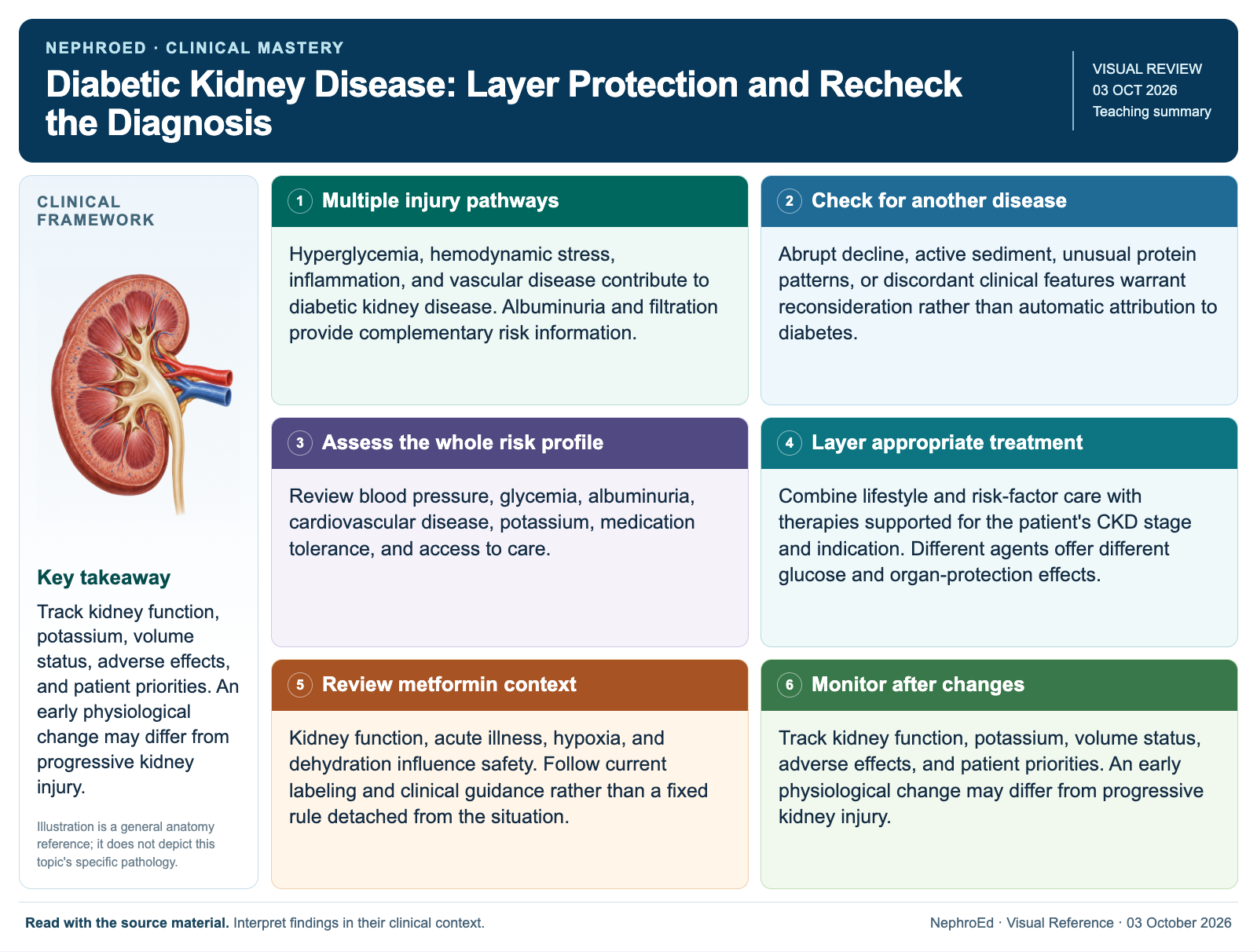
Track kidney function, potassium, volume status, adverse effects, and patient priorities. An early physiological change may differ from progressive kidney injury.
Text version
Multiple injury pathways
Hyperglycemia, hemodynamic stress, inflammation, and vascular disease contribute to diabetic kidney disease. Albuminuria and filtration provide complementary risk information.
Check for another disease
Abrupt decline, active sediment, unusual protein patterns, or discordant clinical features warrant reconsideration rather than automatic attribution to diabetes.
Assess the whole risk profile
Review blood pressure, glycemia, albuminuria, cardiovascular disease, potassium, medication tolerance, and access to care.
Layer appropriate treatment
Combine lifestyle and risk-factor care with therapies supported for the patient's CKD stage and indication. Different agents offer different glucose and organ-protection effects.
Review metformin context
Kidney function, acute illness, hypoxia, and dehydration influence safety. Follow current labeling and clinical guidance rather than a fixed rule detached from the situation.
Monitor after changes
Track kidney function, potassium, volume status, adverse effects, and patient priorities. An early physiological change may differ from progressive kidney injury.
Continue learning
This graphic summarizes a topic. The full educational pages provide the broader discussion and references.