Visual summary
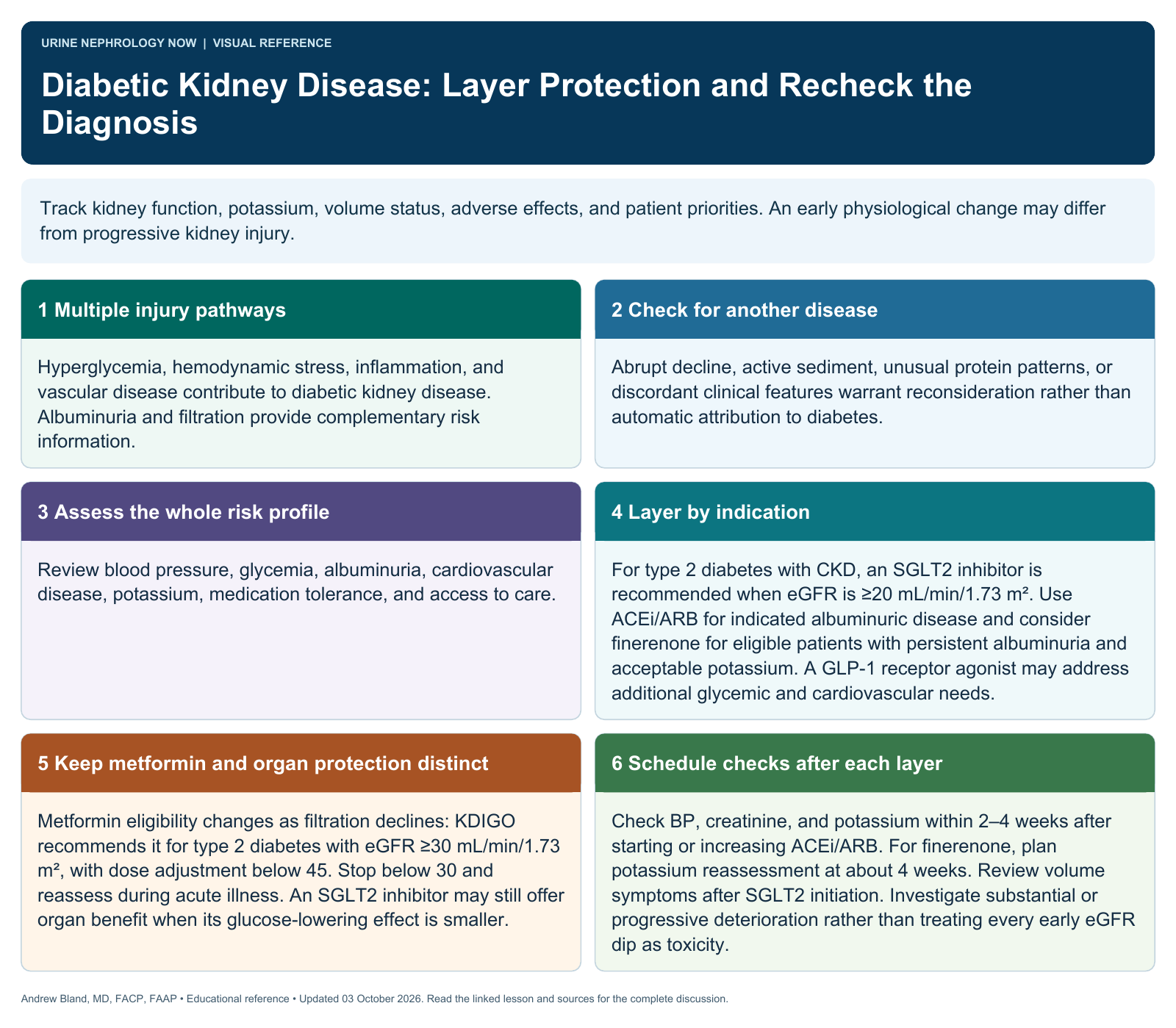
Track kidney function, potassium, volume status, adverse effects, and patient priorities. An early physiological change may differ from progressive kidney injury.
Text version
Multiple injury pathways
Hyperglycemia, hemodynamic stress, inflammation, and vascular disease contribute to diabetic kidney disease. Albuminuria and filtration provide complementary risk information.
Check for another disease
Abrupt decline, active sediment, unusual protein patterns, or discordant clinical features warrant reconsideration rather than automatic attribution to diabetes.
Assess the whole risk profile
Review blood pressure, glycemia, albuminuria, cardiovascular disease, potassium, medication tolerance, and access to care.
Layer by indication
For type 2 diabetes with CKD, an SGLT2 inhibitor is recommended when eGFR is ≥20 mL/min/1.73 m². Use ACEi/ARB for indicated albuminuric disease and consider finerenone for eligible patients with persistent albuminuria and acceptable potassium. A GLP-1 receptor agonist may address additional glycemic and cardiovascular needs.
Keep metformin and organ protection distinct
Metformin eligibility changes as filtration declines: KDIGO recommends it for type 2 diabetes with eGFR ≥30 mL/min/1.73 m², with dose adjustment below 45. Stop below 30 and reassess during acute illness. An SGLT2 inhibitor may still offer organ benefit when its glucose-lowering effect is smaller.
Schedule checks after each layer
Check BP, creatinine, and potassium within 2–4 weeks after starting or increasing ACEi/ARB. For finerenone, plan potassium reassessment at about 4 weeks. Review volume symptoms after SGLT2 initiation. Investigate substantial or progressive deterioration rather than treating every early eGFR dip as toxicity.