Visual summary
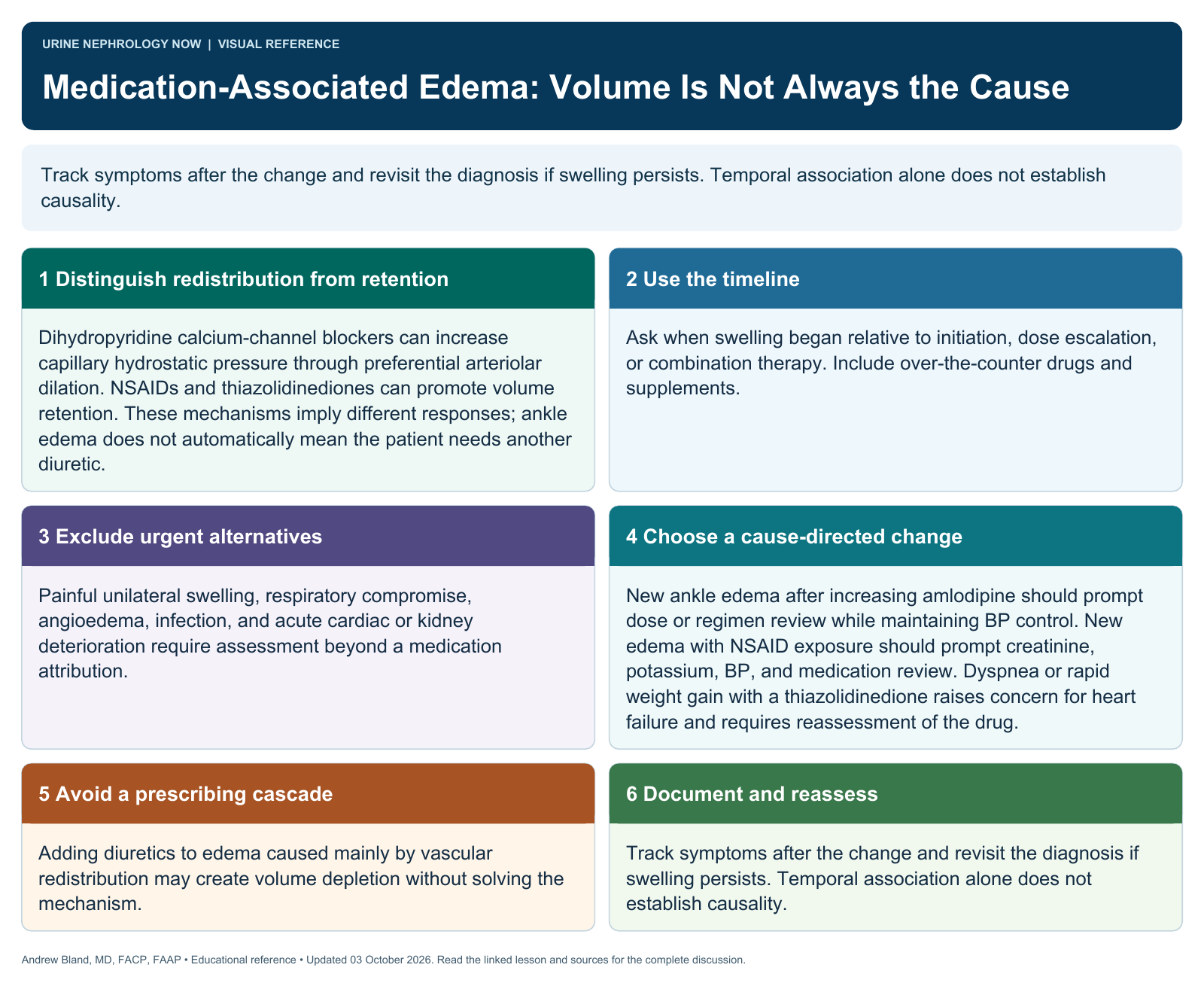
Track symptoms after the change and revisit the diagnosis if swelling persists. Temporal association alone does not establish causality.
Text version
Different drug mechanisms
Medications can promote sodium retention, alter arteriolar–venular balance, increase vascular permeability, or cause allergic swelling. These pathways do not respond identically.
Use the timeline
Ask when swelling began relative to initiation, dose escalation, or combination therapy. Include over-the-counter drugs and supplements.
Exclude urgent alternatives
Painful unilateral swelling, respiratory compromise, angioedema, infection, and acute cardiac or kidney deterioration require assessment beyond a medication attribution.
Review the treatment purpose
Consider dose reduction, substitution, or discontinuation when appropriate. Preserve the original therapeutic goal while reducing harm.
Avoid a prescribing cascade
Adding diuretics to edema caused mainly by vascular redistribution may create volume depletion without solving the mechanism.
Document and reassess
Track symptoms after the change and revisit the diagnosis if swelling persists. Temporal association alone does not establish causality.
Continue learning
This graphic summarizes a topic. The full educational pages provide the broader discussion and references.