Visual summary
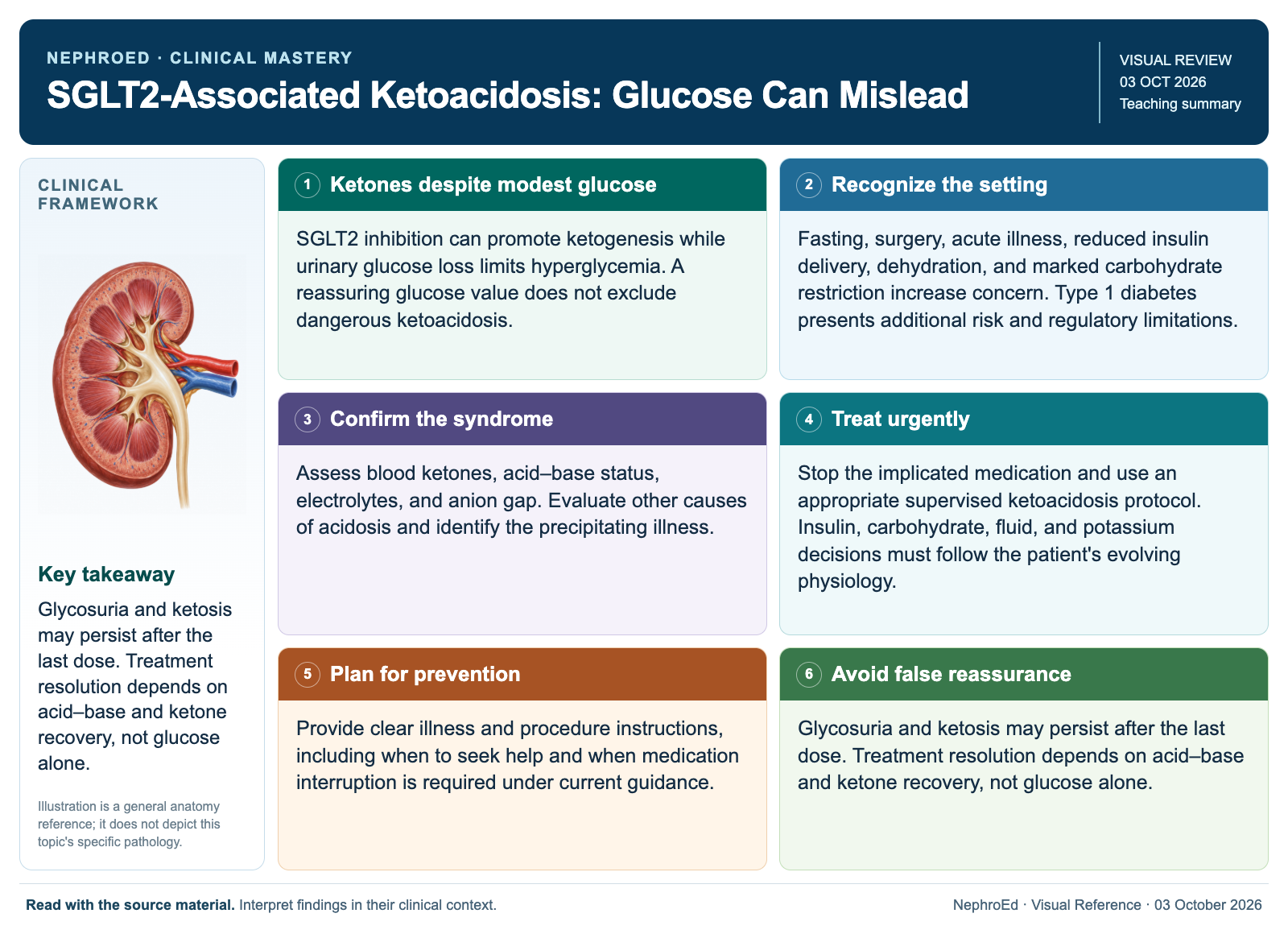
Glycosuria and ketosis may persist after the last dose. Treatment resolution depends on acid–base and ketone recovery, not glucose alone.
Text version
Ketones despite modest glucose
SGLT2 inhibition can promote ketogenesis while urinary glucose loss limits hyperglycemia. A reassuring glucose value does not exclude dangerous ketoacidosis.
Recognize the setting
Fasting, surgery, acute illness, reduced insulin delivery, dehydration, and marked carbohydrate restriction increase concern. Type 1 diabetes presents additional risk and regulatory limitations.
Confirm the syndrome
Assess blood ketones, acid–base status, electrolytes, and anion gap. Evaluate other causes of acidosis and identify the precipitating illness.
Treat urgently
Stop the implicated medication and use an appropriate supervised ketoacidosis protocol. Insulin, carbohydrate, fluid, and potassium decisions must follow the patient's evolving physiology.
Plan for prevention
Provide clear illness and procedure instructions, including when to seek help and when medication interruption is required under current guidance.
Avoid false reassurance
Glycosuria and ketosis may persist after the last dose. Treatment resolution depends on acid–base and ketone recovery, not glucose alone.
Continue learning
This graphic summarizes a topic. The full educational pages provide the broader discussion and references.