Visual summary
Glycosuria and ketosis may persist after the last dose. Treatment resolution depends on acid–base and ketone recovery, not glucose alone.
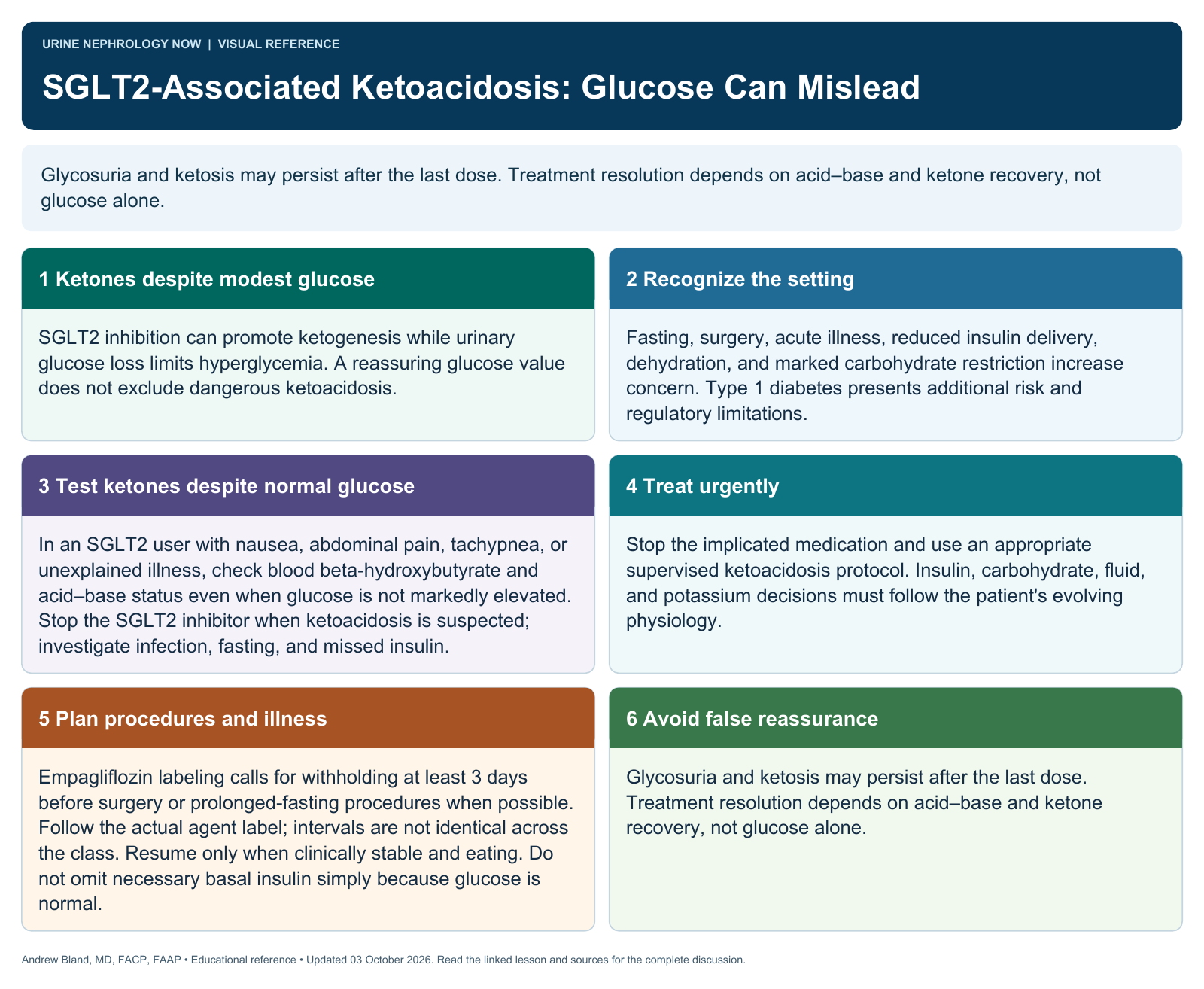
Text version
Ketones despite modest glucose
SGLT2 inhibition can promote ketogenesis while urinary glucose loss limits hyperglycemia. A reassuring glucose value does not exclude dangerous ketoacidosis.
Recognize the setting
Fasting, surgery, acute illness, reduced insulin delivery, dehydration, and marked carbohydrate restriction increase concern. Type 1 diabetes presents additional risk and regulatory limitations.
Test ketones despite normal glucose
In an SGLT2 user with nausea, abdominal pain, tachypnea, or unexplained illness, check blood beta-hydroxybutyrate and acid–base status even when glucose is not markedly elevated. Stop the SGLT2 inhibitor when ketoacidosis is suspected; investigate infection, fasting, and missed insulin.
Treat urgently
Stop the implicated medication and use an appropriate supervised ketoacidosis protocol. Insulin, carbohydrate, fluid, and potassium decisions must follow the patient's evolving physiology.
Plan procedures and illness
Empagliflozin labeling calls for withholding at least 3 days before surgery or prolonged-fasting procedures when possible. Follow the actual agent label; intervals are not identical across the class. Resume only when clinically stable and eating. Do not omit necessary basal insulin simply because glucose is normal.
Avoid false reassurance
Glycosuria and ketosis may persist after the last dose. Treatment resolution depends on acid–base and ketone recovery, not glucose alone.