Visual summary
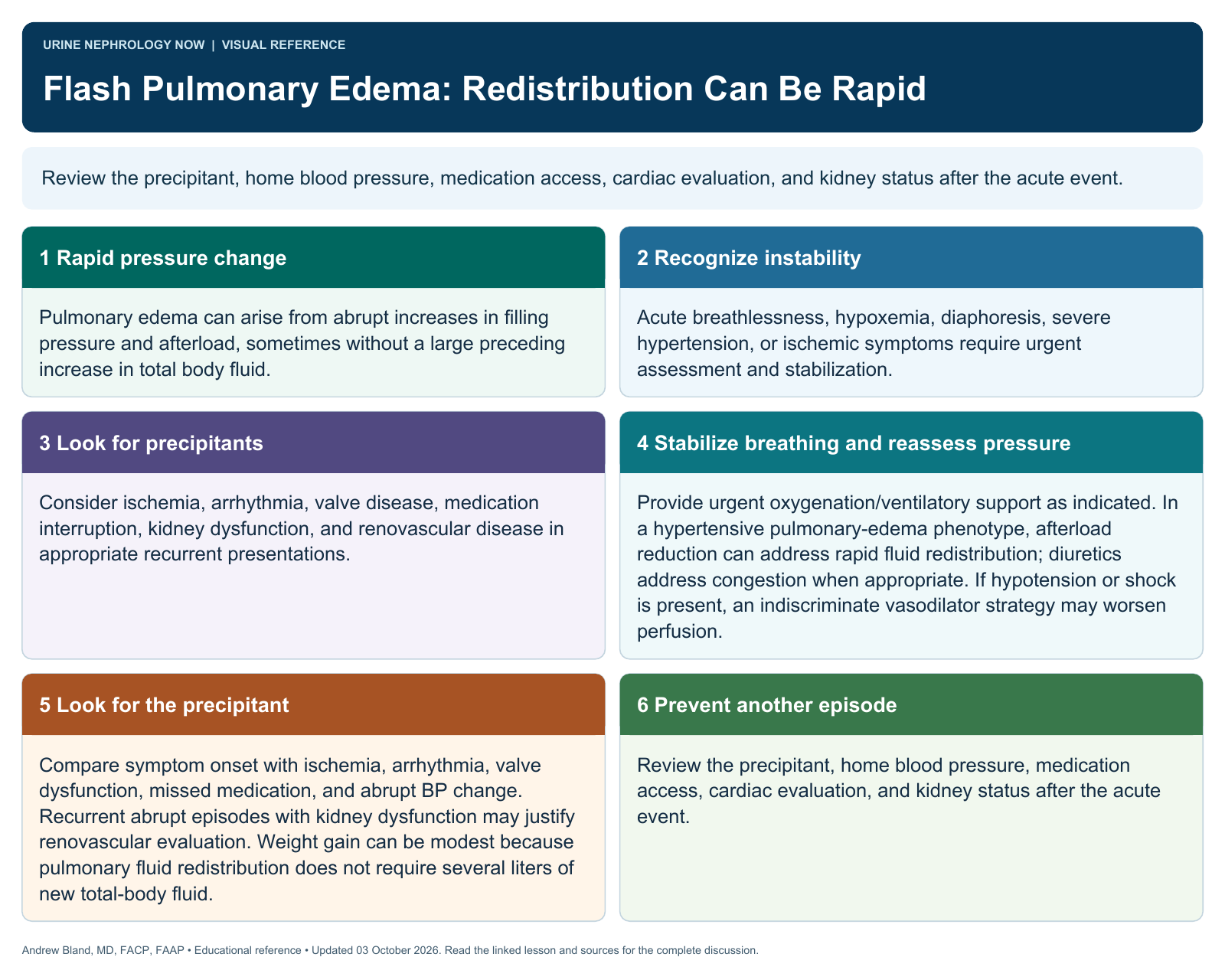
Review the precipitant, home blood pressure, medication access, cardiac evaluation, and kidney status after the acute event.
Text version
Rapid pressure change
Pulmonary edema can arise from abrupt increases in filling pressure and afterload, sometimes without a large preceding increase in total body fluid.
Recognize instability
Acute breathlessness, hypoxemia, diaphoresis, severe hypertension, or ischemic symptoms require urgent assessment and stabilization.
Look for precipitants
Consider ischemia, arrhythmia, valve disease, medication interruption, kidney dysfunction, and renovascular disease in appropriate recurrent presentations.
Stabilize breathing and reassess pressure
Provide urgent oxygenation/ventilatory support as indicated. In a hypertensive pulmonary-edema phenotype, afterload reduction can address rapid fluid redistribution; diuretics address congestion when appropriate. If hypotension or shock is present, an indiscriminate vasodilator strategy may worsen perfusion.
Look for the precipitant
Compare symptom onset with ischemia, arrhythmia, valve dysfunction, missed medication, and abrupt BP change. Recurrent abrupt episodes with kidney dysfunction may justify renovascular evaluation. Weight gain can be modest because pulmonary fluid redistribution does not require several liters of new total-body fluid.
Prevent another episode
Review the precipitant, home blood pressure, medication access, cardiac evaluation, and kidney status after the acute event.