Visual summary
Preserving function, comfort, autonomy, and time at home may guide decisions differently from pursuing a laboratory target alone.
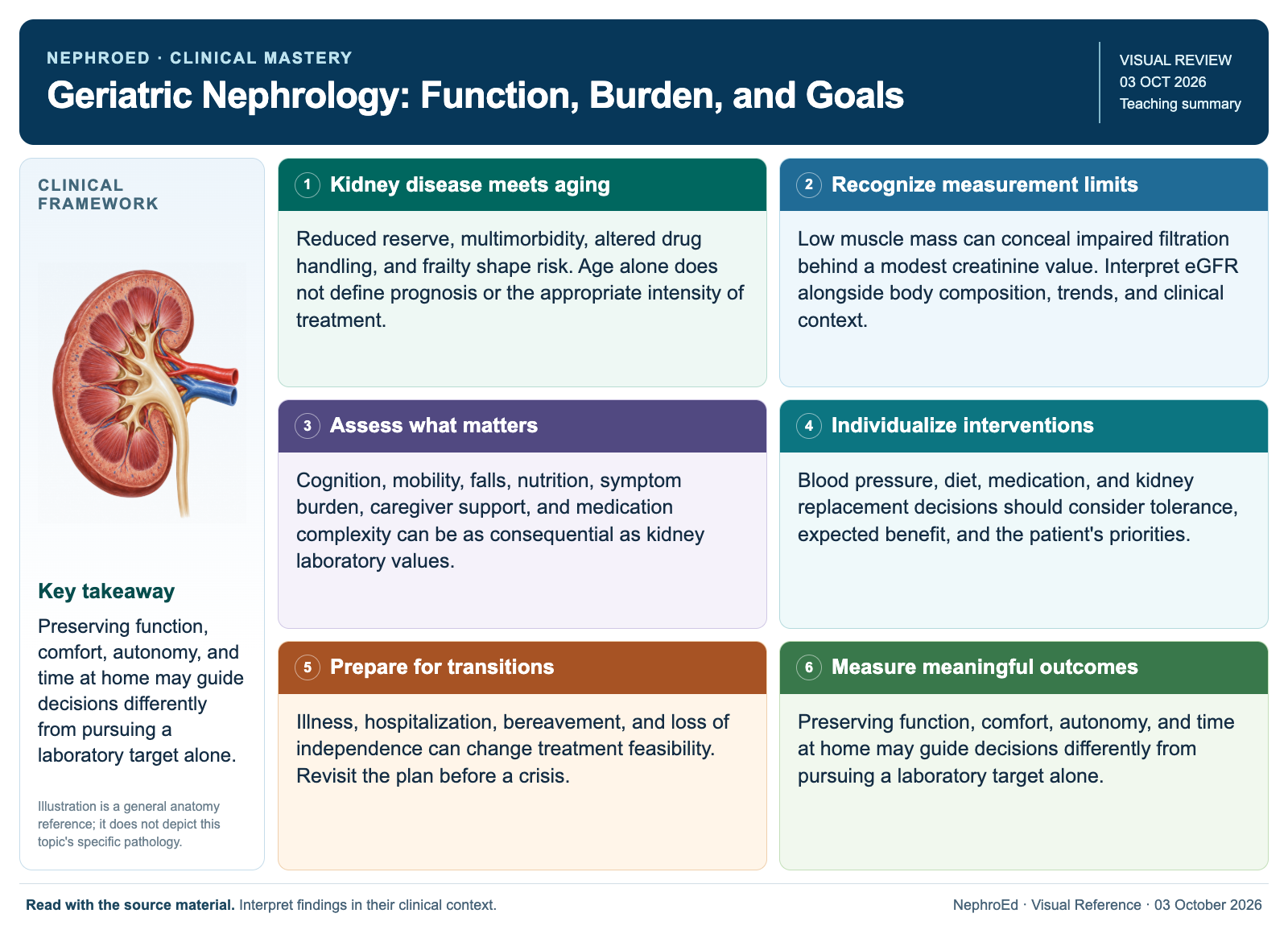
Text version
Kidney disease meets aging
Reduced reserve, multimorbidity, altered drug handling, and frailty shape risk. Age alone does not define prognosis or the appropriate intensity of treatment.
Recognize measurement limits
Low muscle mass can conceal impaired filtration behind a modest creatinine value. Interpret eGFR alongside body composition, trends, and clinical context.
Assess what matters
Cognition, mobility, falls, nutrition, symptom burden, caregiver support, and medication complexity can be as consequential as kidney laboratory values.
Individualize interventions
Blood pressure, diet, medication, and kidney replacement decisions should consider tolerance, expected benefit, and the patient's priorities.
Prepare for transitions
Illness, hospitalization, bereavement, and loss of independence can change treatment feasibility. Revisit the plan before a crisis.
Measure meaningful outcomes
Preserving function, comfort, autonomy, and time at home may guide decisions differently from pursuing a laboratory target alone.
Continue learning
This graphic summarizes a topic. The full educational pages provide the broader discussion and references.