Visual summary
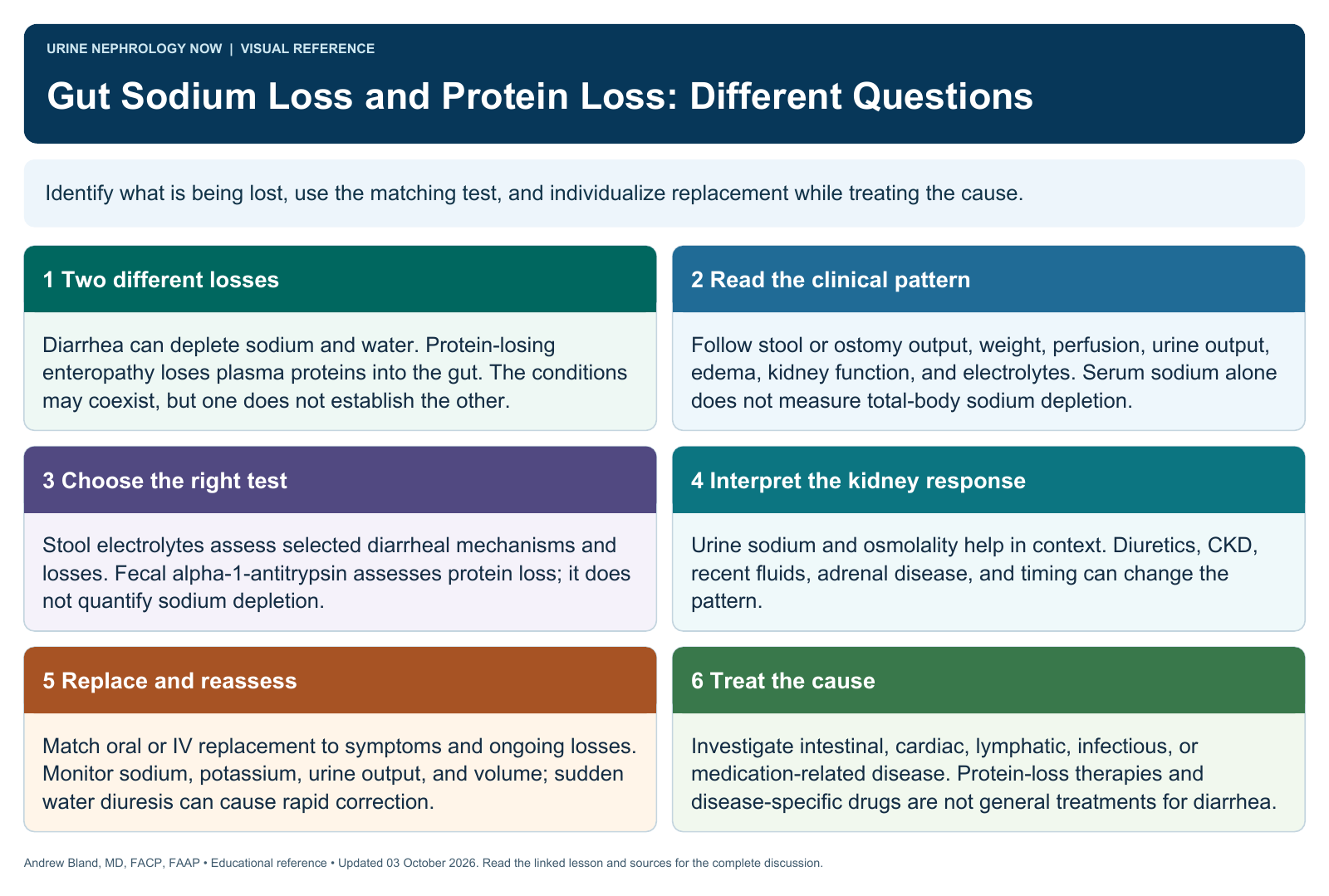
Identify what is being lost, use the matching test, and individualize replacement while treating the cause.
Text version
Two different losses
Diarrhea can deplete sodium and water. Protein-losing enteropathy loses plasma proteins into the gut. The conditions may coexist, but one does not establish the other.
Read the clinical pattern
Follow stool or ostomy output, weight, perfusion, urine output, edema, kidney function, and electrolytes. Serum sodium alone does not measure total-body sodium depletion.
Choose the right test
Stool electrolytes assess selected diarrheal mechanisms and losses. Fecal alpha-1-antitrypsin assesses protein loss; it does not quantify sodium depletion.
Interpret the kidney response
Urine sodium and osmolality help in context. Diuretics, CKD, recent fluids, adrenal disease, and timing can change the pattern.
Replace and reassess
Match oral or IV replacement to symptoms and ongoing losses. Monitor sodium, potassium, urine output, and volume; sudden water diuresis can cause rapid correction.
Treat the cause
Investigate intestinal, cardiac, lymphatic, infectious, or medication-related disease. Protein-loss therapies and disease-specific drugs are not general treatments for diarrhea.
Continue learning
This graphic summarizes a topic. The full educational pages provide the broader discussion and references.