Visual summary
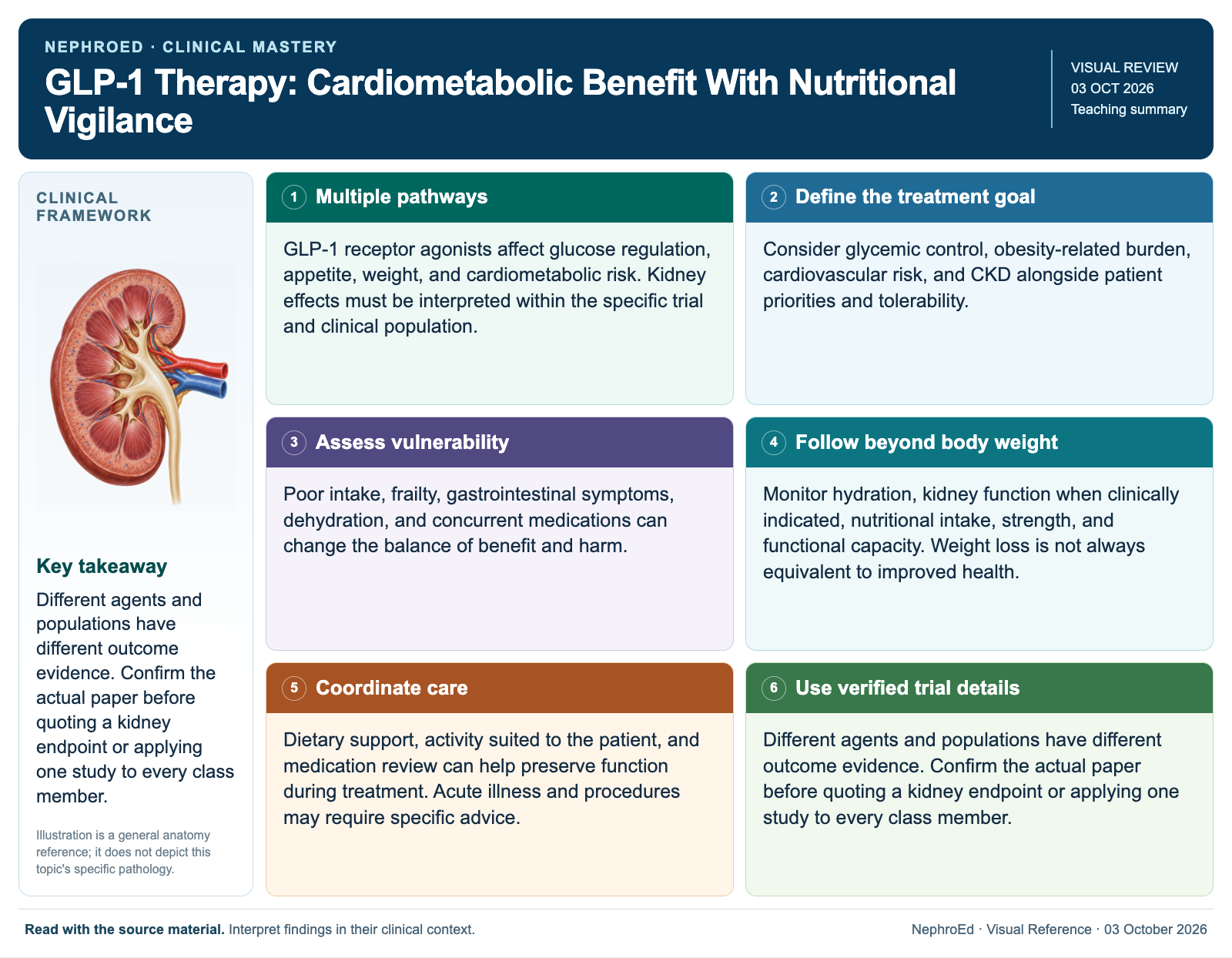
Different agents and populations have different outcome evidence. Confirm the actual paper before quoting a kidney endpoint or applying one study to every class member.
Text version
Multiple pathways
GLP-1 receptor agonists affect glucose regulation, appetite, weight, and cardiometabolic risk. Kidney effects must be interpreted within the specific trial and clinical population.
Define the treatment goal
Consider glycemic control, obesity-related burden, cardiovascular risk, and CKD alongside patient priorities and tolerability.
Assess vulnerability
Poor intake, frailty, gastrointestinal symptoms, dehydration, and concurrent medications can change the balance of benefit and harm.
Follow beyond body weight
Monitor hydration, kidney function when clinically indicated, nutritional intake, strength, and functional capacity. Weight loss is not always equivalent to improved health.
Coordinate care
Dietary support, activity suited to the patient, and medication review can help preserve function during treatment. Acute illness and procedures may require specific advice.
Use verified trial details
Different agents and populations have different outcome evidence. Confirm the actual paper before quoting a kidney endpoint or applying one study to every class member.
Continue learning
This graphic summarizes a topic. The full educational pages provide the broader discussion and references.