Visual summary
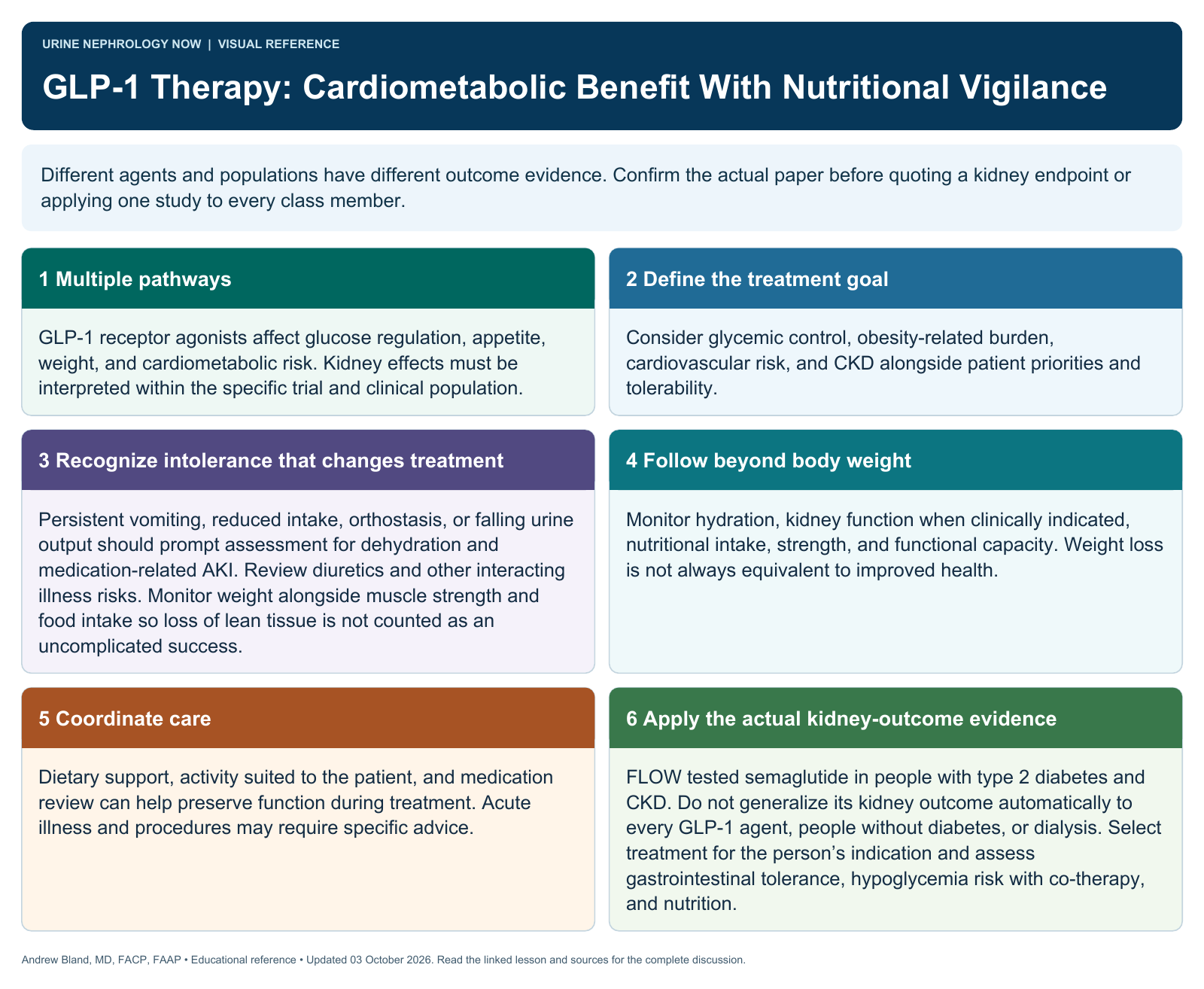
Different agents and populations have different outcome evidence. Confirm the actual paper before quoting a kidney endpoint or applying one study to every class member.
Text version
Multiple pathways
GLP-1 receptor agonists affect glucose regulation, appetite, weight, and cardiometabolic risk. Kidney effects must be interpreted within the specific trial and clinical population.
Define the treatment goal
Consider glycemic control, obesity-related burden, cardiovascular risk, and CKD alongside patient priorities and tolerability.
Recognize intolerance that changes treatment
Persistent vomiting, reduced intake, orthostasis, or falling urine output should prompt assessment for dehydration and medication-related AKI. Review diuretics and other interacting illness risks. Monitor weight alongside muscle strength and food intake so loss of lean tissue is not counted as an uncomplicated success.
Follow beyond body weight
Monitor hydration, kidney function when clinically indicated, nutritional intake, strength, and functional capacity. Weight loss is not always equivalent to improved health.
Coordinate care
Dietary support, activity suited to the patient, and medication review can help preserve function during treatment. Acute illness and procedures may require specific advice.
Apply the actual kidney-outcome evidence
FLOW tested semaglutide in people with type 2 diabetes and CKD. Do not generalize its kidney outcome automatically to every GLP-1 agent, people without diabetes, or dialysis. Select treatment for the person’s indication and assess gastrointestinal tolerance, hypoglycemia risk with co-therapy, and nutrition.