Visual summary
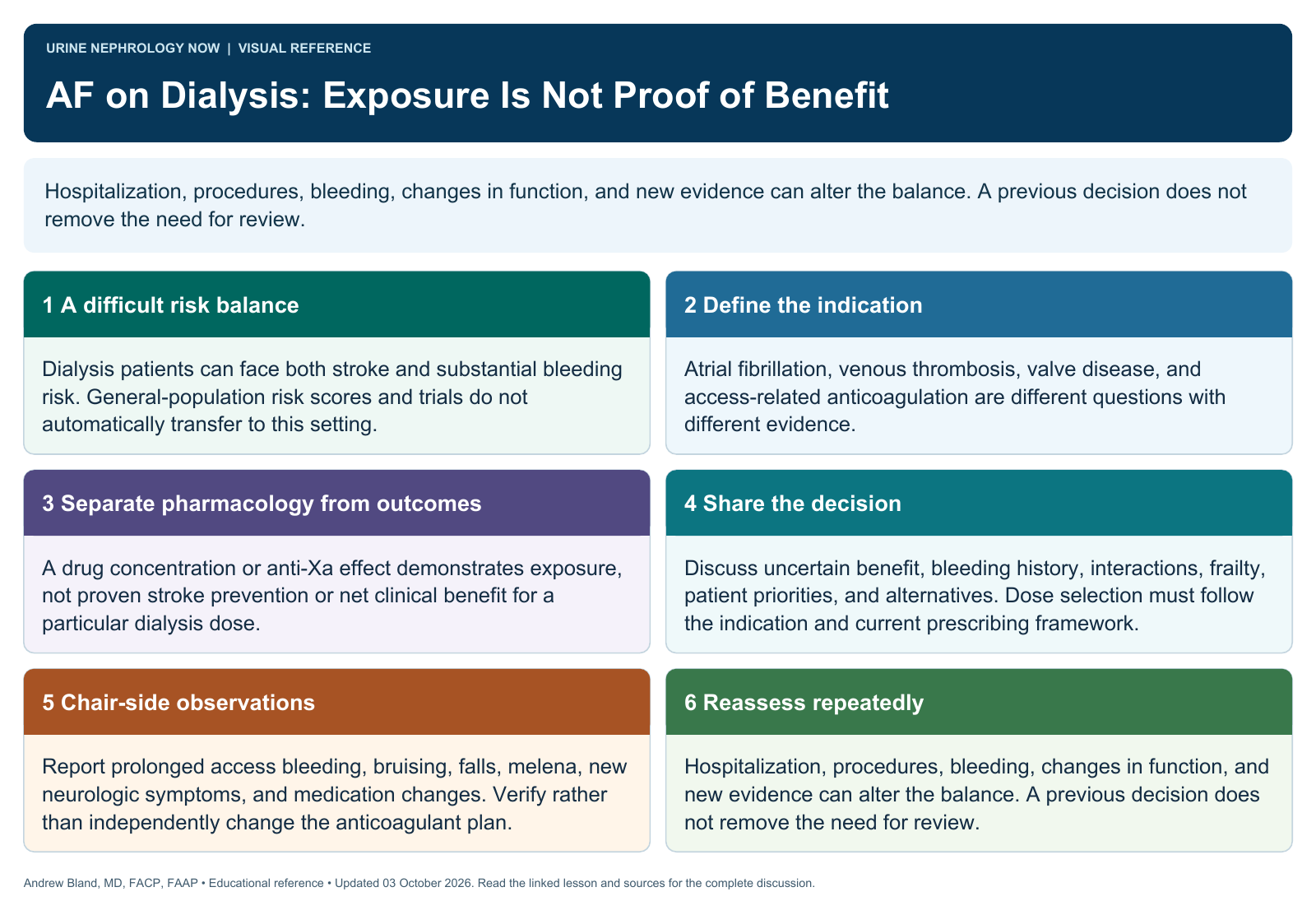
Hospitalization, procedures, bleeding, changes in function, and new evidence can alter the balance. A previous decision does not remove the need for review.
Text version
A difficult risk balance
Dialysis patients can face both stroke and substantial bleeding risk. General-population risk scores and trials do not automatically transfer to this setting.
Define the indication
Atrial fibrillation, venous thrombosis, valve disease, and access-related anticoagulation are different questions with different evidence.
Separate pharmacology from outcomes
A drug concentration or anti-Xa effect demonstrates exposure, not proven stroke prevention or net clinical benefit for a particular dialysis dose.
Share the decision
Discuss uncertain benefit, bleeding history, interactions, frailty, patient priorities, and alternatives. Dose selection must follow the indication and current prescribing framework.
Chair-side observations
Report prolonged access bleeding, bruising, falls, melena, new neurologic symptoms, and medication changes. Verify rather than independently change the anticoagulant plan.
Reassess repeatedly
Hospitalization, procedures, bleeding, changes in function, and new evidence can alter the balance. A previous decision does not remove the need for review.
Continue learning
This graphic summarizes a topic. The full educational pages provide the broader discussion and references.