Visual summary
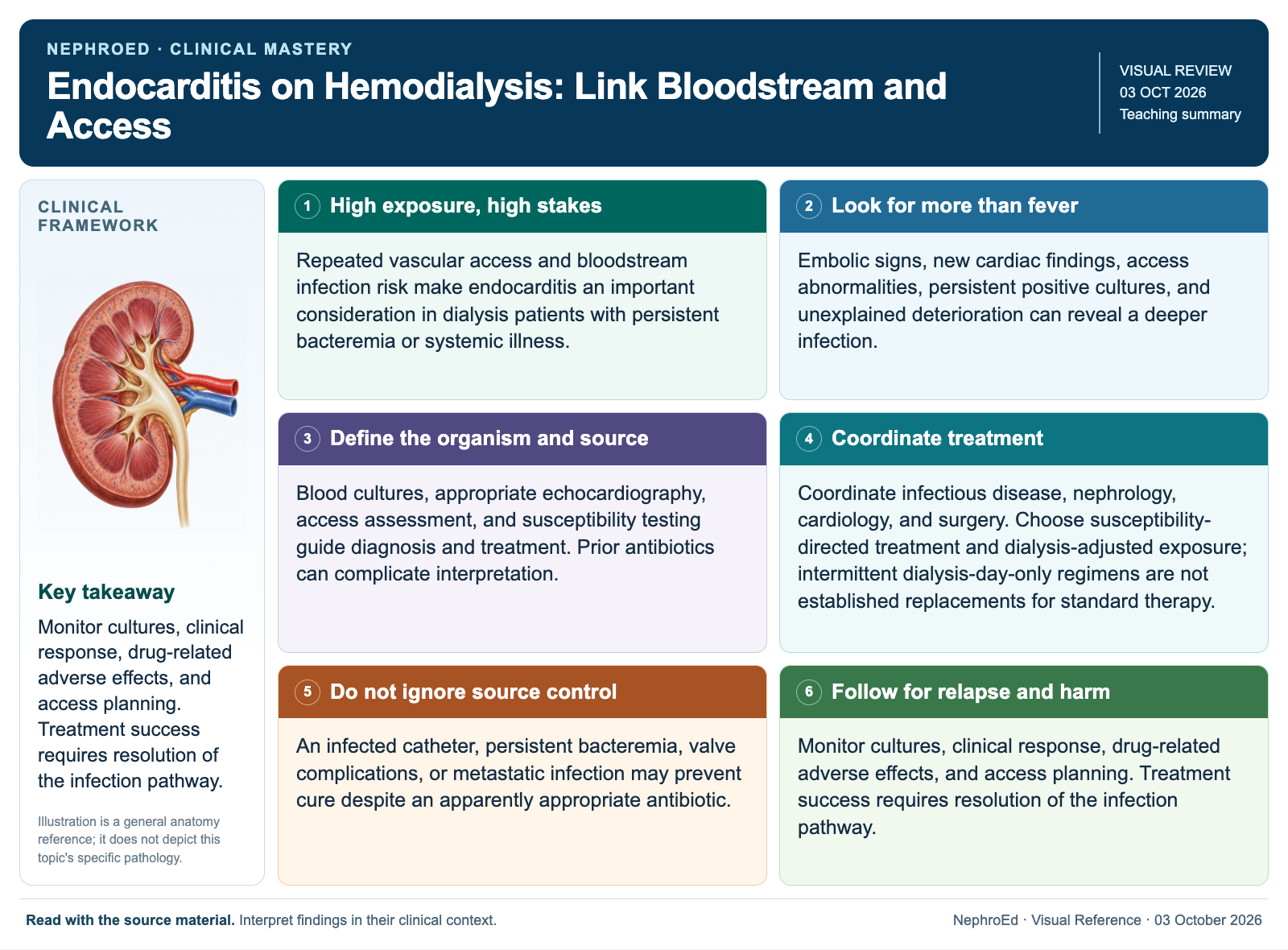
Monitor cultures, clinical response, drug-related adverse effects, and access planning. Treatment success requires resolution of the infection pathway.
Text version
High exposure, high stakes
Repeated vascular access and bloodstream infection risk make endocarditis an important consideration in dialysis patients with persistent bacteremia or systemic illness.
Look for more than fever
Embolic signs, new cardiac findings, access abnormalities, persistent positive cultures, and unexplained deterioration can reveal a deeper infection.
Define the organism and source
Blood cultures, appropriate echocardiography, access assessment, and susceptibility testing guide diagnosis and treatment. Prior antibiotics can complicate interpretation.
Coordinate treatment
Coordinate infectious disease, nephrology, cardiology, and surgery. Choose susceptibility-directed treatment and dialysis-adjusted exposure; intermittent dialysis-day-only regimens are not established replacements for standard therapy.
Do not ignore source control
An infected catheter, persistent bacteremia, valve complications, or metastatic infection may prevent cure despite an apparently appropriate antibiotic.
Follow for relapse and harm
Monitor cultures, clinical response, drug-related adverse effects, and access planning. Treatment success requires resolution of the infection pathway.
Continue learning
This graphic summarizes a topic. The full educational pages provide the broader discussion and references.