Visual summary
A plausible anti-inflammatory mechanism needs outcome evidence. Continue the fundamentals of infection care, nutrition, access health, and physical function.
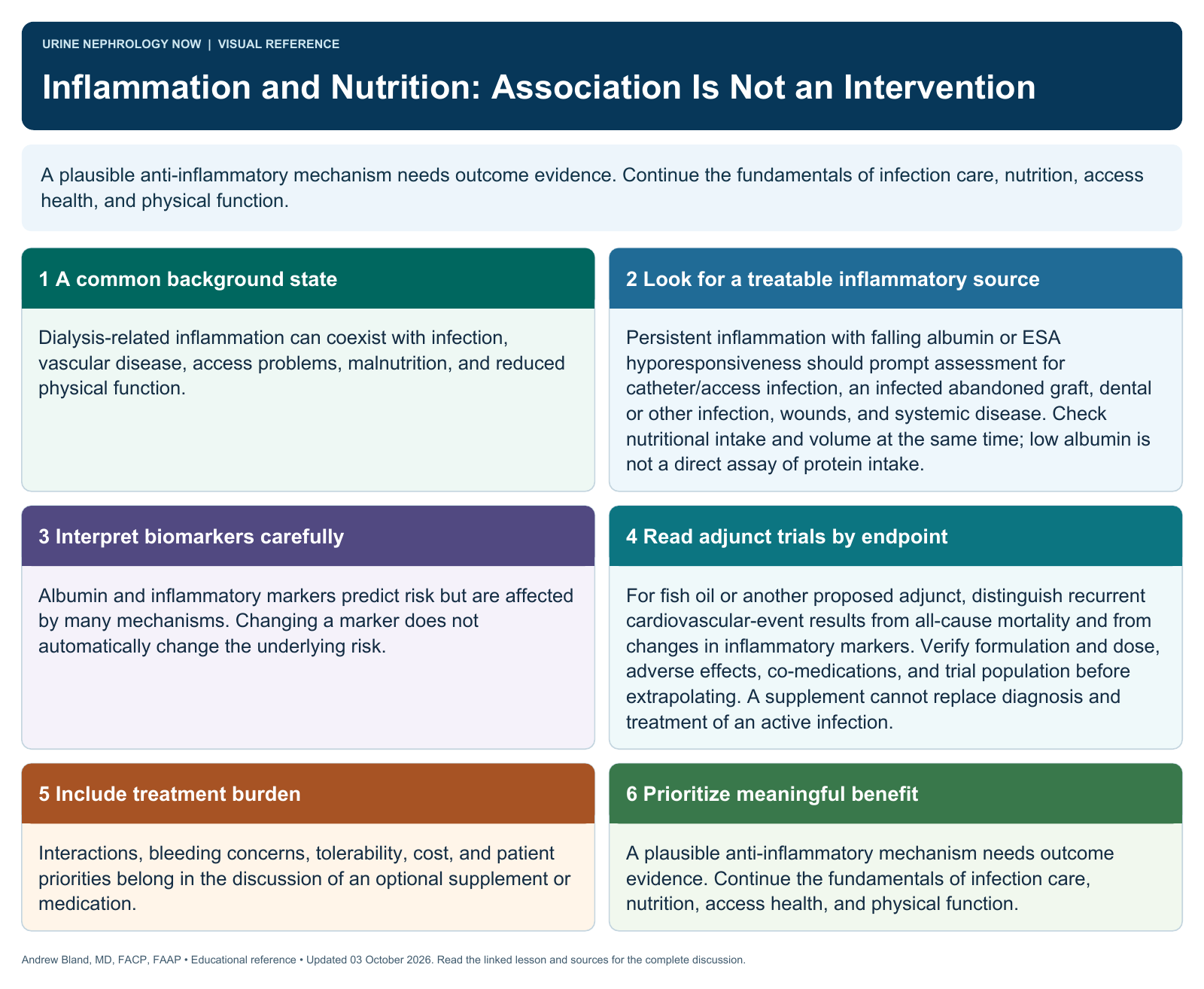
Text version
A common background state
Dialysis-related inflammation can coexist with infection, vascular disease, access problems, malnutrition, and reduced physical function.
Look for a treatable inflammatory source
Persistent inflammation with falling albumin or ESA hyporesponsiveness should prompt assessment for catheter/access infection, an infected abandoned graft, dental or other infection, wounds, and systemic disease. Check nutritional intake and volume at the same time; low albumin is not a direct assay of protein intake.
Interpret biomarkers carefully
Albumin and inflammatory markers predict risk but are affected by many mechanisms. Changing a marker does not automatically change the underlying risk.
Read adjunct trials by endpoint
For fish oil or another proposed adjunct, distinguish recurrent cardiovascular-event results from all-cause mortality and from changes in inflammatory markers. Verify formulation and dose, adverse effects, co-medications, and trial population before extrapolating. A supplement cannot replace diagnosis and treatment of an active infection.
Include treatment burden
Interactions, bleeding concerns, tolerability, cost, and patient priorities belong in the discussion of an optional supplement or medication.
Prioritize meaningful benefit
A plausible anti-inflammatory mechanism needs outcome evidence. Continue the fundamentals of infection care, nutrition, access health, and physical function.