Visual summary
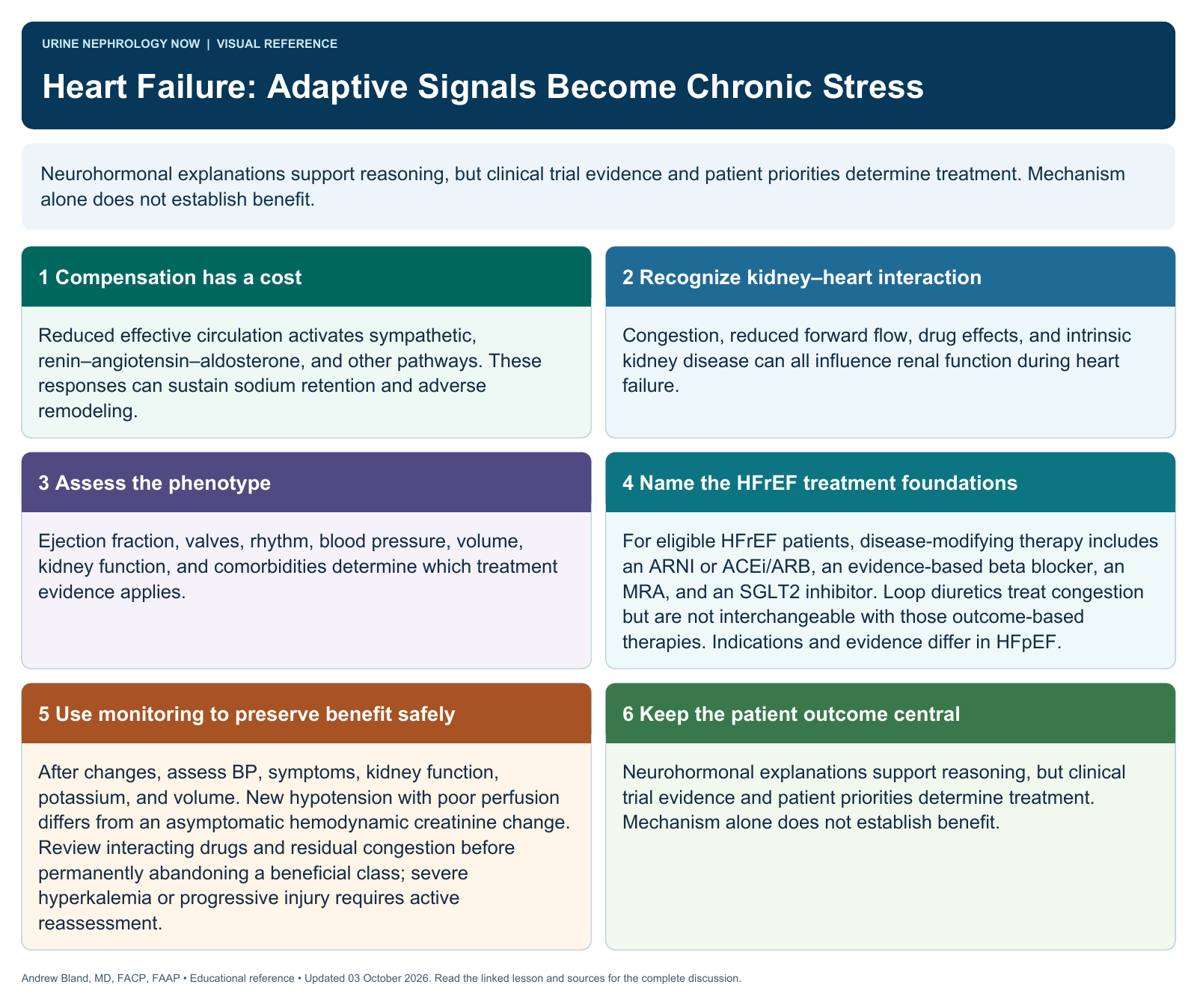
Neurohormonal explanations support reasoning, but clinical trial evidence and patient priorities determine treatment. Mechanism alone does not establish benefit.
Text version
Compensation has a cost
Reduced effective circulation activates sympathetic, renin–angiotensin–aldosterone, and other pathways. These responses can sustain sodium retention and adverse remodeling.
Recognize kidney–heart interaction
Congestion, reduced forward flow, drug effects, and intrinsic kidney disease can all influence renal function during heart failure.
Assess the phenotype
Ejection fraction, valves, rhythm, blood pressure, volume, kidney function, and comorbidities determine which treatment evidence applies.
Use pathway-directed treatment
Evidence-based therapies act on distinct mechanisms and may have complementary effects. Introduce and adjust them according to indication and tolerance.
Monitor physiology after changes
Potassium, kidney function, blood pressure, volume status, and symptoms help distinguish expected effects from important harm.
Keep the patient outcome central
Neurohormonal explanations support reasoning, but clinical trial evidence and patient priorities determine treatment. Mechanism alone does not establish benefit.
Continue learning
This graphic summarizes a topic. The full educational pages provide the broader discussion and references.