Visual summary
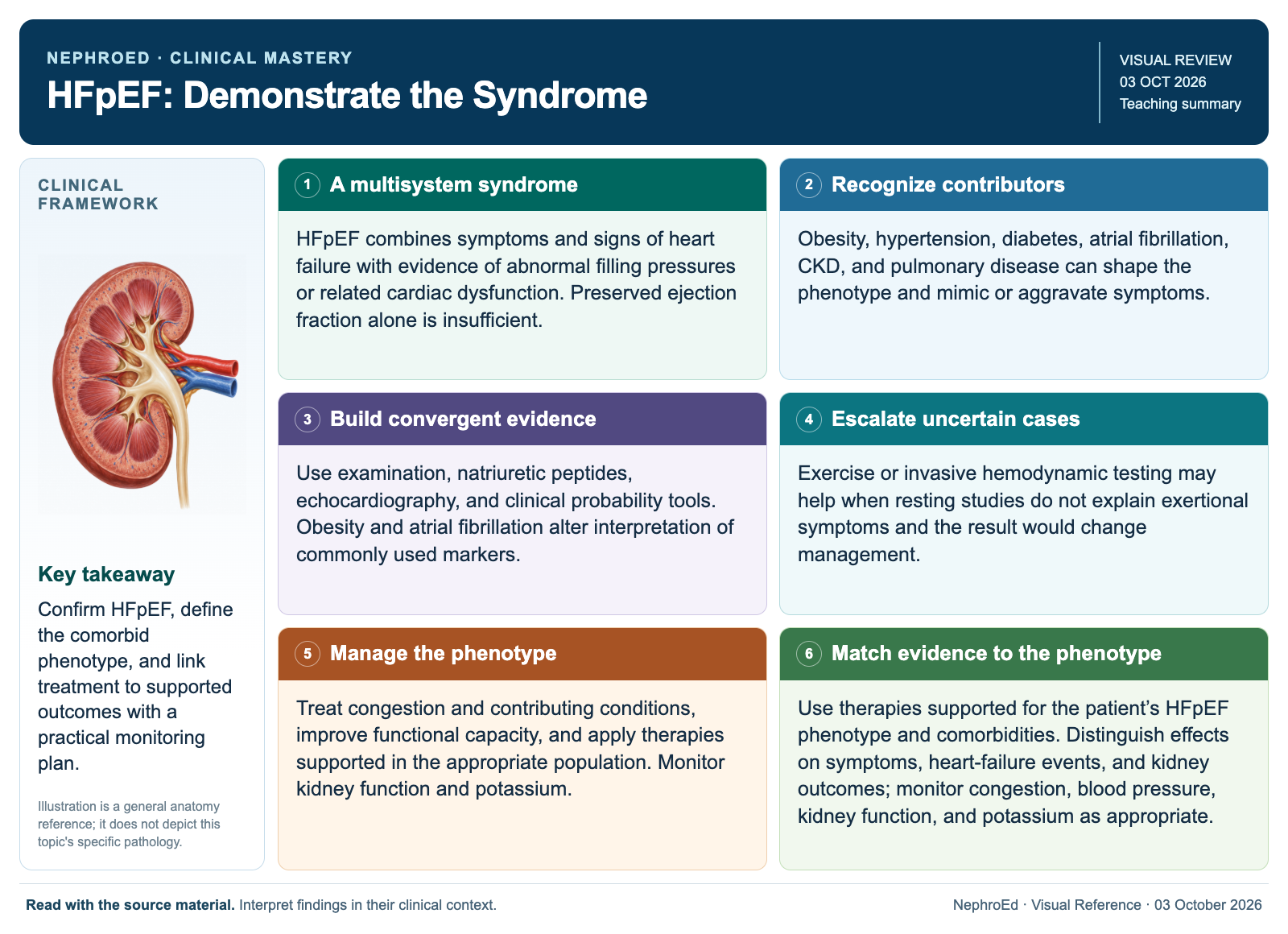
Confirm HFpEF, define the comorbid phenotype, and link treatment to supported outcomes with a practical monitoring plan.
Text version
A multisystem syndrome
HFpEF combines symptoms and signs of heart failure with evidence of abnormal filling pressures or related cardiac dysfunction. Preserved ejection fraction alone is insufficient.
Recognize contributors
Obesity, hypertension, diabetes, atrial fibrillation, CKD, and pulmonary disease can shape the phenotype and mimic or aggravate symptoms.
Build convergent evidence
Use examination, natriuretic peptides, echocardiography, and clinical probability tools. Obesity and atrial fibrillation alter interpretation of commonly used markers.
Escalate uncertain cases
Exercise or invasive hemodynamic testing may help when resting studies do not explain exertional symptoms and the result would change management.
Manage the phenotype
Treat congestion and contributing conditions, improve functional capacity, and apply therapies supported in the appropriate population. Monitor kidney function and potassium.
Match evidence to the phenotype
Use therapies supported for the patient’s HFpEF phenotype and comorbidities. Distinguish effects on symptoms, heart-failure events, and kidney outcomes; monitor congestion, blood pressure, kidney function, and potassium as appropriate.
Continue learning
This graphic summarizes a topic. The full educational pages provide the broader discussion and references.