Visual summary
Liver transplant assessment, kidney replacement decisions, and supportive care should reflect reversibility, overall illness, and patient priorities.
Text version
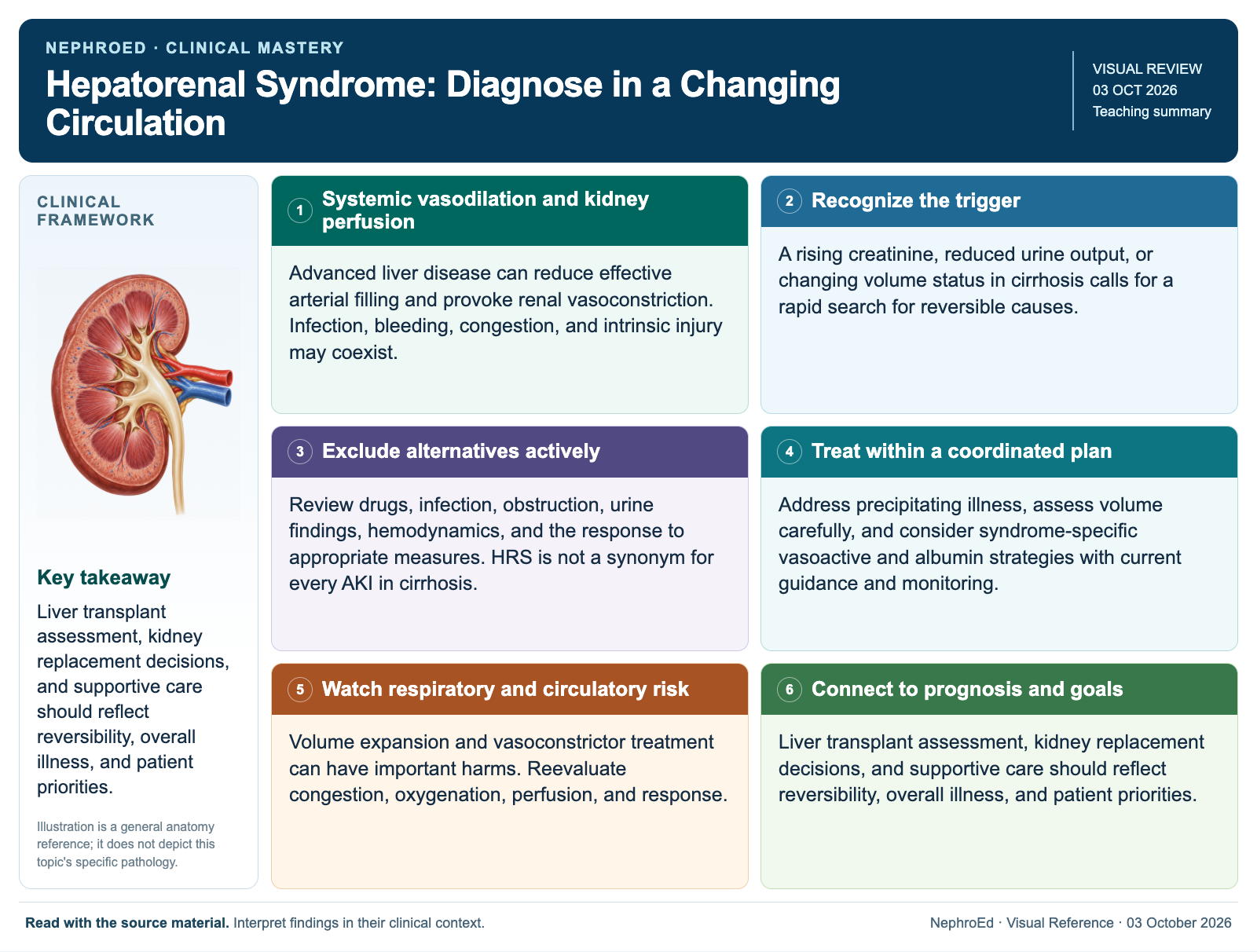
Systemic vasodilation and kidney perfusion
Advanced liver disease can reduce effective arterial filling and provoke renal vasoconstriction. Infection, bleeding, congestion, and intrinsic injury may coexist.
Recognize the trigger
A rising creatinine, reduced urine output, or changing volume status in cirrhosis calls for a rapid search for reversible causes.
Exclude alternatives actively
Review drugs, infection, obstruction, urine findings, hemodynamics, and the response to appropriate measures. HRS is not a synonym for every AKI in cirrhosis.
Treat within a coordinated plan
Address precipitating illness, assess volume carefully, and consider syndrome-specific vasoactive and albumin strategies with current guidance and monitoring.
Watch respiratory and circulatory risk
Volume expansion and vasoconstrictor treatment can have important harms. Reevaluate congestion, oxygenation, perfusion, and response.
Connect to prognosis and goals
Liver transplant assessment, kidney replacement decisions, and supportive care should reflect reversibility, overall illness, and patient priorities.
Continue learning
This graphic summarizes a topic. The full educational pages provide the broader discussion and references.