Visual summary
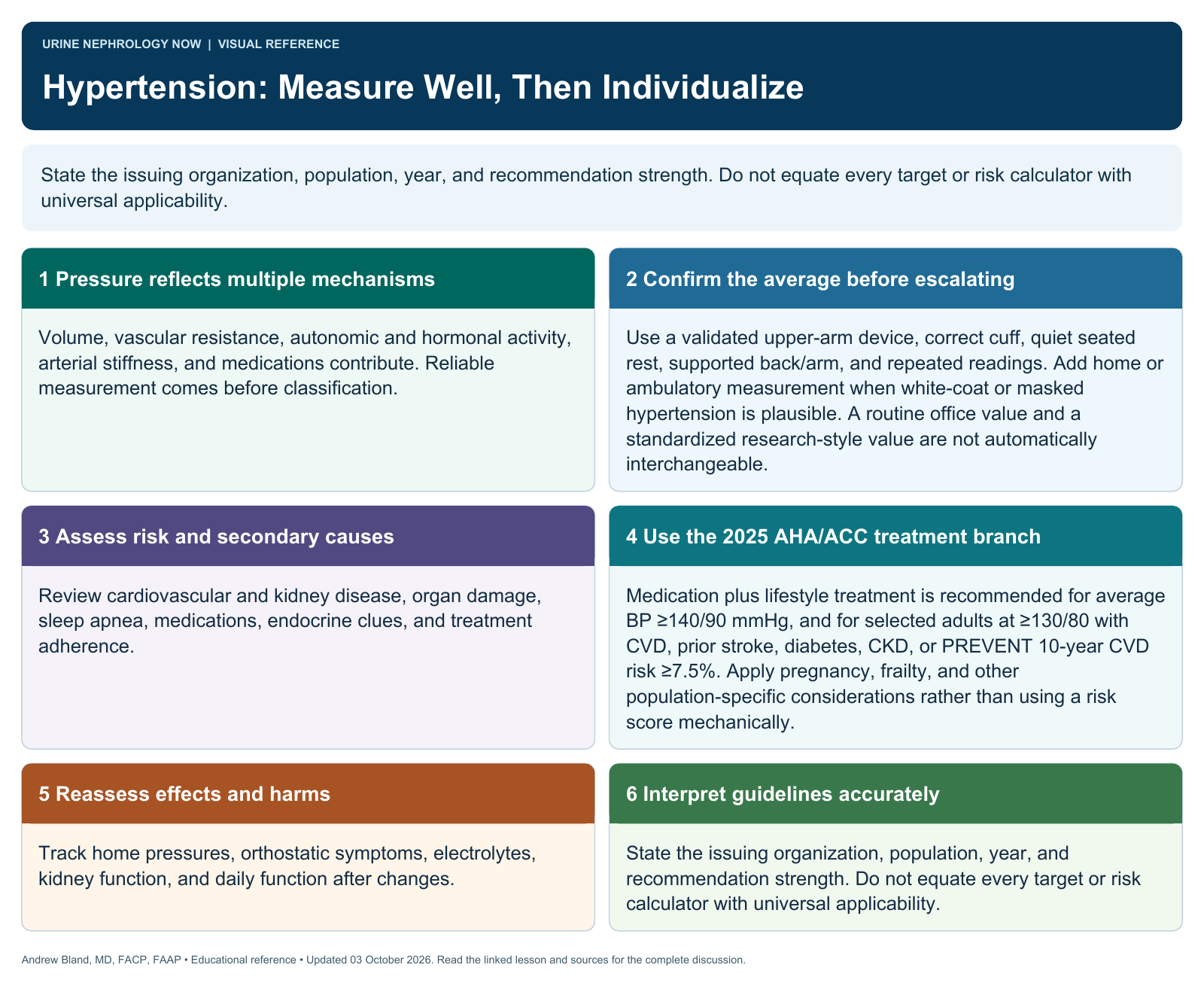
State the issuing organization, population, year, and recommendation strength. Do not equate every target or risk calculator with universal applicability.
Text version
Pressure reflects multiple mechanisms
Volume, vascular resistance, autonomic and hormonal activity, arterial stiffness, and medications contribute. Reliable measurement comes before classification.
Confirm the phenotype
Use standardized office technique and out-of-office data when appropriate. White-coat and masked patterns can change treatment decisions.
Assess risk and secondary causes
Review cardiovascular and kidney disease, organ damage, sleep apnea, medications, endocrine clues, and treatment adherence.
Build an achievable plan
Combine lifestyle measures with medication choices matched to comorbidities, tolerance, interactions, and access. Shared goals support sustained treatment.
Reassess effects and harms
Track home pressures, orthostatic symptoms, electrolytes, kidney function, and daily function after changes.
Interpret guidelines accurately
State the issuing organization, population, year, and recommendation strength. Do not equate every target or risk calculator with universal applicability.
Continue learning
This graphic summarizes a topic. The full educational pages provide the broader discussion and references.