Visual summary
State the issuing organization, population, year, and recommendation strength. Do not equate every target or risk calculator with universal applicability.
Text version
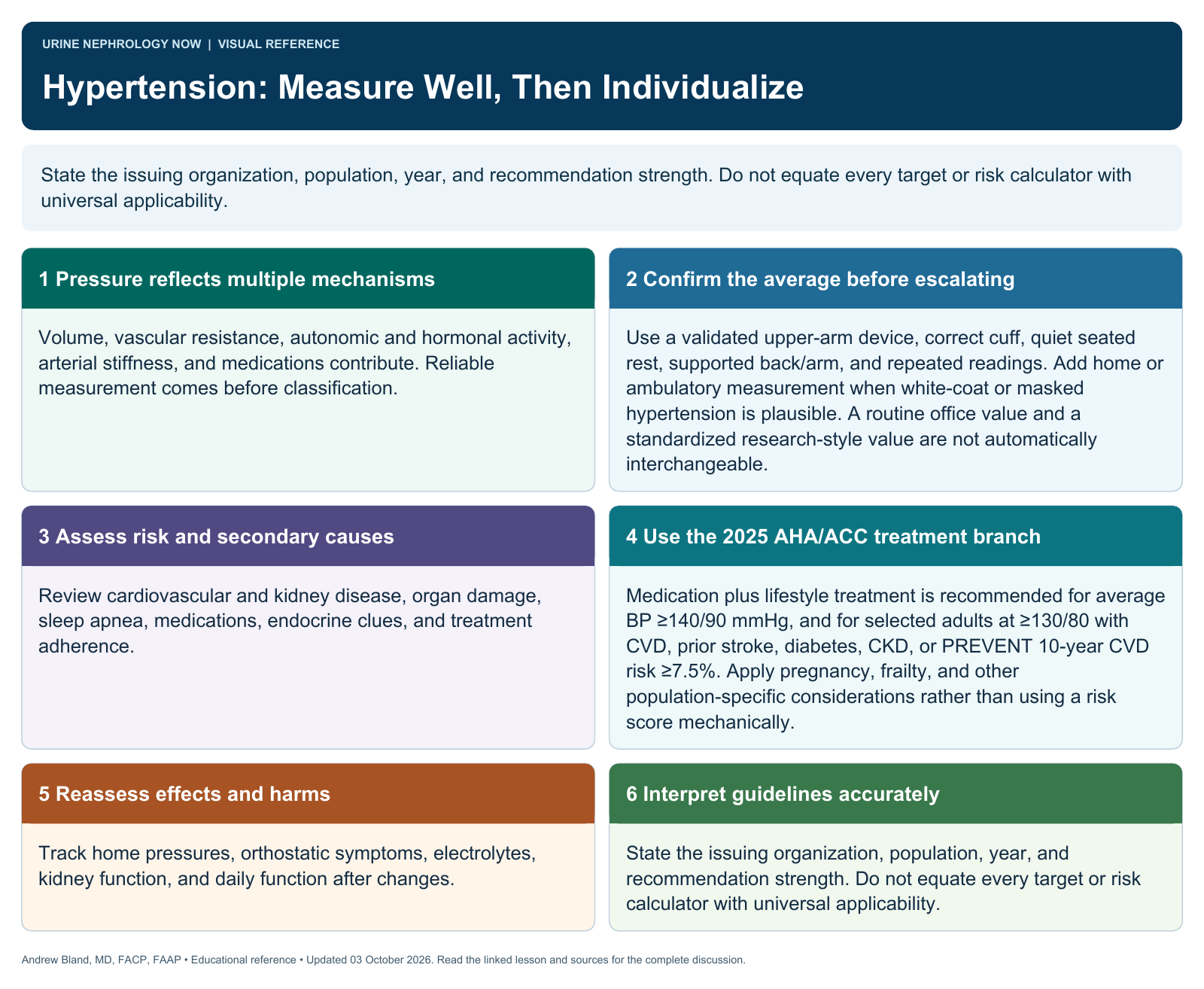
Pressure reflects multiple mechanisms
Volume, vascular resistance, autonomic and hormonal activity, arterial stiffness, and medications contribute. Reliable measurement comes before classification.
Confirm the average before escalating
Use a validated upper-arm device, correct cuff, quiet seated rest, supported back/arm, and repeated readings. Add home or ambulatory measurement when white-coat or masked hypertension is plausible. A routine office value and a standardized research-style value are not automatically interchangeable.
Assess risk and secondary causes
Review cardiovascular and kidney disease, organ damage, sleep apnea, medications, endocrine clues, and treatment adherence.
Use the 2025 AHA/ACC treatment branch
Medication plus lifestyle treatment is recommended for average BP ≥140/90 mmHg, and for selected adults at ≥130/80 with CVD, prior stroke, diabetes, CKD, or PREVENT 10-year CVD risk ≥7.5%. Apply pregnancy, frailty, and other population-specific considerations rather than using a risk score mechanically.
Reassess effects and harms
Track home pressures, orthostatic symptoms, electrolytes, kidney function, and daily function after changes.
Interpret guidelines accurately
State the issuing organization, population, year, and recommendation strength. Do not equate every target or risk calculator with universal applicability.