Visual summary
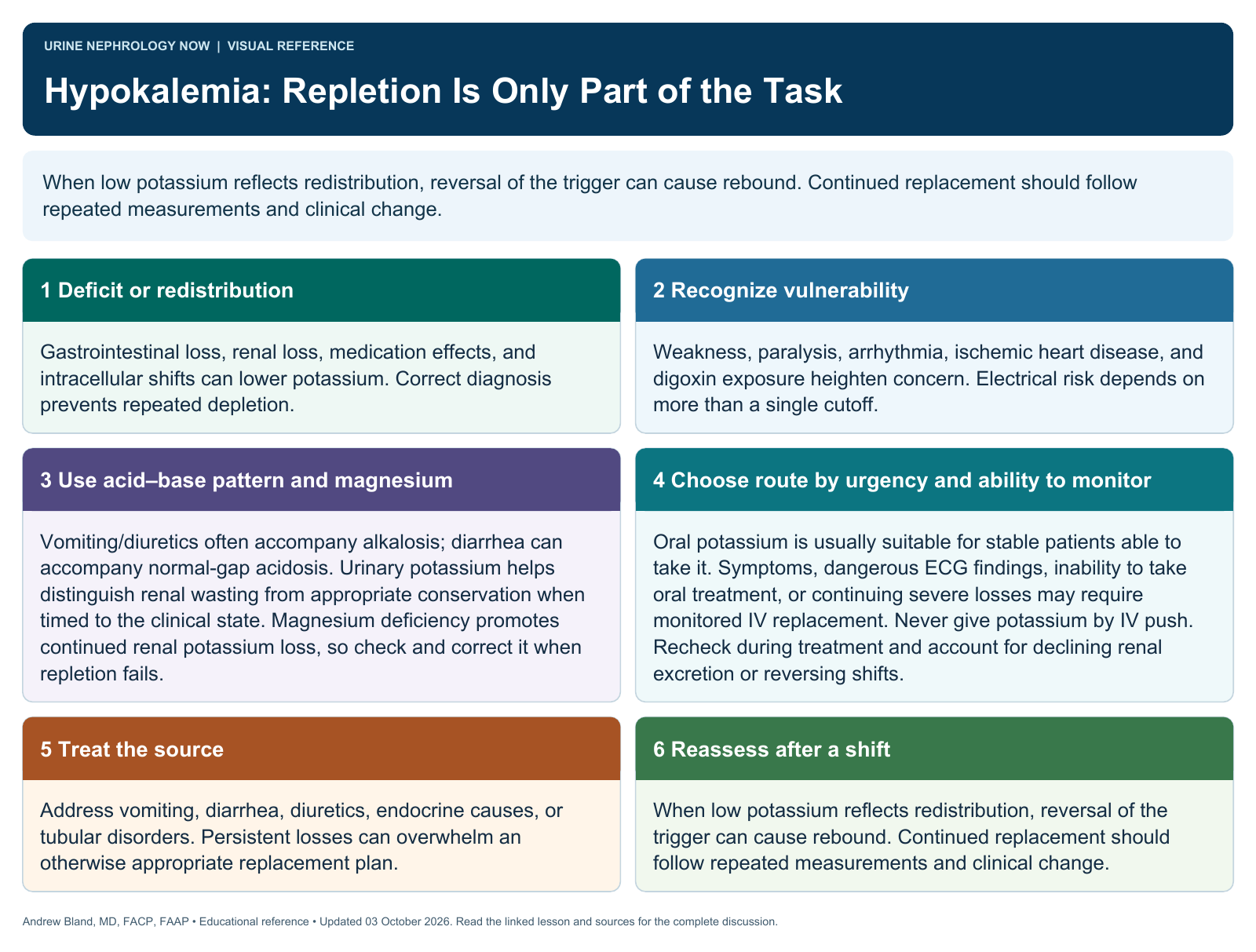
When low potassium reflects redistribution, reversal of the trigger can cause rebound. Continued replacement should follow repeated measurements and clinical change.
Text version
Deficit or redistribution
Gastrointestinal loss, renal loss, medication effects, and intracellular shifts can lower potassium. Correct diagnosis prevents repeated depletion.
Recognize vulnerability
Weakness, paralysis, arrhythmia, ischemic heart disease, and digoxin exposure heighten concern. Electrical risk depends on more than a single cutoff.
Use acid–base pattern and magnesium
Vomiting/diuretics often accompany alkalosis; diarrhea can accompany normal-gap acidosis. Urinary potassium helps distinguish renal wasting from appropriate conservation when timed to the clinical state. Magnesium deficiency promotes continued renal potassium loss, so check and correct it when repletion fails.
Choose route by urgency and ability to monitor
Oral potassium is usually suitable for stable patients able to take it. Symptoms, dangerous ECG findings, inability to take oral treatment, or continuing severe losses may require monitored IV replacement. Never give potassium by IV push. Recheck during treatment and account for declining renal excretion or reversing shifts.
Treat the source
Address vomiting, diarrhea, diuretics, endocrine causes, or tubular disorders. Persistent losses can overwhelm an otherwise appropriate replacement plan.
Reassess after a shift
When low potassium reflects redistribution, reversal of the trigger can cause rebound. Continued replacement should follow repeated measurements and clinical change.