Visual summary
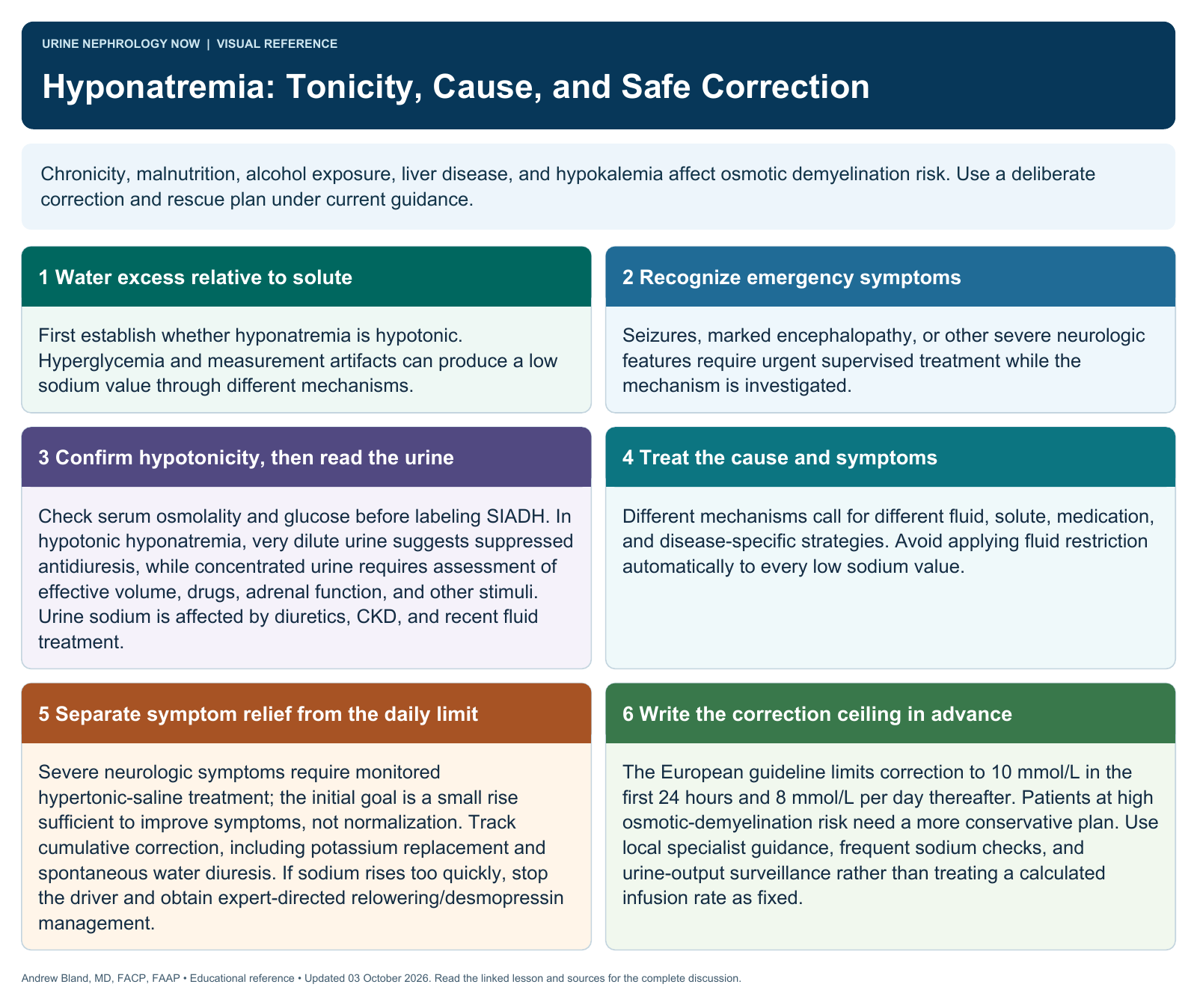
Chronicity, malnutrition, alcohol exposure, liver disease, and hypokalemia affect osmotic demyelination risk. Use a deliberate correction and rescue plan under current guidance.
Text version
Water excess relative to solute
First establish whether hyponatremia is hypotonic. Hyperglycemia and measurement artifacts can produce a low sodium value through different mechanisms.
Recognize emergency symptoms
Seizures, marked encephalopathy, or other severe neurologic features require urgent supervised treatment while the mechanism is investigated.
Use urine and context
Urine osmolality, urine sodium, intake, medications, endocrine disease, kidney function, and effective circulation help explain impaired water excretion.
Treat the cause and symptoms
Different mechanisms call for different fluid, solute, medication, and disease-specific strategies. Avoid applying fluid restriction automatically to every low sodium value.
Expect sudden aquaresis
Removing a stimulus to antidiuresis can produce rapid water loss and unexpected correction. Monitor urine output and sodium closely during active treatment.
Protect the brain
Chronicity, malnutrition, alcohol exposure, liver disease, and hypokalemia affect osmotic demyelination risk. Use a deliberate correction and rescue plan under current guidance.
Continue learning
This graphic summarizes a topic. The full educational pages provide the broader discussion and references.