Visual summary
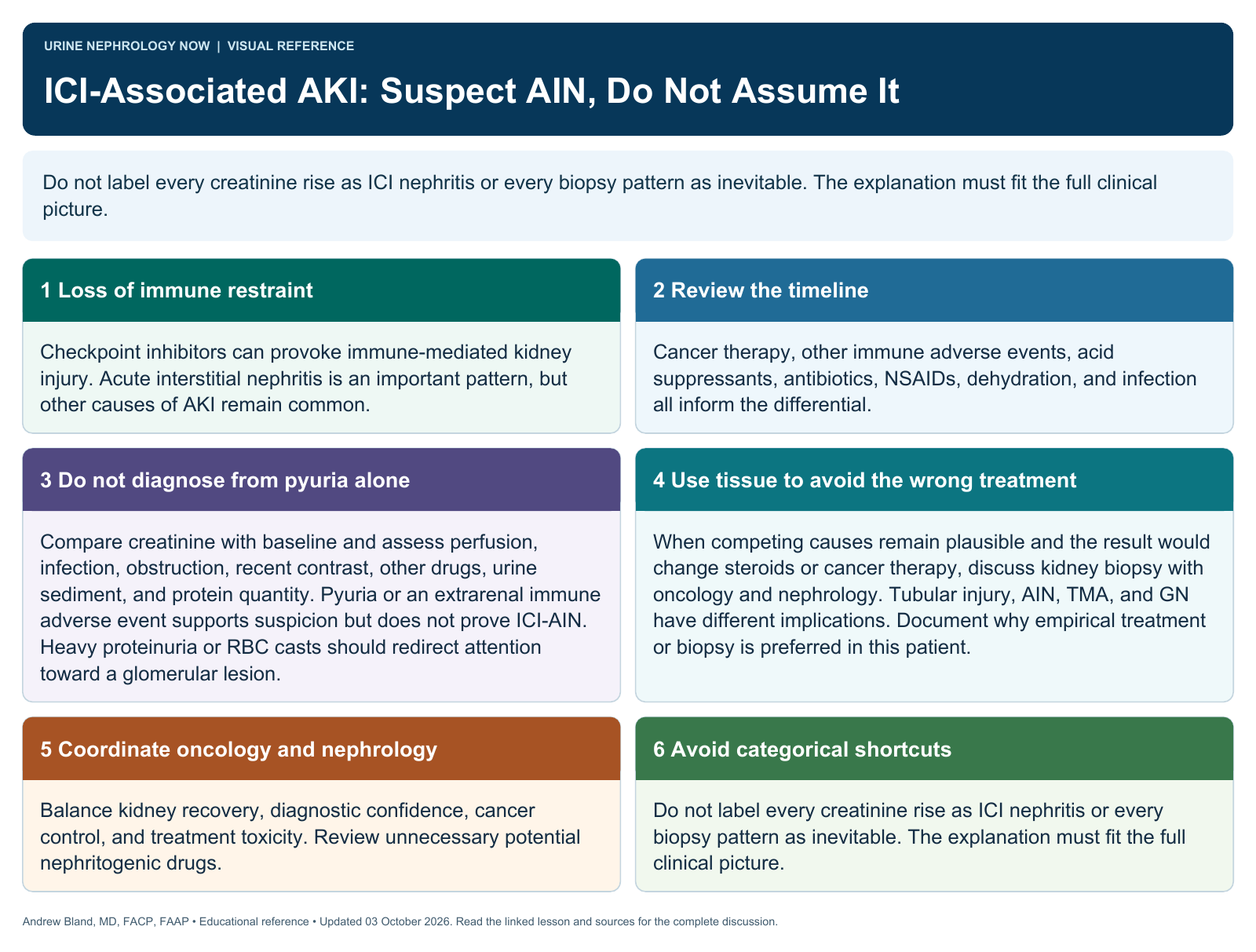
Do not label every creatinine rise as ICI nephritis or every biopsy pattern as inevitable. The explanation must fit the full clinical picture.
Text version
Loss of immune restraint
Checkpoint inhibitors can provoke immune-mediated kidney injury. Acute interstitial nephritis is an important pattern, but other causes of AKI remain common.
Review the timeline
Cancer therapy, other immune adverse events, acid suppressants, antibiotics, NSAIDs, dehydration, and infection all inform the differential.
Assess urine and kidney trends
Pyuria, proteinuria, sediment, and creatinine changes are clues. Their absence or presence does not reliably diagnose immune-mediated injury alone.
Consider biopsy when it matters
Tissue can distinguish interstitial, tubular, vascular, and glomerular lesions when uncertainty would change immunosuppression or cancer-treatment decisions.
Coordinate oncology and nephrology
Balance kidney recovery, diagnostic confidence, cancer control, and treatment toxicity. Review unnecessary potential nephritogenic drugs.
Avoid categorical shortcuts
Do not label every creatinine rise as ICI nephritis or every biopsy pattern as inevitable. The explanation must fit the full clinical picture.
Continue learning
This graphic summarizes a topic. The full educational pages provide the broader discussion and references.