Visual summary
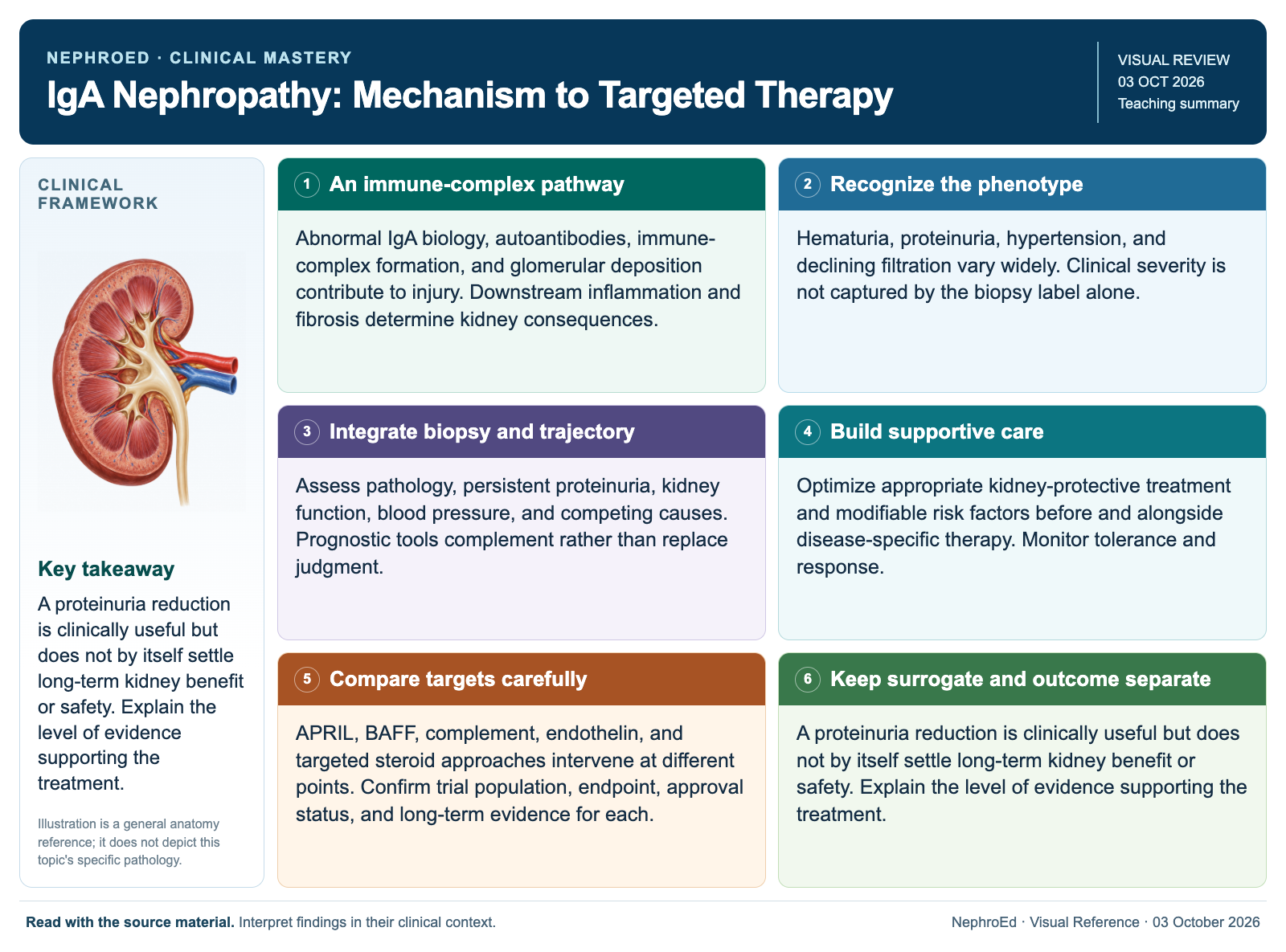
A proteinuria reduction is clinically useful but does not by itself settle long-term kidney benefit or safety. Explain the level of evidence supporting the treatment.
Text version
An immune-complex pathway
Abnormal IgA biology, autoantibodies, immune-complex formation, and glomerular deposition contribute to injury. Downstream inflammation and fibrosis determine kidney consequences.
Recognize the phenotype
Hematuria, proteinuria, hypertension, and declining filtration vary widely. Clinical severity is not captured by the biopsy label alone.
Integrate biopsy and trajectory
Assess pathology, persistent proteinuria, kidney function, blood pressure, and competing causes. Prognostic tools complement rather than replace judgment.
Build supportive care
Optimize appropriate kidney-protective treatment and modifiable risk factors before and alongside disease-specific therapy. Monitor tolerance and response.
Compare targets carefully
APRIL, BAFF, complement, endothelin, and targeted steroid approaches intervene at different points. Confirm trial population, endpoint, approval status, and long-term evidence for each.
Keep surrogate and outcome separate
A proteinuria reduction is clinically useful but does not by itself settle long-term kidney benefit or safety. Explain the level of evidence supporting the treatment.
Continue learning
This graphic summarizes a topic. The full educational pages provide the broader discussion and references.