Visual summary
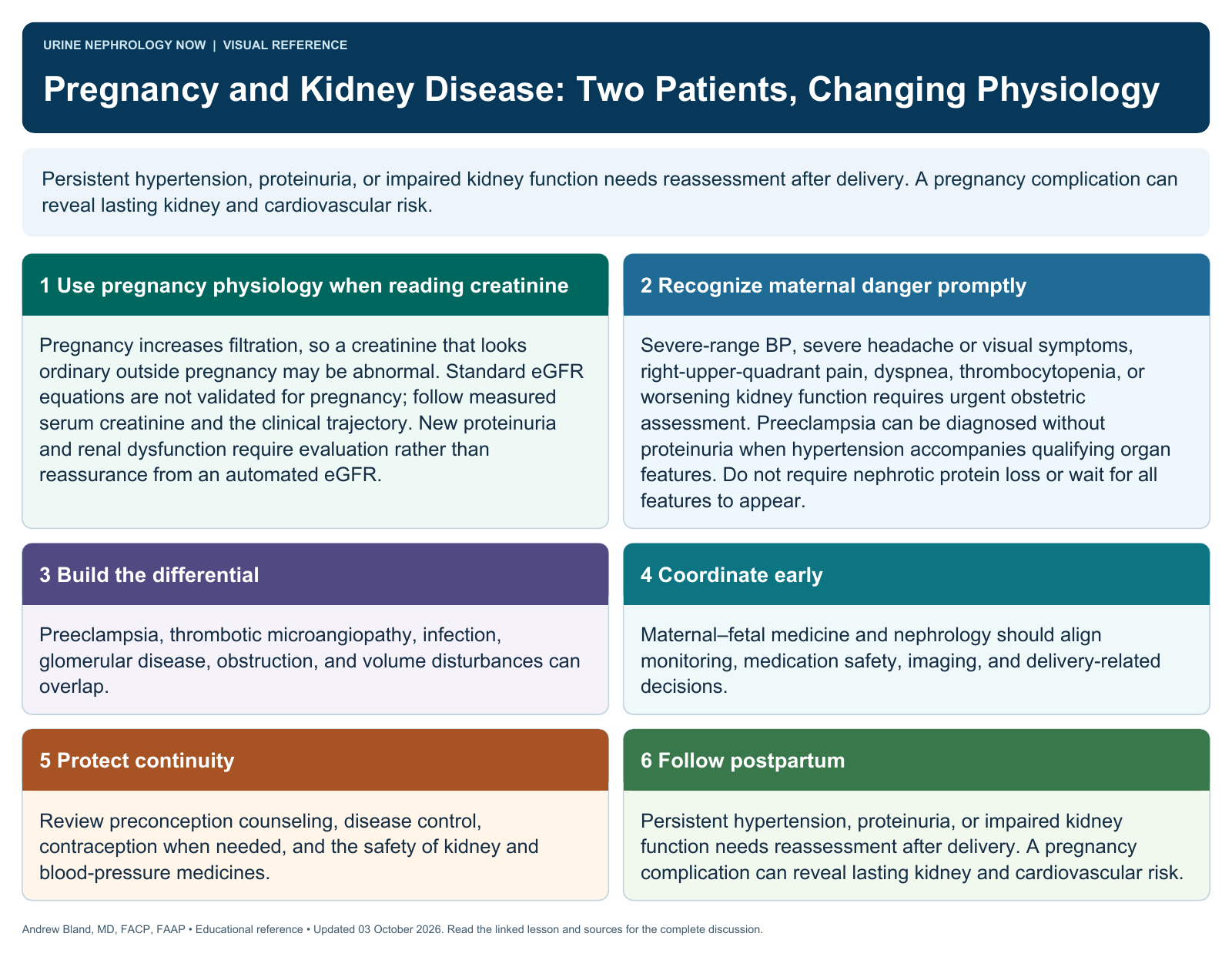
Persistent hypertension, proteinuria, or impaired kidney function needs reassessment after delivery. A pregnancy complication can reveal lasting kidney and cardiovascular risk.
Text version
Normal pregnancy changes filtration
Renal hemodynamics, plasma volume, and laboratory reference expectations change during pregnancy. A value that appears ordinary outside pregnancy may be abnormal within it.
Recognize urgent syndromes
New hypertension, proteinuria, kidney dysfunction, thrombocytopenia, hemolysis, or neurologic symptoms require assessment for pregnancy-specific and preexisting disease.
Build the differential
Preeclampsia, thrombotic microangiopathy, infection, glomerular disease, obstruction, and volume disturbances can overlap.
Coordinate early
Maternal–fetal medicine and nephrology should align monitoring, medication safety, imaging, and delivery-related decisions.
Protect continuity
Review preconception counseling, disease control, contraception when needed, and the safety of kidney and blood-pressure medicines.
Follow postpartum
Persistent hypertension, proteinuria, or impaired kidney function needs reassessment after delivery. A pregnancy complication can reveal lasting kidney and cardiovascular risk.
Continue learning
This graphic summarizes a topic. The full educational pages provide the broader discussion and references.