Visual summary
Persistent hypertension, proteinuria, or impaired kidney function needs reassessment after delivery. A pregnancy complication can reveal lasting kidney and cardiovascular risk.
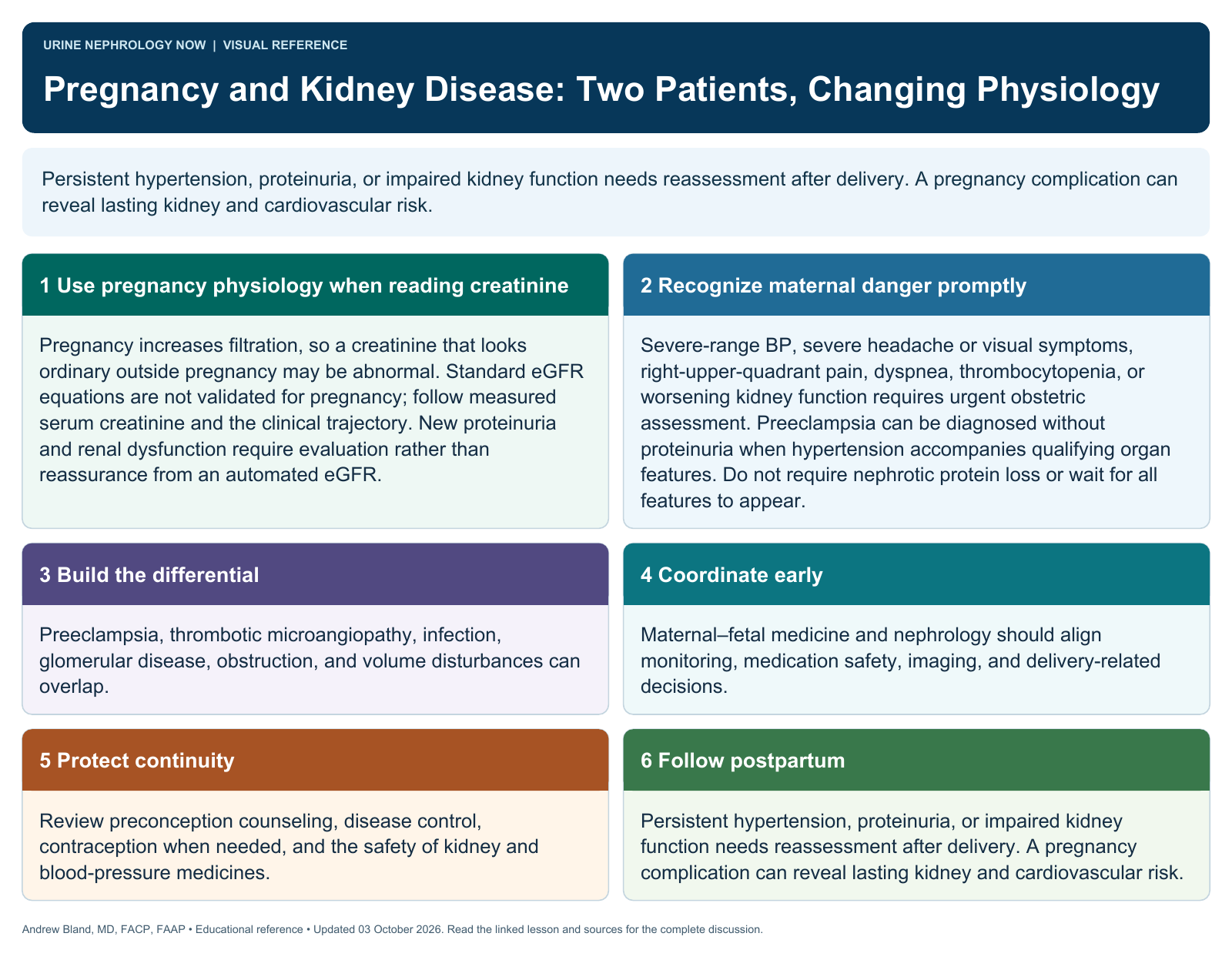
Text version
Use pregnancy physiology when reading creatinine
Pregnancy increases filtration, so a creatinine that looks ordinary outside pregnancy may be abnormal. Standard eGFR equations are not validated for pregnancy; follow measured serum creatinine and the clinical trajectory. New proteinuria and renal dysfunction require evaluation rather than reassurance from an automated eGFR.
Recognize maternal danger promptly
Severe-range BP, severe headache or visual symptoms, right-upper-quadrant pain, dyspnea, thrombocytopenia, or worsening kidney function requires urgent obstetric assessment. Preeclampsia can be diagnosed without proteinuria when hypertension accompanies qualifying organ features. Do not require nephrotic protein loss or wait for all features to appear.
Build the differential
Preeclampsia, thrombotic microangiopathy, infection, glomerular disease, obstruction, and volume disturbances can overlap.
Coordinate early
Maternal–fetal medicine and nephrology should align monitoring, medication safety, imaging, and delivery-related decisions.
Protect continuity
Review preconception counseling, disease control, contraception when needed, and the safety of kidney and blood-pressure medicines.
Follow postpartum
Persistent hypertension, proteinuria, or impaired kidney function needs reassessment after delivery. A pregnancy complication can reveal lasting kidney and cardiovascular risk.