Visual summary
Graft function, proteinuria, infection surveillance, preventive care, cardiovascular risk, and quality of life remain important after the early transplant period.
Text version
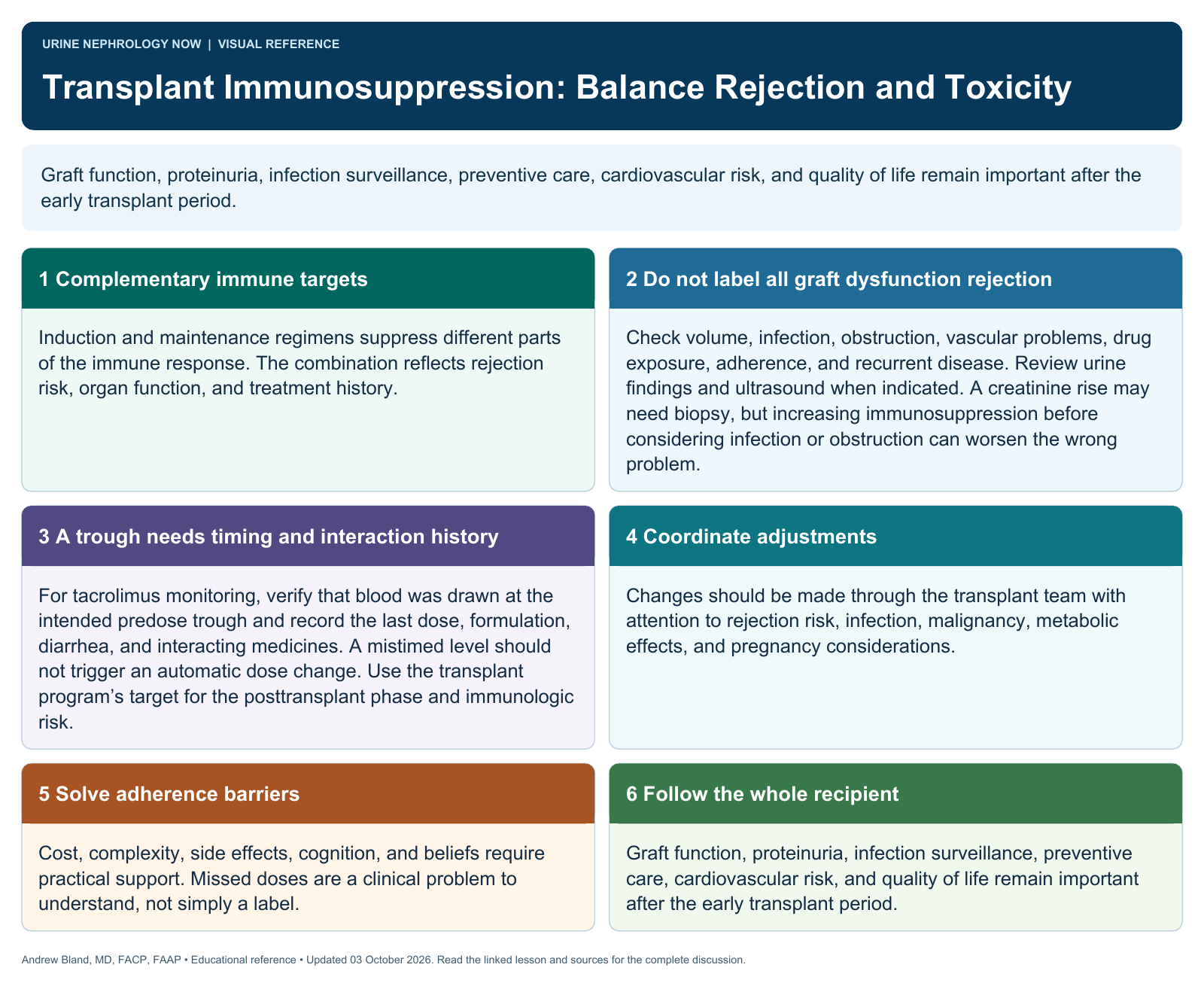
Complementary immune targets
Induction and maintenance regimens suppress different parts of the immune response. The combination reflects rejection risk, organ function, and treatment history.
Recognize competing causes of dysfunction
Rejection, infection, obstruction, vascular problems, drug toxicity, and recurrent disease can all impair graft function.
Check exposure correctly
Drug levels depend on collection timing, interactions, absorption, formulation, and adherence. A number without this context can mislead.
Coordinate adjustments
Changes should be made through the transplant team with attention to rejection risk, infection, malignancy, metabolic effects, and pregnancy considerations.
Solve adherence barriers
Cost, complexity, side effects, cognition, and beliefs require practical support. Missed doses are a clinical problem to understand, not simply a label.
Follow the whole recipient
Graft function, proteinuria, infection surveillance, preventive care, cardiovascular risk, and quality of life remain important after the early transplant period.
Continue learning
This graphic summarizes a topic. The full educational pages provide the broader discussion and references.