Visual summary
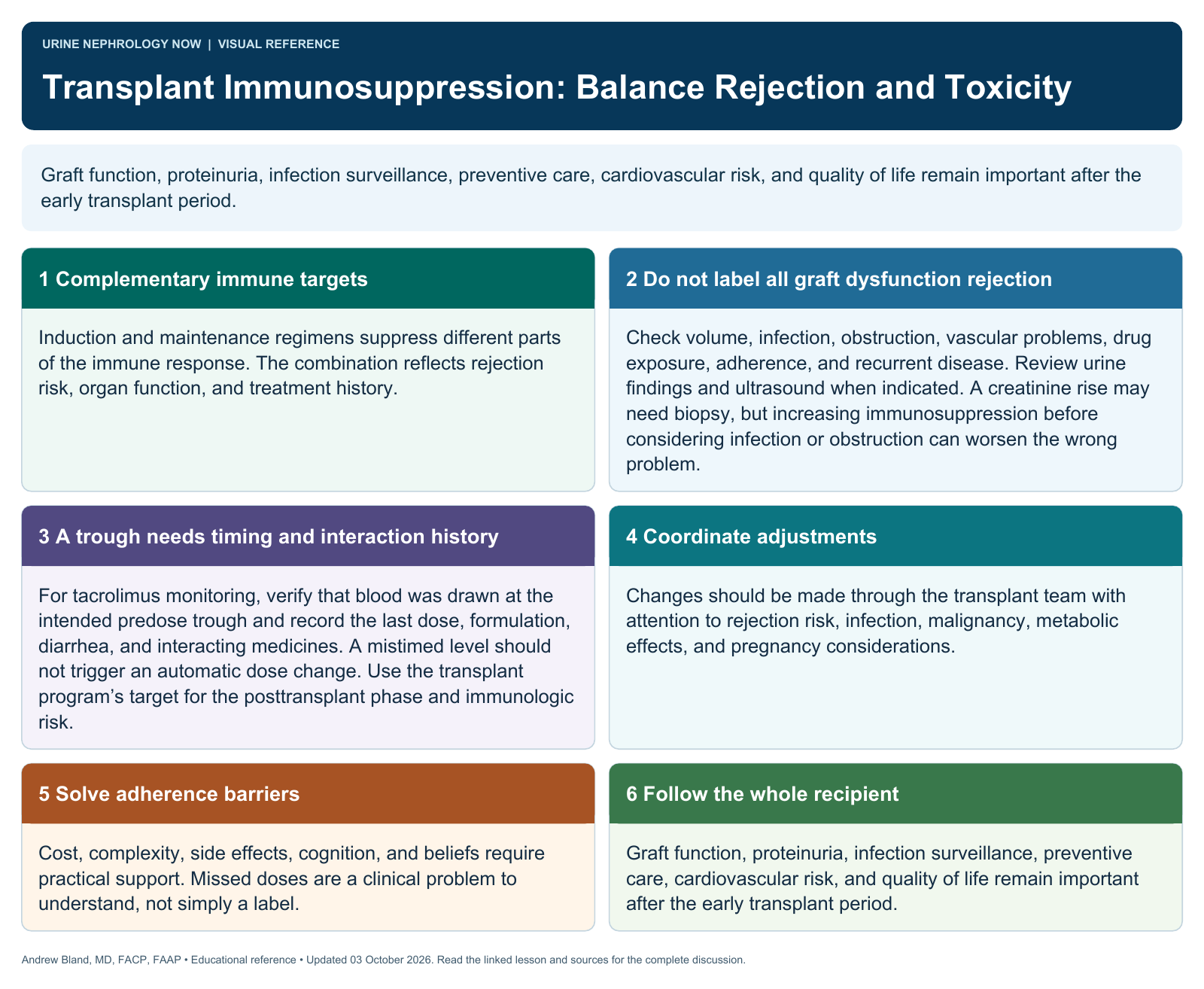
Graft function, proteinuria, infection surveillance, preventive care, cardiovascular risk, and quality of life remain important after the early transplant period.
Text version
Complementary immune targets
Induction and maintenance regimens suppress different parts of the immune response. The combination reflects rejection risk, organ function, and treatment history.
Do not label all graft dysfunction rejection
Check volume, infection, obstruction, vascular problems, drug exposure, adherence, and recurrent disease. Review urine findings and ultrasound when indicated. A creatinine rise may need biopsy, but increasing immunosuppression before considering infection or obstruction can worsen the wrong problem.
A trough needs timing and interaction history
For tacrolimus monitoring, verify that blood was drawn at the intended predose trough and record the last dose, formulation, diarrhea, and interacting medicines. A mistimed level should not trigger an automatic dose change. Use the transplant program’s target for the posttransplant phase and immunologic risk.
Coordinate adjustments
Changes should be made through the transplant team with attention to rejection risk, infection, malignancy, metabolic effects, and pregnancy considerations.
Solve adherence barriers
Cost, complexity, side effects, cognition, and beliefs require practical support. Missed doses are a clinical problem to understand, not simply a label.
Follow the whole recipient
Graft function, proteinuria, infection surveillance, preventive care, cardiovascular risk, and quality of life remain important after the early transplant period.