Visual summary
A recovery diuresis can create water and electrolyte deficits. Continue reassessment during improvement and arrange follow-up for persistent kidney risk.
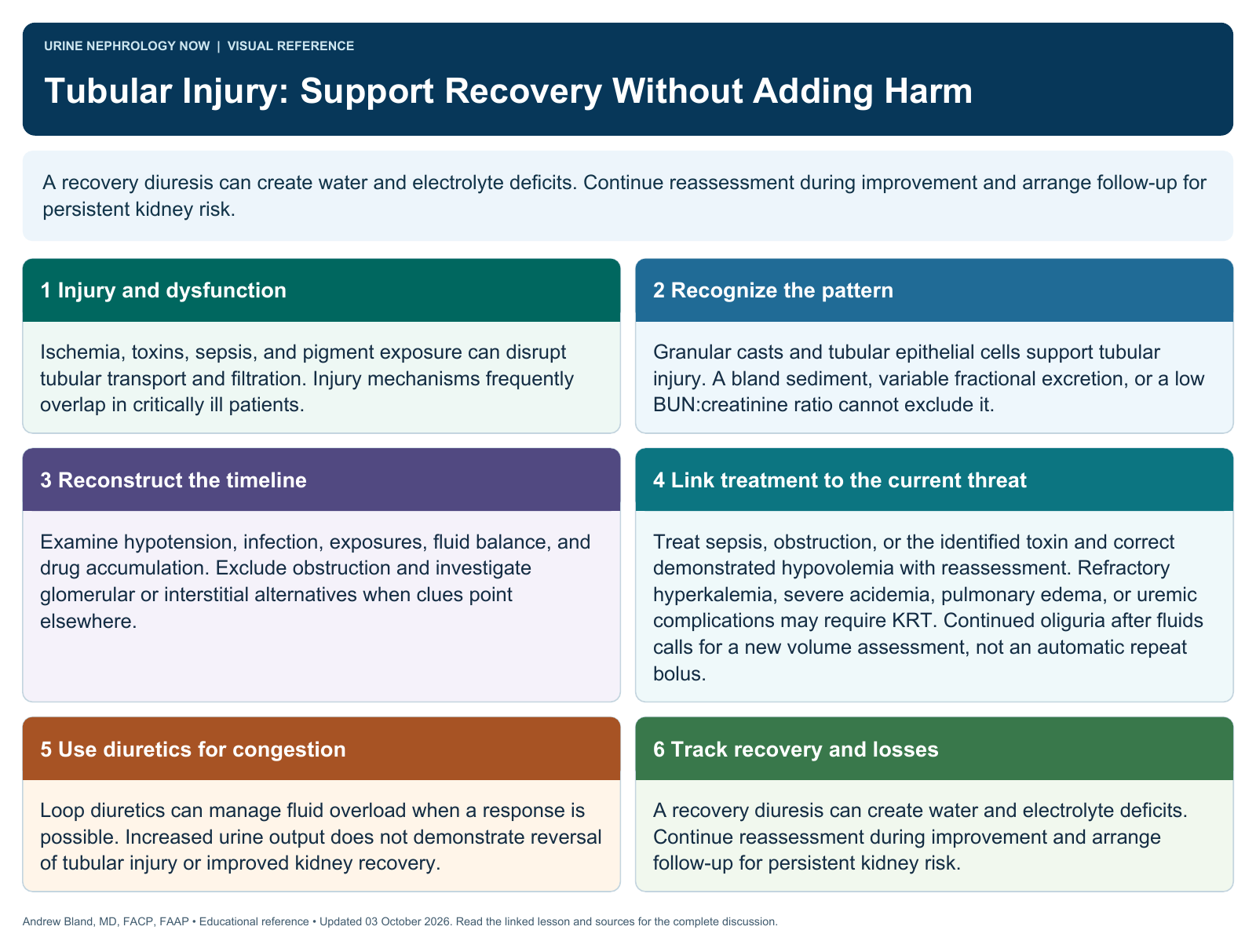
Text version
Injury and dysfunction
Ischemia, toxins, sepsis, and pigment exposure can disrupt tubular transport and filtration. Injury mechanisms frequently overlap in critically ill patients.
Recognize the pattern
Granular casts and tubular epithelial cells support tubular injury. A bland sediment, variable fractional excretion, or a low BUN:creatinine ratio cannot exclude it.
Reconstruct the timeline
Examine hypotension, infection, exposures, fluid balance, and drug accumulation. Exclude obstruction and investigate glomerular or interstitial alternatives when clues point elsewhere.
Link treatment to the current threat
Treat sepsis, obstruction, or the identified toxin and correct demonstrated hypovolemia with reassessment. Refractory hyperkalemia, severe acidemia, pulmonary edema, or uremic complications may require KRT. Continued oliguria after fluids calls for a new volume assessment, not an automatic repeat bolus.
Use diuretics for congestion
Loop diuretics can manage fluid overload when a response is possible. Increased urine output does not demonstrate reversal of tubular injury or improved kidney recovery.
Track recovery and losses
A recovery diuresis can create water and electrolyte deficits. Continue reassessment during improvement and arrange follow-up for persistent kidney risk.