Visual summary
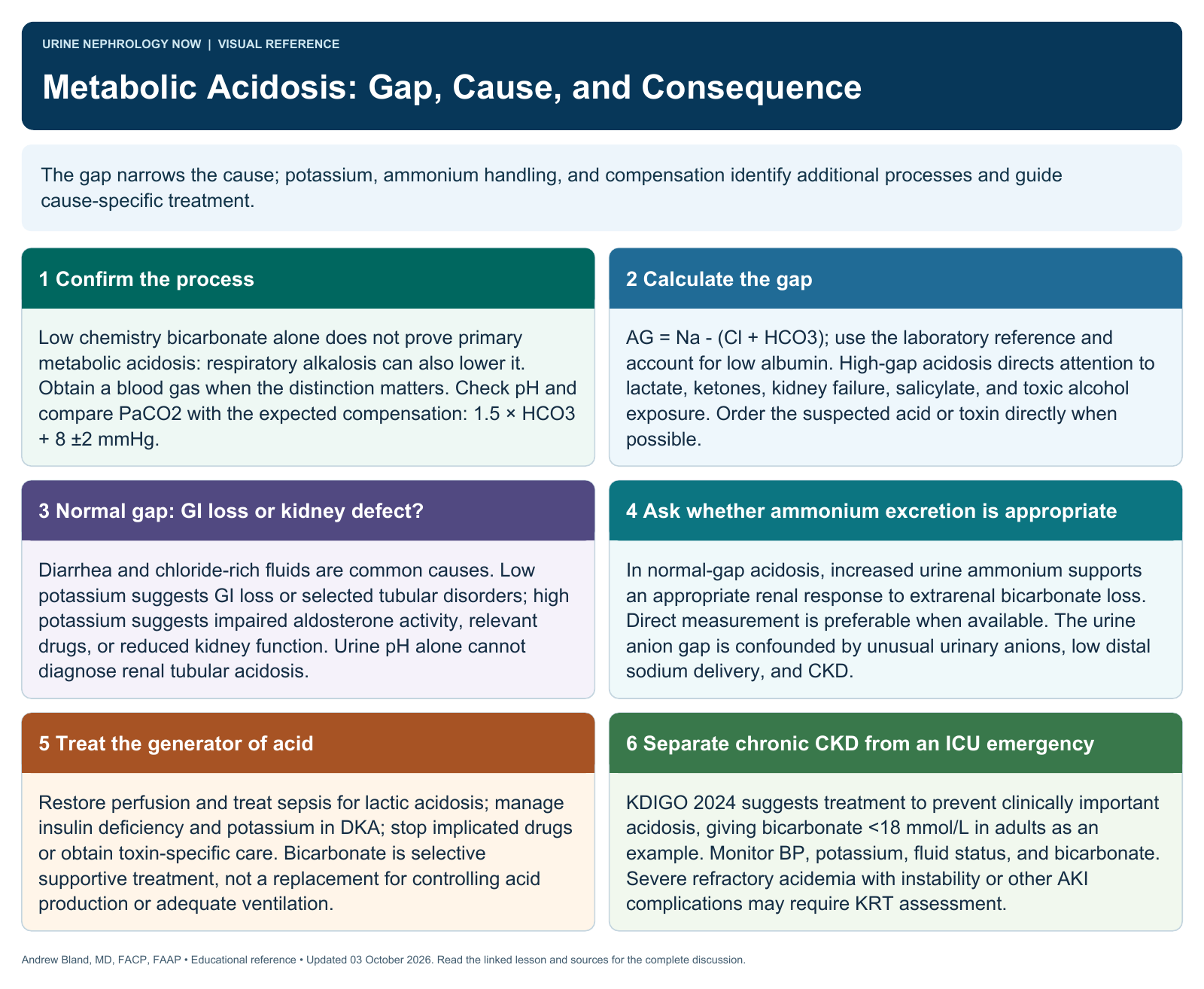
The anion gap organizes the differential; the underlying cause and clinical severity determine the treatment.
Text version
Acid gain or bicarbonate loss
Metabolic acidosis results from increased acid production, reduced renal acid excretion, or bicarbonate loss. Respiratory compensation lowers carbon dioxide, but coexisting lung disease or fatigue can limit that response.
Recognize severe physiology
Assess circulation, mental status, respiratory effort, potassium, lactate when indicated, and the suspected cause. Marked acidemia with instability requires urgent treatment of the underlying process and consideration of additional organ support.
Use the gap to organize causes
An elevated anion gap suggests unmeasured acids such as lactate, ketones, or selected toxins. A normal-gap pattern directs attention to gastrointestinal bicarbonate loss, renal tubular disorders, medications, and chloride-rich fluid exposure.
Interrogate a normal-gap pattern
Review potassium, urine studies, medication exposures, and gastrointestinal losses. Urinary ammonium estimation can help distinguish renal from extrarenal causes, but surrogate measures such as the urinary anion gap have important limitations.
Treat the specific mechanism
Restore perfusion when needed, treat infection or ketoacidosis, remove toxins, and replace relevant losses. Alkali may be appropriate in selected settings; its benefit depends on cause, severity, kidney function, and treatment risks.
Avoid blanket bicarbonate rules
Sodium load, volume expansion, carbon dioxide generation, and electrolyte shifts matter. Bicarbonate is neither mandatory for every low pH nor universally harmful. Reassess ventilation and consider dialysis when severe complications remain uncontrolled.
Continue learning
This graphic summarizes a topic. The full educational pages provide the broader discussion and references.