Visual summary
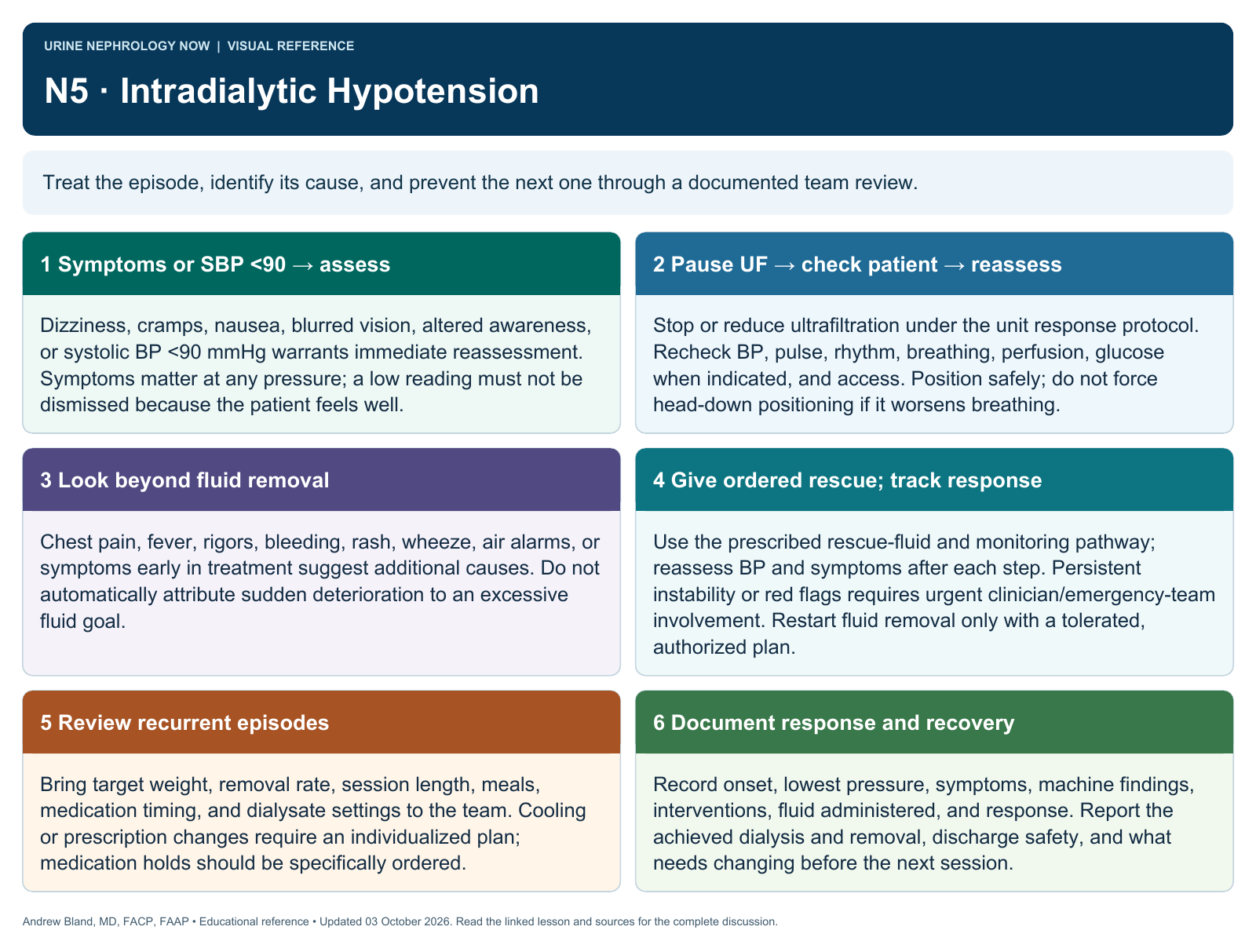
Treat the episode, identify its cause, and prevent the next one through a documented team review.
Text version
Symptoms or SBP <90 → assess
Dizziness, cramps, nausea, blurred vision, altered awareness, or systolic BP <90 mmHg warrants immediate reassessment. Symptoms matter at any pressure; a low reading must not be dismissed because the patient feels well.
Pause UF → check patient → reassess
Stop or reduce ultrafiltration under the unit response protocol. Recheck BP, pulse, rhythm, breathing, perfusion, glucose when indicated, and access. Position safely; do not force head-down positioning if it worsens breathing.
Look beyond fluid removal
Chest pain, fever, rigors, bleeding, rash, wheeze, air alarms, or symptoms early in treatment suggest additional causes. Do not automatically attribute sudden deterioration to an excessive fluid goal.
Give ordered rescue; track response
Use the prescribed rescue-fluid and monitoring pathway; reassess BP and symptoms after each step. Persistent instability or red flags requires urgent clinician/emergency-team involvement. Restart fluid removal only with a tolerated, authorized plan.
Review recurrent episodes
Bring target weight, removal rate, session length, meals, medication timing, and dialysate settings to the team. Cooling or prescription changes require an individualized plan; medication holds should be specifically ordered.
Document response and recovery
Record onset, lowest pressure, symptoms, machine findings, interventions, fluid administered, and response. Report the achieved dialysis and removal, discharge safety, and what needs changing before the next session.