Visual summary
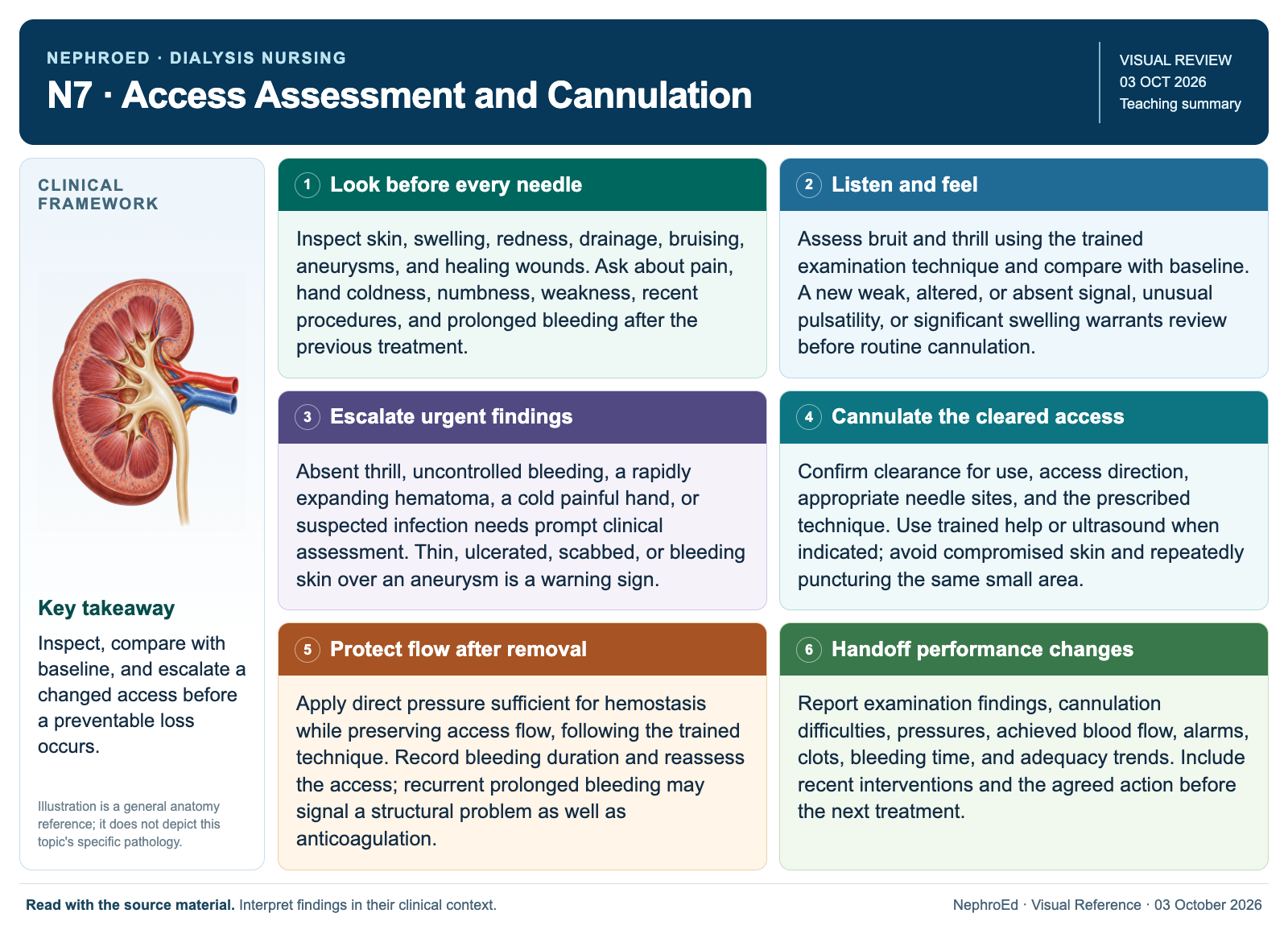
Inspect, compare with baseline, and escalate a changed access before a preventable loss occurs.
Text version
Look before every needle
Inspect skin, swelling, redness, drainage, bruising, aneurysms, and healing wounds. Ask about pain, hand coldness, numbness, weakness, recent procedures, and prolonged bleeding after the previous treatment.
Listen and feel
Assess bruit and thrill using the trained examination technique and compare with baseline. A new weak, altered, or absent signal, unusual pulsatility, or significant swelling warrants review before routine cannulation.
Escalate urgent findings
Absent thrill, uncontrolled bleeding, a rapidly expanding hematoma, a cold painful hand, or suspected infection needs prompt clinical assessment. Thin, ulcerated, scabbed, or bleeding skin over an aneurysm is a warning sign.
Cannulate the cleared access
Confirm clearance for use, access direction, appropriate needle sites, and the prescribed technique. Use trained help or ultrasound when indicated; avoid compromised skin and repeatedly puncturing the same small area.
Protect flow after removal
Apply direct pressure sufficient for hemostasis while preserving access flow, following the trained technique. Record bleeding duration and reassess the access; recurrent prolonged bleeding may signal a structural problem as well as anticoagulation.
Handoff performance changes
Report examination findings, cannulation difficulties, pressures, achieved blood flow, alarms, clots, bleeding time, and adequacy trends. Include recent interventions and the agreed action before the next treatment.
Continue learning
This graphic summarizes a topic. The full educational pages provide the broader discussion and references.