Visual summary
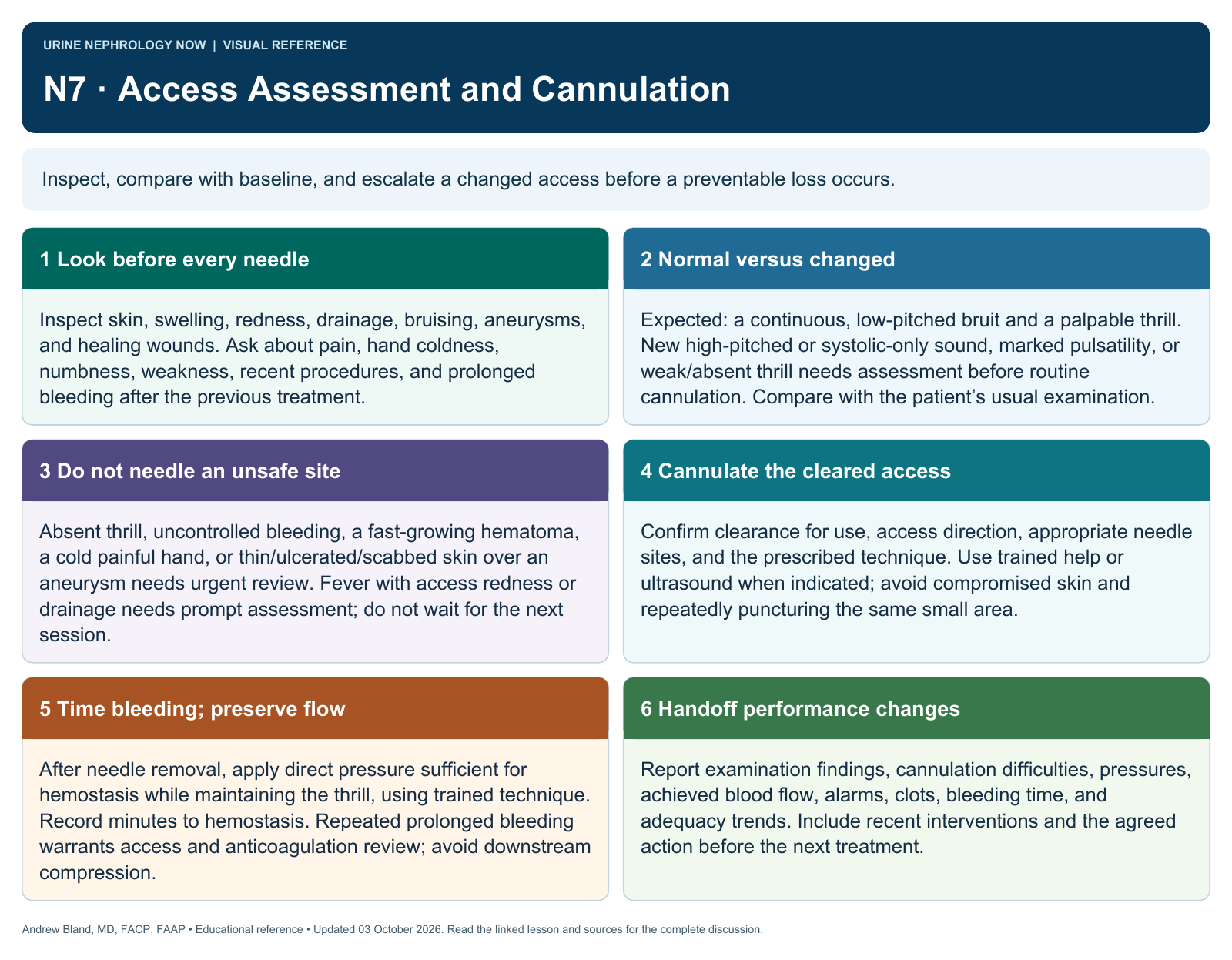
Inspect, compare with baseline, and escalate a changed access before a preventable loss occurs.
Text version
Look before every needle
Inspect skin, swelling, redness, drainage, bruising, aneurysms, and healing wounds. Ask about pain, hand coldness, numbness, weakness, recent procedures, and prolonged bleeding after the previous treatment.
Normal versus changed
Expected: a continuous, low-pitched bruit and a palpable thrill. New high-pitched or systolic-only sound, marked pulsatility, or weak/absent thrill needs assessment before routine cannulation. Compare with the patient’s usual examination.
Do not needle an unsafe site
Absent thrill, uncontrolled bleeding, a fast-growing hematoma, a cold painful hand, or thin/ulcerated/scabbed skin over an aneurysm needs urgent review. Fever with access redness or drainage needs prompt assessment; do not wait for the next session.
Cannulate the cleared access
Confirm clearance for use, access direction, appropriate needle sites, and the prescribed technique. Use trained help or ultrasound when indicated; avoid compromised skin and repeatedly puncturing the same small area.
Time bleeding; preserve flow
After needle removal, apply direct pressure sufficient for hemostasis while maintaining the thrill, using trained technique. Record minutes to hemostasis. Repeated prolonged bleeding warrants access and anticoagulation review; avoid downstream compression.
Handoff performance changes
Report examination findings, cannulation difficulties, pressures, achieved blood flow, alarms, clots, bleeding time, and adequacy trends. Include recent interventions and the agreed action before the next treatment.