Visual summary
Nutrition assessment connects intake, illness, weight, function, and practical access to food.
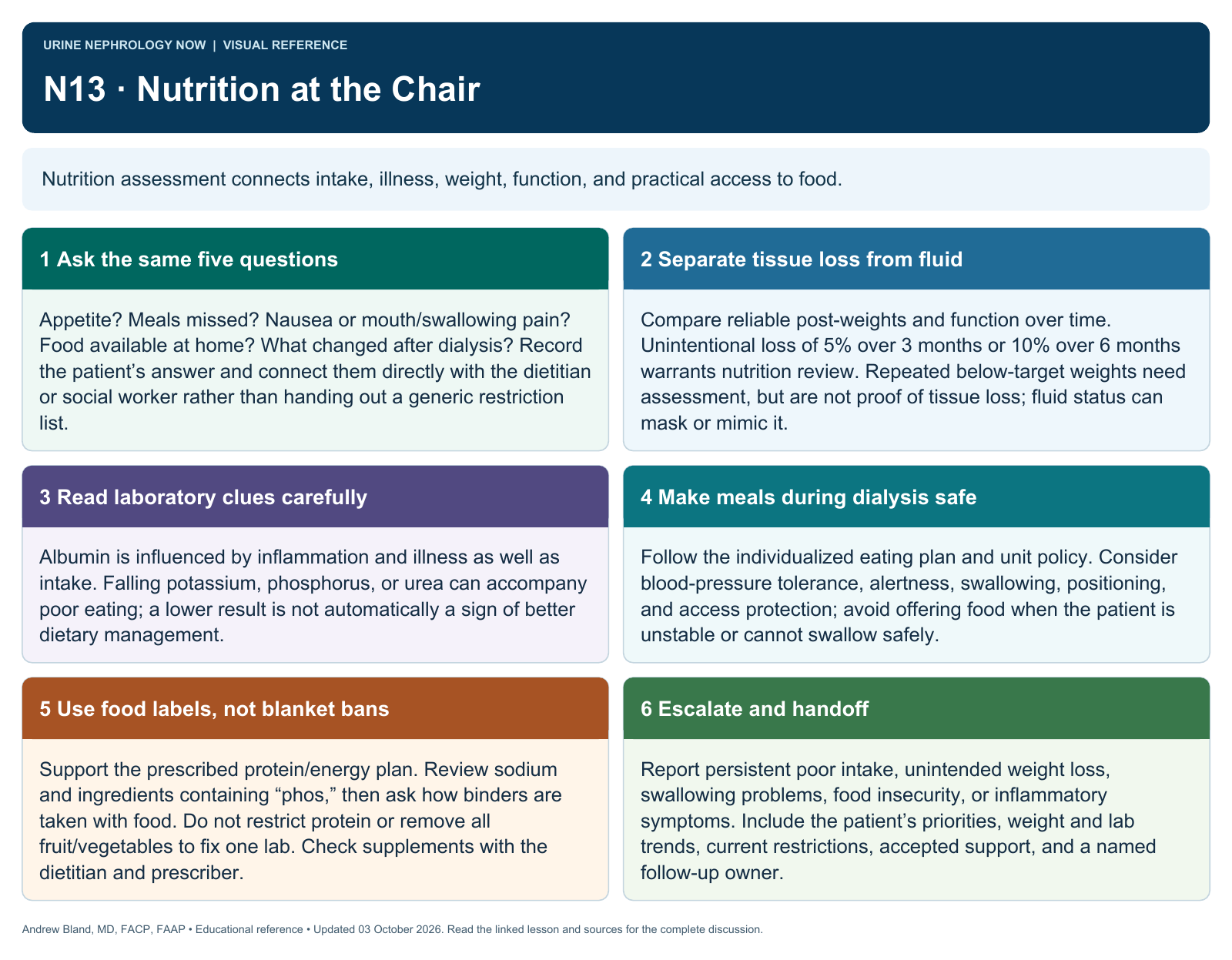
Text version
Ask about eating
Discuss appetite, meals on dialysis days, nausea, swallowing, mouth pain, taste changes, and food access. Ask which problem is most difficult and connect the patient with the renal dietitian or other relevant support.
Follow weight and function
Use reliable weights and the longer trend, including recent illness and target-weight changes. Unintentional tissue loss can coexist with fluid excess; a postdialysis weight below target does not by itself prove malnutrition.
Read laboratory clues carefully
Albumin is influenced by inflammation and illness as well as intake. Falling potassium, phosphorus, or urea can accompany poor eating; a lower result is not automatically a sign of better dietary management.
Make meals during dialysis safe
Follow the individualized eating plan and unit policy. Consider blood-pressure tolerance, alertness, swallowing, positioning, and access protection; avoid offering food when the patient is unstable or cannot swallow safely.
Reinforce the individualized plan
Support adequate protein and energy while addressing sodium, additives, and patient-specific electrolyte needs. Avoid blanket food bans or protein restriction to improve phosphorus. Review supplements with the clinician and dietitian.
Escalate and handoff
Report persistent poor intake, unintended weight loss, swallowing problems, food insecurity, or inflammatory symptoms. Include the patient’s priorities, weight and lab trends, current restrictions, accepted support, and a named follow-up owner.
Continue learning
This graphic summarizes a topic. The full educational pages provide the broader discussion and references.