Visual summary
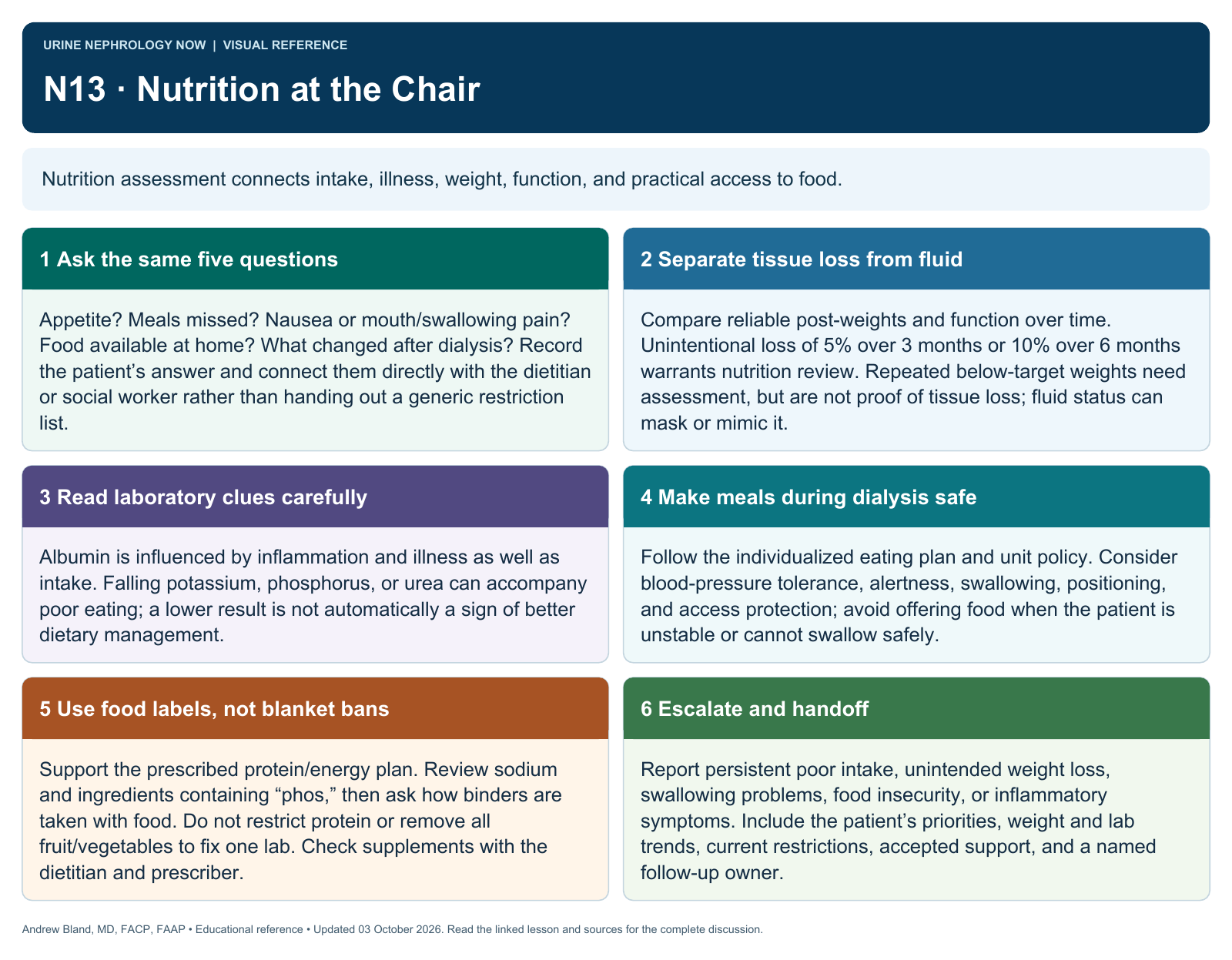
Nutrition assessment connects intake, illness, weight, function, and practical access to food.
Text version
Ask the same five questions
Appetite? Meals missed? Nausea or mouth/swallowing pain? Food available at home? What changed after dialysis? Record the patient’s answer and connect them directly with the dietitian or social worker rather than handing out a generic restriction list.
Separate tissue loss from fluid
Compare reliable post-weights and function over time. Unintentional loss of 5% over 3 months or 10% over 6 months warrants nutrition review. Repeated below-target weights need assessment, but are not proof of tissue loss; fluid status can mask or mimic it.
Read laboratory clues carefully
Albumin is influenced by inflammation and illness as well as intake. Falling potassium, phosphorus, or urea can accompany poor eating; a lower result is not automatically a sign of better dietary management.
Make meals during dialysis safe
Follow the individualized eating plan and unit policy. Consider blood-pressure tolerance, alertness, swallowing, positioning, and access protection; avoid offering food when the patient is unstable or cannot swallow safely.
Use food labels, not blanket bans
Support the prescribed protein/energy plan. Review sodium and ingredients containing “phos,” then ask how binders are taken with food. Do not restrict protein or remove all fruit/vegetables to fix one lab. Check supplements with the dietitian and prescriber.
Escalate and handoff
Report persistent poor intake, unintended weight loss, swallowing problems, food insecurity, or inflammatory symptoms. Include the patient’s priorities, weight and lab trends, current restrictions, accepted support, and a named follow-up owner.