Visual summary
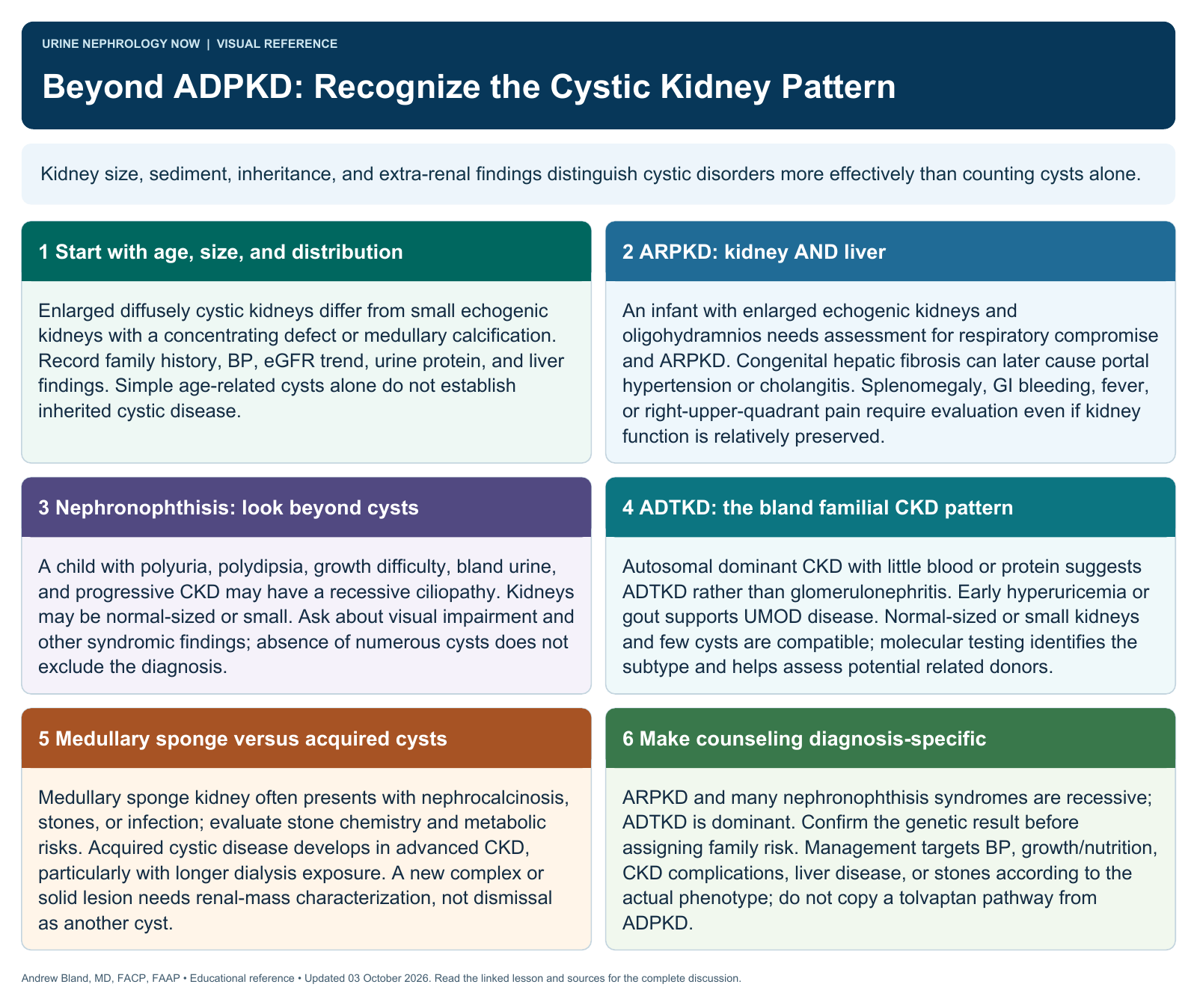
Kidney size, sediment, inheritance, and extra-renal findings distinguish cystic disorders more effectively than counting cysts alone.
Text version
Start with age, size, and distribution
Enlarged diffusely cystic kidneys differ from small echogenic kidneys with a concentrating defect or medullary calcification. Record family history, BP, eGFR trend, urine protein, and liver findings. Simple age-related cysts alone do not establish inherited cystic disease.
ARPKD: kidney AND liver
An infant with enlarged echogenic kidneys and oligohydramnios needs assessment for respiratory compromise and ARPKD. Congenital hepatic fibrosis can later cause portal hypertension or cholangitis. Splenomegaly, GI bleeding, fever, or right-upper-quadrant pain require evaluation even if kidney function is relatively preserved.
Nephronophthisis: look beyond cysts
A child with polyuria, polydipsia, growth difficulty, bland urine, and progressive CKD may have a recessive ciliopathy. Kidneys may be normal-sized or small. Ask about visual impairment and other syndromic findings; absence of numerous cysts does not exclude the diagnosis.
ADTKD: the bland familial CKD pattern
Autosomal dominant CKD with little blood or protein suggests ADTKD rather than glomerulonephritis. Early hyperuricemia or gout supports UMOD disease. Normal-sized or small kidneys and few cysts are compatible; molecular testing identifies the subtype and helps assess potential related donors.
Medullary sponge versus acquired cysts
Medullary sponge kidney often presents with nephrocalcinosis, stones, or infection; evaluate stone chemistry and metabolic risks. Acquired cystic disease develops in advanced CKD, particularly with longer dialysis exposure. A new complex or solid lesion needs renal-mass characterization, not dismissal as another cyst.
Make counseling diagnosis-specific
ARPKD and many nephronophthisis syndromes are recessive; ADTKD is dominant. Confirm the genetic result before assigning family risk. Management targets BP, growth/nutrition, CKD complications, liver disease, or stones according to the actual phenotype; do not copy a tolvaptan pathway from ADPKD.