Visual summary
Use the medicine with follow-up testing and an individualized sick-day plan.
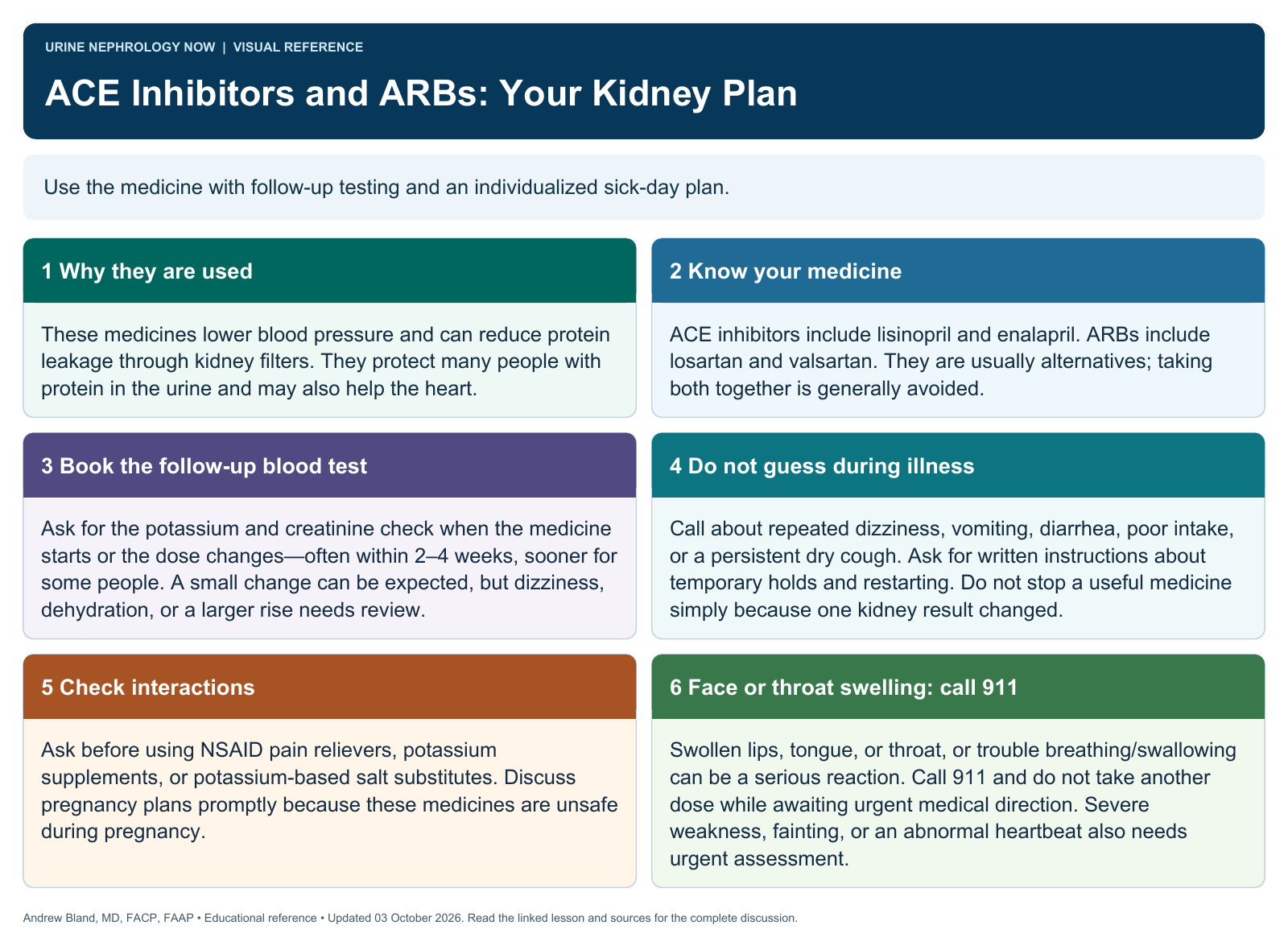
Text version
Why they are used
These medicines lower blood pressure and can reduce protein leakage through kidney filters. They protect many people with protein in the urine and may also help the heart.
Know your medicine
ACE inhibitors include lisinopril and enalapril. ARBs include losartan and valsartan. They are usually alternatives; taking both together is generally avoided.
Book the follow-up blood test
Ask for the potassium and creatinine check when the medicine starts or the dose changes—often within 2–4 weeks, sooner for some people. A small change can be expected, but dizziness, dehydration, or a larger rise needs review.
Do not guess during illness
Call about repeated dizziness, vomiting, diarrhea, poor intake, or a persistent dry cough. Ask for written instructions about temporary holds and restarting. Do not stop a useful medicine simply because one kidney result changed.
Check interactions
Ask before using NSAID pain relievers, potassium supplements, or potassium-based salt substitutes. Discuss pregnancy plans promptly because these medicines are unsafe during pregnancy.
Face or throat swelling: call 911
Swollen lips, tongue, or throat, or trouble breathing/swallowing can be a serious reaction. Call 911 and do not take another dose while awaiting urgent medical direction. Severe weakness, fainting, or an abnormal heartbeat also needs urgent assessment.