Visual summary
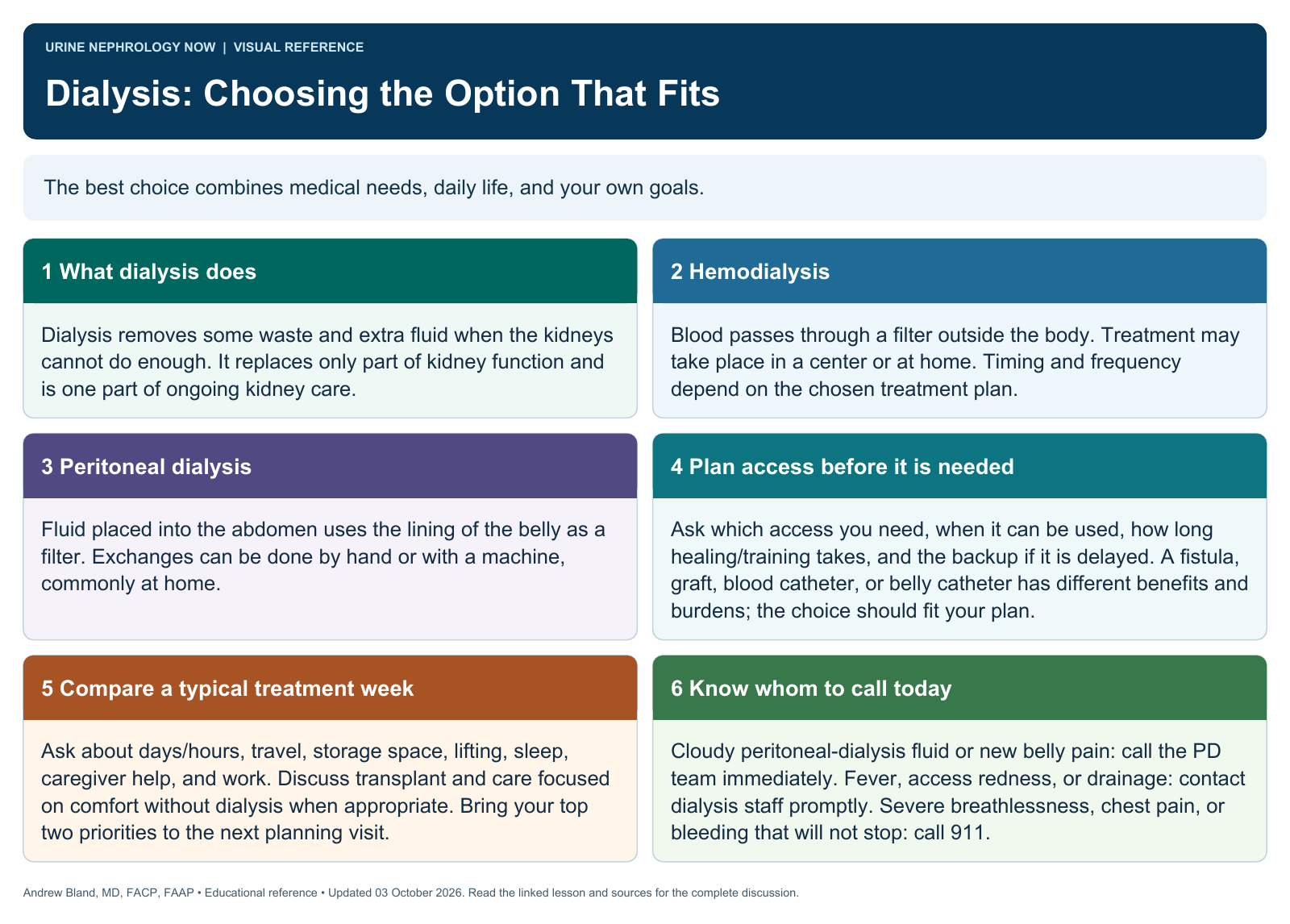
The best choice combines medical needs, daily life, and your own goals.
Text version
What dialysis does
Dialysis removes some waste and extra fluid when the kidneys cannot do enough. It replaces only part of kidney function and is one part of ongoing kidney care.
Hemodialysis
Blood passes through a filter outside the body. Treatment may take place in a center or at home. Timing and frequency depend on the chosen treatment plan.
Peritoneal dialysis
Fluid placed into the abdomen uses the lining of the belly as a filter. Exchanges can be done by hand or with a machine, commonly at home.
Plan access before it is needed
Ask which access you need, when it can be used, how long healing/training takes, and the backup if it is delayed. A fistula, graft, blood catheter, or belly catheter has different benefits and burdens; the choice should fit your plan.
Compare a typical treatment week
Ask about days/hours, travel, storage space, lifting, sleep, caregiver help, and work. Discuss transplant and care focused on comfort without dialysis when appropriate. Bring your top two priorities to the next planning visit.
Know whom to call today
Cloudy peritoneal-dialysis fluid or new belly pain: call the PD team immediately. Fever, access redness, or drainage: contact dialysis staff promptly. Severe breathlessness, chest pain, or bleeding that will not stop: call 911.