Visual summary
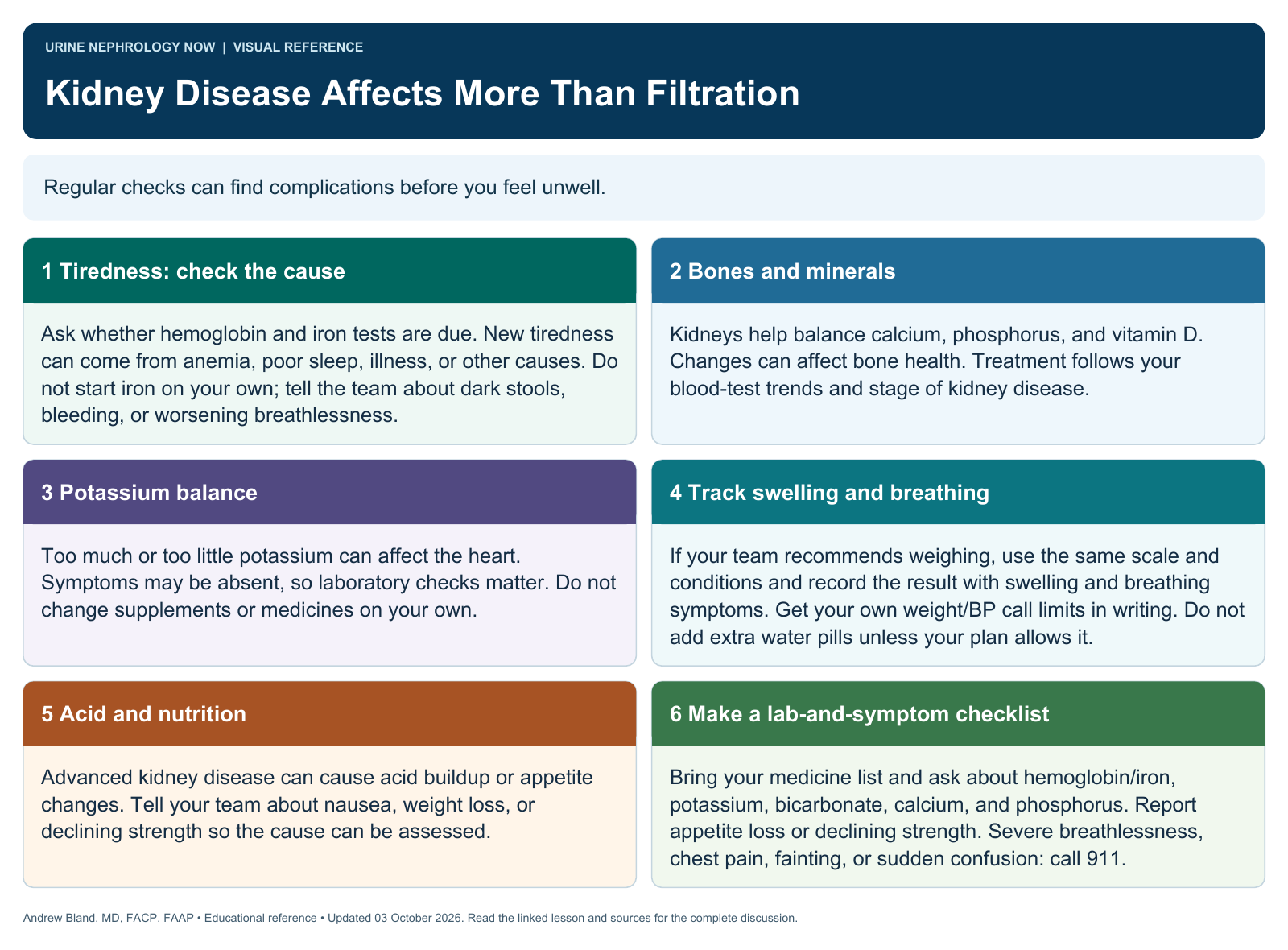
Regular checks can find complications before you feel unwell.
Text version
Tiredness: check the cause
Ask whether hemoglobin and iron tests are due. New tiredness can come from anemia, poor sleep, illness, or other causes. Do not start iron on your own; tell the team about dark stools, bleeding, or worsening breathlessness.
Bones and minerals
Kidneys help balance calcium, phosphorus, and vitamin D. Changes can affect bone health. Treatment follows your blood-test trends and stage of kidney disease.
Potassium balance
Too much or too little potassium can affect the heart. Symptoms may be absent, so laboratory checks matter. Do not change supplements or medicines on your own.
Track swelling and breathing
If your team recommends weighing, use the same scale and conditions and record the result with swelling and breathing symptoms. Get your own weight/BP call limits in writing. Do not add extra water pills unless your plan allows it.
Acid and nutrition
Advanced kidney disease can cause acid buildup or appetite changes. Tell your team about nausea, weight loss, or declining strength so the cause can be assessed.
Make a lab-and-symptom checklist
Bring your medicine list and ask about hemoglobin/iron, potassium, bicarbonate, calcium, and phosphorus. Report appetite loss or declining strength. Severe breathlessness, chest pain, fainting, or sudden confusion: call 911.